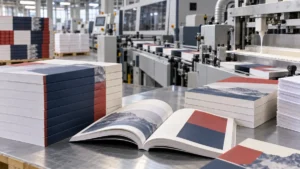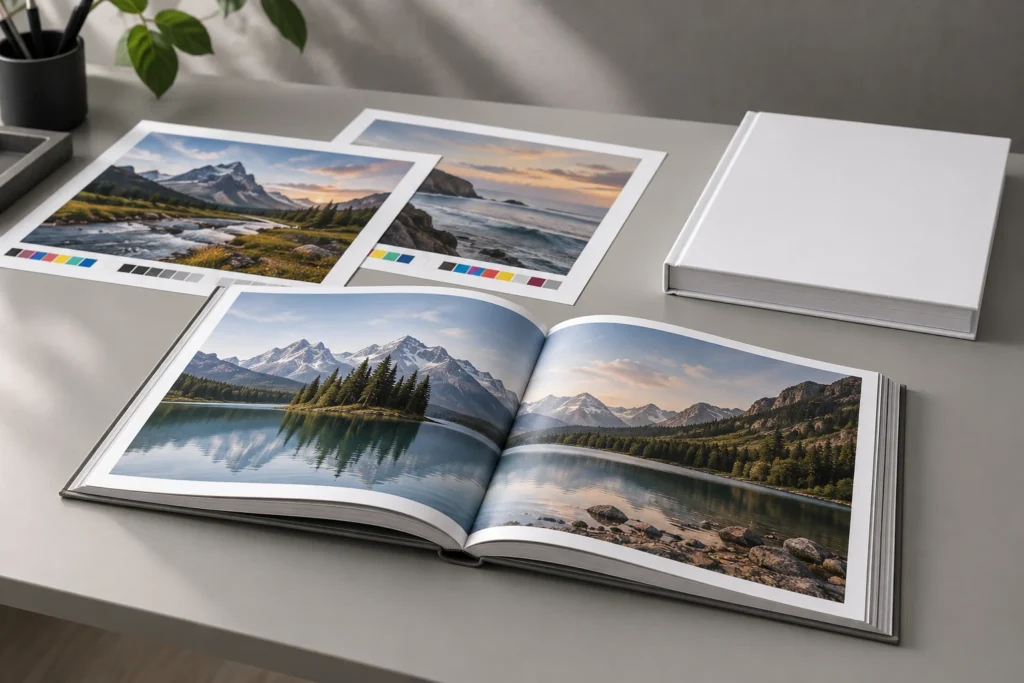
Book printing proofs should approve three separate things: the content, the color target, and the physical construction. A PDF checks the pages and artwork. A controlled color proof establishes a print reference. A representative dummy or bound sample checks materials and handling. Choose the combination that covers your book’s actual risks before authorizing production.
The right plan depends on the book’s images, paper, binding, finishes, quantity, and delivery deadline. This guide explains what each proof can show, what it cannot promise, and how to record approval without leaving costly assumptions unresolved.
Compare Book Printing Proofs by the Decision They Support
Choose a proof by what you need to approve, rather than by its name. Suppliers may use “digital proof,” “hard proof,” and “sample” differently. Ask which equipment, stock, files, and processes produced it, and which properties it is intended to represent.
| Proof or sample | Best decision it supports | Main limitation | Question to ask |
|---|---|---|---|
| PDF content proof | Text, pagination, image placement, trim geometry, and cover artwork | Does not establish paper feel, binding performance, or an uncontrolled screen’s color accuracy | Is this the final production PDF, or a preview exported from another file? |
| Color-managed soft proof | Predicted color under an identified output profile and controlled display conditions | Reliability depends on the display, profiles, and viewing environment; no physical surface or finish | Which output condition and display setup are being simulated? |
| Measured hard-copy color proof | Color and tonal targets for an identified printing condition | Proofing stock and ink may differ from production stock and ink; it does not prove construction | What measurement report and target condition accompany this proof? |
| Unprinted white dummy | Size, bulk, paper handling, opening, case proportions, and fit | No printed color; substituted materials or handmade assembly may change behavior | Are the paper, board, page count, and construction representative? |
| Printed and bound prototype | Integrated page layout, cover position, handling, and selected finishes | Digital printing or prototype binding can differ from the production process | Which materials and manufacturing steps differ from the planned run? |
| Production-press sheet | Printed result on the specified press and stock at the sampled stage | Does not establish final binding; drying and finishing can affect appearance | Is this a separate press test or a sample taken after the print run has begun? |
For a familiar text-led paperback, a careful PDF review and confirmed stock may cover the main risks. For a first order using unfamiliar materials, add a representative physical sample. For a photography or art book, establish a controlled color reference as well. The print quantity affects the financial consequence of an error, but there is no universal copy threshold that makes one proof plan correct.
Review Content and PDF Output Before Physical Sampling
Approve the exact pages that will be used for production. Check the title page, copyright details, contents, running heads, captions, folios, blank pages, and final page. Then compare the cover and interior version names with the printer’s proof record.
Review geometry at the intended trim size. Keep small text and important image details clear of the trim, folds, and binding area using the printer’s supplied template. A flat spread cannot show how much of an image the finished gutter will conceal. Therefore, use the proposed binding and a representative dummy to assess important crossovers.
Ask prepress to confirm fonts, image resolution at placed size, bleed, transparency, separations, and overprint behavior. These checks identify technical risks; they do not replace editorial proofreading. For the broader handoff process, see our book printing workflow after file submission.
Separate ordinary PDF review from soft proofing
An ordinary PDF viewed on a laptop is primarily a content reference. Adobe explains that a soft proof’s reliability depends on the monitor, device profiles, and ambient lighting. Its proof setup can also simulate paper color and black ink where the selected profile supports those options. See Adobe’s guidance on proofing colors.
Keep overprint inspection explicit. Do not assume that opening the PDF in any viewer checks every print interaction. Have prepress review the relevant output settings, especially white objects, fine black text, and artwork using spot colors.
Establish a Color Reference for Image-Critical Books
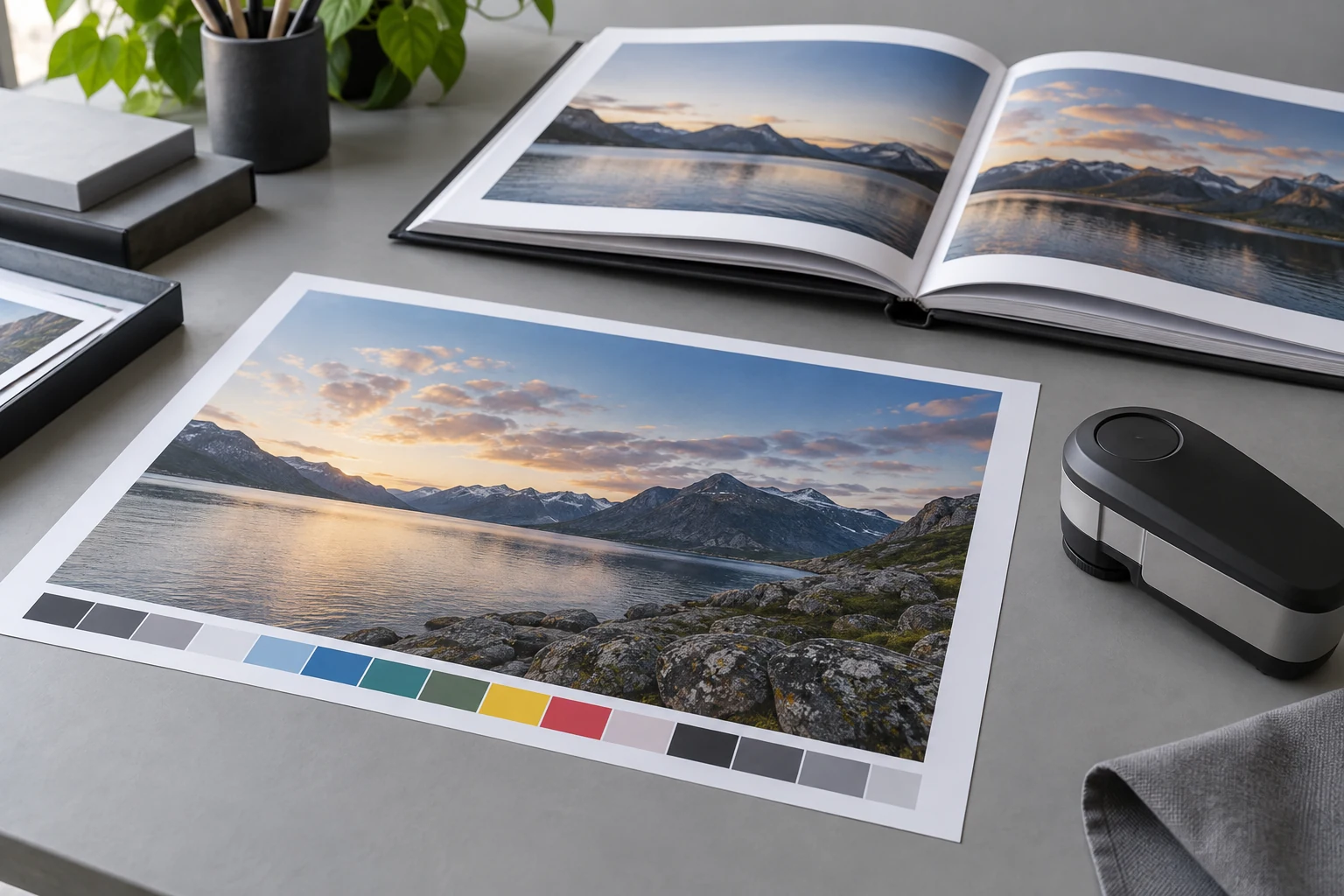
A useful color proof identifies the printing condition it simulates and provides evidence of its accuracy. “High-resolution printout” describes detail, rather than verified color. For critical photographs, neutral grays, or brand artwork, ask how the proof was produced and measured.
ISO 12647-7:2016 describes requirements for hard-copy digital proofing systems that simulate a defined printing condition. Referencing the standard does not establish that a particular supplier or sample complies. Request evidence for the actual proof instead of treating a general claim as a certificate.
Fogra identifies its MediaWedge CMYK as a control element for digital contract proofs. A colored strip alone is insufficient: the measurements must be evaluated against the relevant reference and tolerances. Ask for the proof’s target condition, date, identification, and measurement result. See Fogra’s MediaWedge explanation.
Choose representative images, then define how to compare them
Include the pages most likely to reveal problems: shadow detail, pale gradients, skin tones, neutral images, saturated artwork, and critical crossovers. Agree whether selected spreads or all pages require color proofing. Selected spreads establish targets for those images; they do not confirm that every unproofed page is correct.
Compare the proof and reference together under the agreed viewing conditions. ISO 3664:2025 covers viewing conditions for printed and other reflective or transmissive images. Its published scope excludes soft-proofing displays. Do not use a phone photograph of a print as the final color approval reference.
Identify effects that the color proof does not reproduce
Metallic inks, foil, embossing, spot varnish, and textured substrates need separate evaluation where appearance matters. A CMYK simulation cannot reproduce metallic reflection or physical relief. Likewise, a matte laminate can change how a cover looks and feels. Record those finishes against an actual finish sample and confirm any differences in stock or process.
Check Paper, Binding, and Finishes with Physical Samples
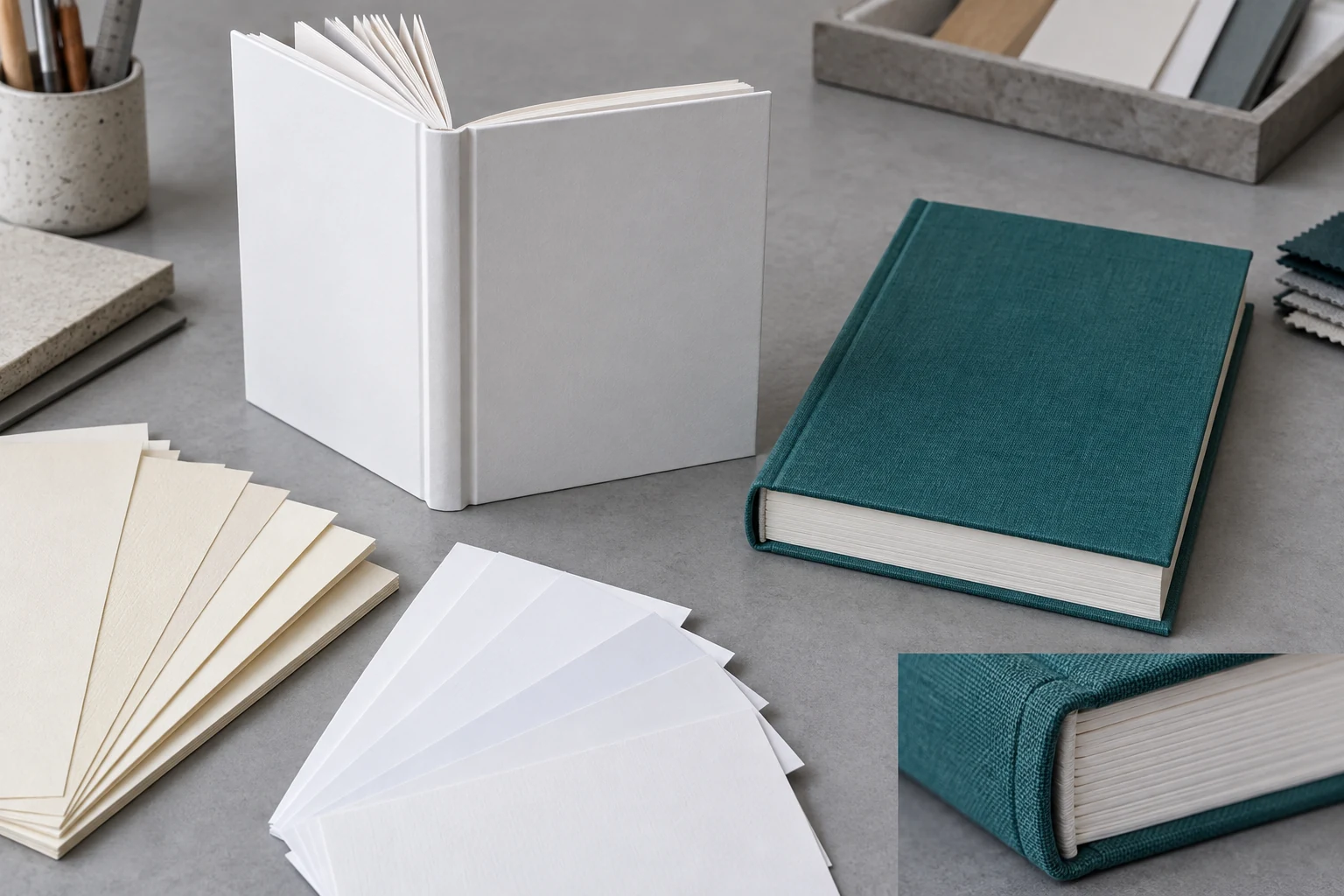
Use representative materials to judge the book as an object. A white dummy can answer questions about thickness and opening even before the artwork is printed. However, record any substituted paper, board, adhesive, or cover material so you know which decisions remain open.
| Inspect | What to do | Record before approval |
|---|---|---|
| Paper | Compare shade, surface, stiffness, and show-through using a representative printed sample where needed | Stock identification, gsm, finish, and any substitution; gsm alone does not determine thickness |
| Book block | Check page order, trim, opening, and important gutter content | Page count, trim size, binding method, and agreed dimensional criteria |
| Cover and case | Check spine position, wrap, joints, corners, and endpaper attachment | Final cover template, material, board specification, and artwork alignment |
| Special finishes | Inspect placement, surface appearance, and interaction with cover stock | Finish sample ID, artwork version, and process or material differences |
| Box or slipcase | Insert and remove the representative book; examine clearance and protection | Finished book dimensions, packaging material, fit requirement, and packing method |
Assess opening in the way readers will actually use the book. Avoid forcing a sample flat unless that behavior is part of the agreed specification. A prototype’s appearance cannot establish the durability of an entire run; agree appropriate production checks and acceptance criteria separately.
For image-heavy casebound projects, review hardcover book printing options alongside the dummy. For photographs across spreads, discuss the intended opening behavior through our photo book printing service before finalizing the layout.
Use a Proof Approval Checklist with Separate Sign-Offs
Approve identified files and samples for named properties. “Sample approved” can leave the printer uncertain whether you mean content, color, binding, or all three. Use one approval record that makes those decisions explicit.
- Identify the project: title, edition, language, quantity, trim size, and interior page count.
- Lock the files: exact interior, cover, jacket, endpaper, and finishing-artwork filenames with version identifiers.
- Approve content: confirm page order, copy, images, blank pages, and artwork geometry.
- Approve color: identify the physical proof or controlled reference, target printing condition, and agreed evaluation method.
- Approve construction: list the dummy or sample IDs and the materials, binding, and finishes they represent.
- Resolve exceptions: name each accepted difference and each issue requiring correction. Avoid an open-ended “approved with changes.”
- Authorize a stage: state whether approval releases printing, binding, finishing, or the complete production plan.
- Retain the record: keep matching references with the buyer and printer, and name the responsible approver and approval date.
A practical approval message
Adapt the wording to the actual agreement. If an issue remains unresolved, identify the affected stage and hold it. After a correction, request a revised proof and withdraw the superseded version from production use.
Example Specification: A Hardcover Photography Book
This is an illustrative sourcing scenario, not a completed Prikoro order or a fixed quote. A publisher plans 1,000 copies of a 210 × 280 mm hardcover photography book with 160 interior pages, four-color CMYK printing on 157 gsm coated paper, a section-sewn book block, and a printed case with matte lamination. Delivery is to a UK warehouse; proof costs and transit must be quoted for the actual address.
The main risks are shadow detail, images crossing the gutter, and cover appearance after lamination. The following plan covers those risks without assuming that one prototype represents every production property.
| Approval stage | Requested evidence | Release decision |
|---|---|---|
| Content | Final cover and interior PDFs, including all 160 interior pages and confirmed blank pages | Close editorial and artwork corrections before making final samples |
| Color | Measured proofs for selected critical spreads, including dark and neutral images; agreed output condition | Approve targets for those spreads and specify production color control |
| Construction | Representative sewn hardcover dummy using the proposed text stock and case materials | Confirm bulk, opening, gutter clearance, and final cover template |
| Cover finish | Printed and laminated cover-material sample, with process differences declared | Approve finish appearance against the identified physical sample |
If the dummy reveals that a subject’s face sits too close to the gutter, adjust that spread and issue a new interior file. Then repeat the affected review. The expected benefit is earlier discovery of a layout risk; this example does not claim a measured saving or a guaranteed production outcome.
Plan Proof Costs, Revisions, and Timing
Ask for a proofing quote that separates preparation, sampling, revisions, and delivery. There is no reliable universal price or turnaround for book printing proofs. Full specifications, proof method, supplier schedule, and shipping destination determine the actual quotation.
- PDF review: clarify preflight scope, correction responsibility, and included revision rounds.
- Color proofs: state the number and size of pages or spreads, target condition, and measurement evidence.
- Dummy or prototype: list materials, binding, finishes, and any tooling or setup charges.
- Press test: confirm whether it is a separate test, its production method, and what has already been committed.
- Shipping: specify the recipient address, courier service, and any buyer-side receiving charges.
Build the schedule around file readiness, sample preparation, shipping, buyer review, possible revisions, and final release. A delivered sample is not yet an approved sample. Ask which event starts the quoted production lead time and who can authorize changes.
For a digital production run, a sample made on the planned device and stock can be more representative than a digital prototype made for an offset run. However, later material substitutions still need review. Compare both the sample’s production method and the intended run’s method before deciding what it proves.
Prepare a Prikoro Proof Request
Send the trim size, page count, quantity, interior and cover materials, printing colors, binding, finishes, destination, and required arrival date. Also name your main concern: color, paper feel, image crossovers, cover alignment, opening, or packaging fit.
For an image-led edition, start with our custom art book printing service. Include the pages that need critical review and ask the team to confirm available proof methods, representative materials, charges, and timing in writing. No particular proofing certification or equipment is assumed in this guide.
Request a book printing quote and proofing plan before finalizing your purchasing schedule. You can also explore the Book Manufacturing guides for related specification decisions.
The safest approach to book printing proofs is to match each approval to evidence that actually supports it. Lock the content, establish the color reference where needed, confirm representative construction, and record every accepted difference before production.
Frequently Asked Questions
Is a printed sample automatically a contract proof?
No. A printed sample may primarily show layout or construction. For a contract color reference, ask for the intended printing condition and measurement evidence. Its appearance or price alone cannot establish that status.
Can I approve an offset book using a digitally printed bound sample?
You can use it to approve properties it represents, such as layout and certain construction details. Do not automatically use it as the offset color target. Document differences in equipment, paper, binding, and finishing, then arrange separate evidence for critical properties.
Should I proof every page or only selected spreads?
Check every page for content. Color proofing may cover selected representative spreads if that scope fits the project’s risks. If each artwork requires individual color approval, quote a wider proof set; selected spreads do not validate the remaining images.
Can a white dummy confirm the final spine width?
It can help when it uses representative materials, page count, and construction. If the paper or binding changes, the result may change too. Obtain the final cover template from the printer after the specification is settled.
Does approving a proof remove the need for production inspection?
No. A proof defines the reference or approved properties. Production inspection checks whether manufactured copies meet the agreed requirements. Keep the reference available and agree the inspection method separately.
What should I do if a proof uses substitute paper?
Ask which properties remain representative and which need further review. You may approve page sequence while leaving paper shade, bulk, opacity, or finish open. Do not treat a material substitution as final approval of the specified stock.
How should remote buyers approve color?
Use an identified physical proof or a properly controlled remote color workflow agreed with the printer. A photograph or video helps discuss visible defects, but it introduces camera, lighting, compression, and display differences and should not be the sole critical color reference.
Sources and Further Reading
This guide uses four official references: Adobe’s color-proofing documentation, ISO 12647-7:2016 for digital hard-copy proofing, Fogra’s MediaWedge guidance, and ISO 3664:2025 for viewing conditions. Each is linked beside the relevant discussion. The standards references describe their published scope; they do not claim Prikoro certification or replace a project-specific production agreement.