A hardcover book does not always need a dust jacket. Choose one when retail presentation, extra marketing space, or a collectible feel matters. Skip it when the book will be handled often, used by children, carried into kitchens or classrooms, or when a durable printed case is the better experience. The right choice depends on the reader, sales channel, cover material, finishing plan, and budget—not on the idea that one format is automatically more premium.
| Project need | Best starting option | Why |
|---|---|---|
| Bookstore visibility and flap copy | Dust jacket | Adds a large printable surface for positioning, reviews, author information, and pricing. |
| Frequent handling or wipe-clean use | Printed case wrap | No loose wrapper to tear, slide, stain, or get lost. |
| Premium literary or collector edition | Cloth case + dust jacket | Combines a tactile permanent cover with a removable marketing layer. |
| Maximum physical protection | Slipcase or clamshell box | Protects more edges and provides more structural support than a paper jacket. |
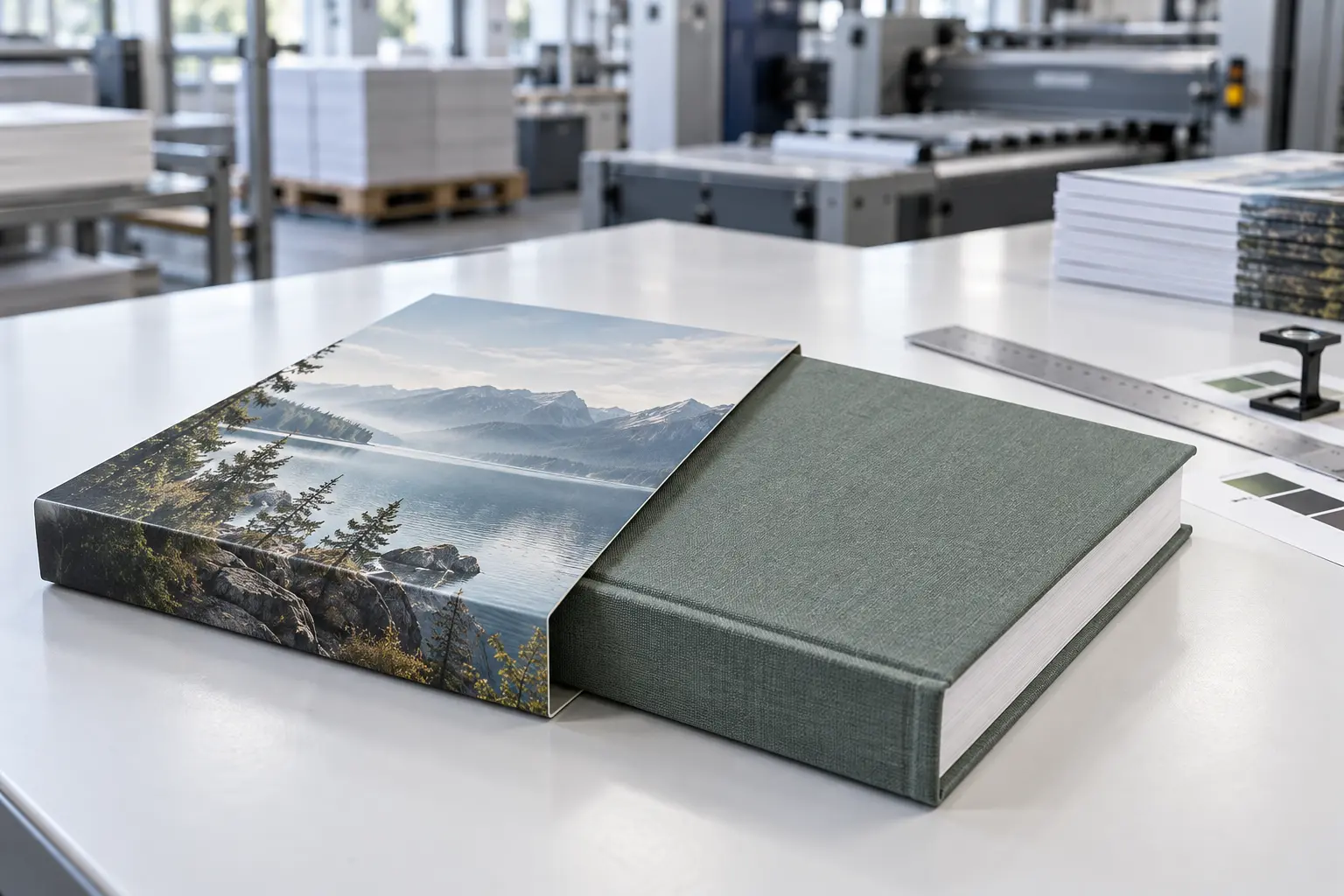
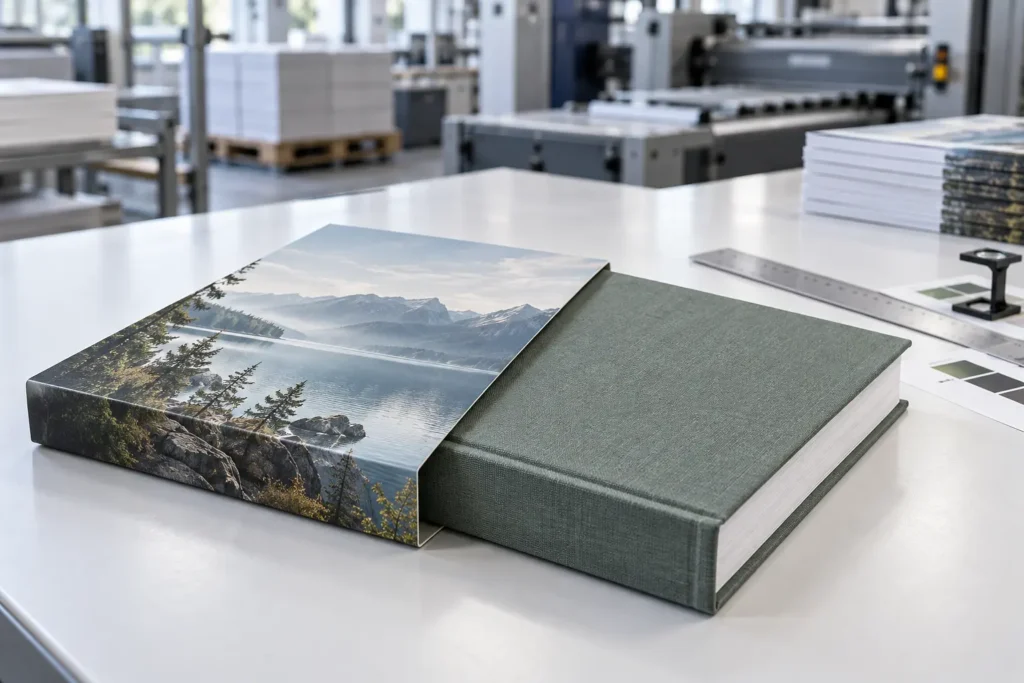
A dust jacket adds a removable printed layer, while the case beneath can remain cloth-covered, foil-stamped, or separately printed.
- What Is a Dust Jacket?
- Dust Jacket vs. Case Wrap
- Which Hardcover Books Benefit Most?
- How a Dust Jacket Changes Printing Cost
- Paper, Lamination, and Finishing
- How to Build the Artwork Correctly
- A Practical Production Case
- Quality-Control Checklist
- What to Send for an Accurate Quote
- Frequently Asked Questions
What Is a Hardcover Book Dust Jacket?
A dust jacket is a removable printed sheet wrapped around a hardcover book. It normally includes a front panel, spine, back panel, and two flaps that fold around the fore edges of the case. Those flaps keep the jacket in position and provide useful space for a synopsis, author biography, endorsements, series information, or publisher details.
The hardcover book dust jacket and the hardcover case are separate components. Therefore, you must specify both. The case may use printed paper-over-board, cloth, imitation leather, or another covering material. It may also carry foil stamping, debossing, a screen-printed title, or no decoration at all.
A jacket protects the case from ordinary surface dirt and scuffing, but it is not a rigid protective enclosure. The Northeast Document Conservation Center notes that a jacket can protect a cover from dirt and handling abrasion. However, for valuable or fragile books, NEDCC recommends fitted enclosures when stronger protection and structural support are needed.
Dust Jacket vs. Case Wrap: What Changes?
A printed case wrap is permanently glued over the cover boards. A hardcover book dust jacket is removable. That simple distinction changes durability, artwork, production, packing, and the reader’s experience.
| Factor | Dust jacket over a case | Printed case wrap |
|---|---|---|
| Artwork area | Front, spine, back, and two flaps | Front, spine, and back only |
| Durability in daily use | Can crease or tear; replaceable if reprinted | Fixed to the boards and harder to lose |
| Marketing flexibility | High; flap copy and endorsements can be changed for a new edition | Lower; all information is part of the permanent case |
| Premium combinations | Works well over cloth, paper, or imitation leather cases | Can still feel premium with lamination, foil, embossing, or specialty paper |
| Production steps | Print, finish, trim, score, fold, and fit as a separate component | Print and finish the cover sheet, then wrap it onto boards |
| Best use environment | Bookstores, gifts, libraries, collector markets | Schools, kitchens, children’s use, reference and frequent handling |
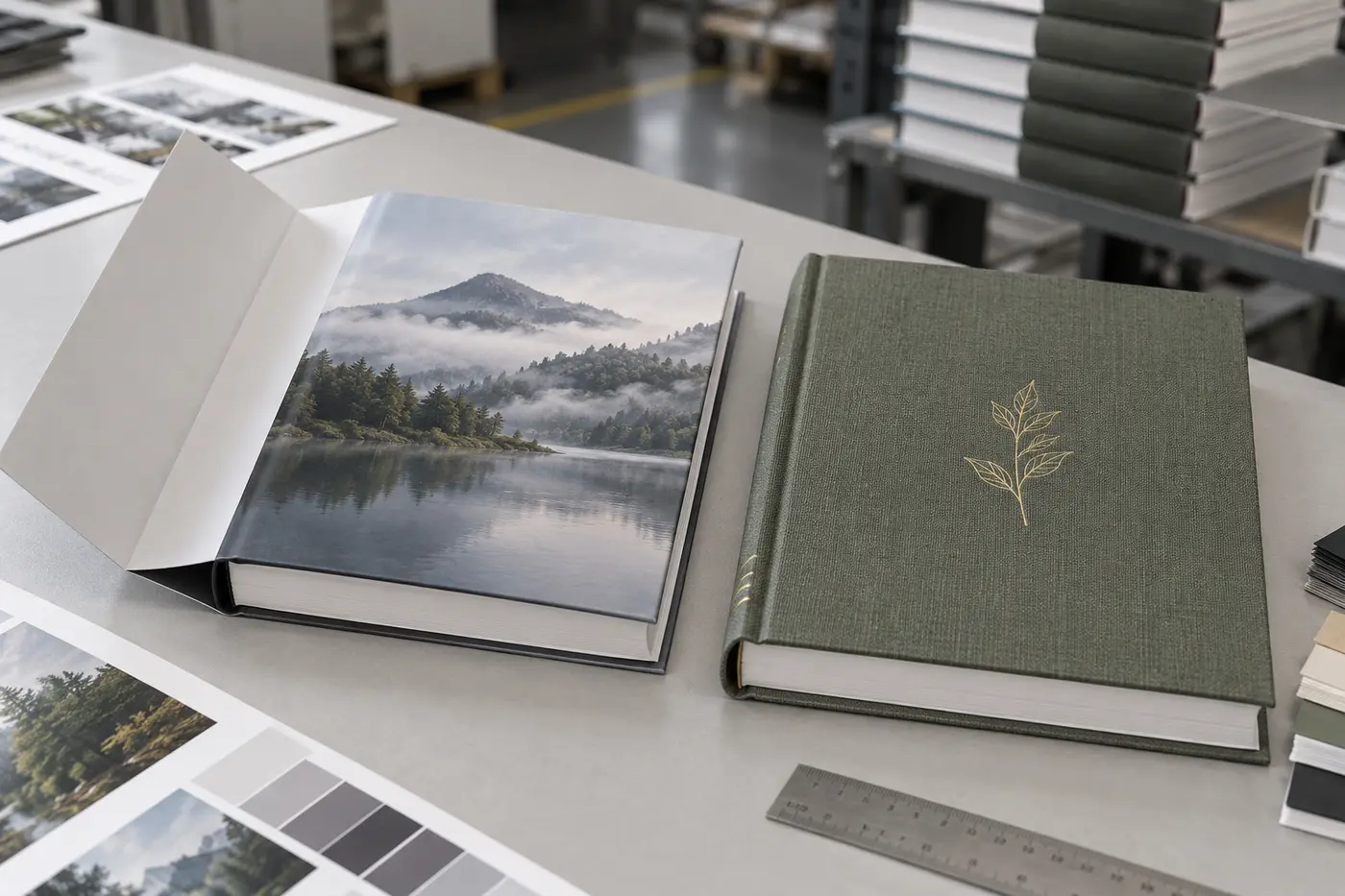
Compare the complete product, not only the loose jacket: the case material underneath changes both cost and perceived value.
Which Books Benefit Most from a Hardcover Book Dust Jacket?
Trade fiction and narrative nonfiction
A jacket gives retailers a familiar presentation and gives publishers room for a strong hook, reviews, pricing, and author credentials. It also allows the permanent case to remain restrained. For example, a cloth case with a small foil title can create a rewarding reveal after the reader removes the jacket.
Photography, art, and coffee-table books
These books depend on color, imagery, and display value. A large coated jacket can reproduce continuous photography across the front, spine, and back while the underlying case provides a different tactile experience. If your publication is image-led, compare this option with Prikoro’s art book printing and hardcover production choices.
Gift books and limited editions
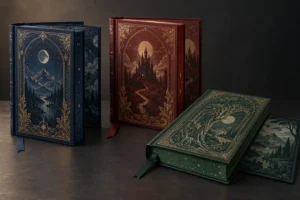
A dust jacket supports foil, embossing, spot UV, metallic inks, and special stocks. Still, it should be part of a deliberate edition architecture. A numbered collector book may deserve a cloth case, jacket, ribbon marker, and slipcase. A standard gift book may need only a well-laminated jacket over a printed or plain case.
When a jacket is usually the wrong choice
Children often remove jackets. Cooks handle books with wet or oily hands. Students put textbooks into bags repeatedly. In these settings, the loose jacket becomes a weak point. A laminated case wrap is normally easier to use and maintain.
Planning a hardcover edition? Send your size, page count, quantity, cover concept, and target retail position. We can compare a jacketed case with a printed case before you commit to artwork.
How a Hardcover Book Dust Jacket Changes Printing Cost
A hardcover book dust jacket adds more than paper. For example, it introduces a separate press form, coating or lamination, trimming, scoring, folding, fitting, and extra inspection. Therefore, the cost per copy normally falls as quantity rises because setup is spread across more units. However, a universal price table is misleading unless the book size, spine width, flap width, paper, colors, finish, quantity, and packing method are identical.
Use this model when comparing quotations:
Dust-jacket cost = prepress and press setup + paper + printing + surface finish + special finishing + scoring/folding + fitting + spoilage allowance.
| Cost driver | What increases cost | How to control it |
|---|---|---|
| Flat jacket size | Large trim size, wide spine, or deep flaps | Confirm the final spine before laying out the jacket. |
| Paper | Heavy, textured, imported, or specialty stock | Compare a standard coated sheet with a premium option using physical samples. |
| Surface protection | Anti-scuff or specialty film | Use premium film only when handling conditions justify it. |
| Decoration | Multiple foil dies, embossing, spot UV, or tight registration | Prioritize one high-impact finish and simplify secondary effects. |
| Quantity | Short runs carry setup across fewer books | Compare realistic quantity tiers rather than ordering excess inventory. |
| Packing | Loose jackets can rub or shift in transit | Specify fitted jackets, protective wrapping, and export carton requirements. |
Paper, Lamination, and Finishing
Coated art paper is the normal starting point because it reproduces photographs, solid colors, and small type cleanly. In addition, it accepts common protective finishes consistently. Common practical weights sit around 157–200 gsm, but the best choice depends on flat size, flap depth, book scale, grain direction, and finish. A heavier sheet is not automatically better: excessive stiffness can make the jacket spring away from the case or resist clean folding.
For a hardcover book dust jacket, matte lamination reduces glare and supports a refined appearance. Gloss lamination increases shine and apparent color saturation. Soft-touch film adds a velvety feel but may show handling marks, especially over dark solids. Anti-scuff matte film can be more practical for black, navy, or other mark-sensitive designs.
Before choosing a stock, review Prikoro’s paper types guide. Then request a physical dummy or finished sample when texture, stiffness, fold behavior, and color are commercially important.
Finishes that work well
- Foil stamping: useful for titles, borders, and small premium details.
- Embossing or debossing: adds relief but requires suitable paper and correct pressure.
- Spot UV: creates gloss contrast over matte film.
- Metallic or fluorescent ink: useful when a spot color must sit outside standard CMYK appearance.
- Textured paper: tactile and distinctive, but it may reproduce fine images less evenly and may not accept every lamination or coating.
How to Build the Dust-Jacket Artwork Correctly
First, do not design the final hardcover book dust jacket before the printer confirms the case size and spine. This is because the spine depends on the page count, paper thickness, folding scheme, sewing or binding method, and compression of the finished book block.
- Confirm the finished book size, page count, paper, binding, and case-board thickness.
- Ask the printer for a project-specific flat template.
- Build the file in this order: back flap, back panel, spine, front panel, front flap.
- Extend background artwork through the required bleed.
- Keep essential text away from trims, flap folds, spine folds, and hinge areas.
- Place the barcode on a quiet, scannable area at the correct final size.
- Supply images at effective print resolution and convert or manage color using the agreed workflow.
- Export the specified print-ready PDF and retain the packaged source file.
See Prikoro’s prepress artwork guidance before exporting your files. A template is a production specification, not a generic decoration guide; always use the version supplied for your final book.
Avoid rebuilding your cover after the spine changes. Share the interior PDF and paper choice first, and ask for the confirmed jacket template before final artwork.
A Practical Production Case: Choosing Between Two Premium Routes
Consider a publisher preparing a 1,000-copy illustrated history book for museum shops. The book will retail as a gift, but visitors will also handle display copies. This is a production scenario, not a claimed Prikoro customer order.
Route A uses a printed paper-over-board case with matte lamination. It keeps all artwork attached to the book and reduces the risk of display copies losing their jackets. Route B uses a cloth case with restrained foil stamping plus a laminated photographic jacket. It provides more marketing space and a stronger reveal when the jacket is removed.
The decision should not be made from unit price alone. The publisher should compare display handling, replacement needs, unboxing experience, retail price, packaging, and whether flap copy improves the sales story. A sensible proof plan is to make one physical dummy of each route, test shelf appearance under real lighting, handle both repeatedly, and scan the barcode before approving production.
This case illustrates a wider rule: the best cover system is the one that supports the book’s actual channel and use. It is not necessarily the option with the longest finishing list.
Dust-Jacket Quality-Control Checklist
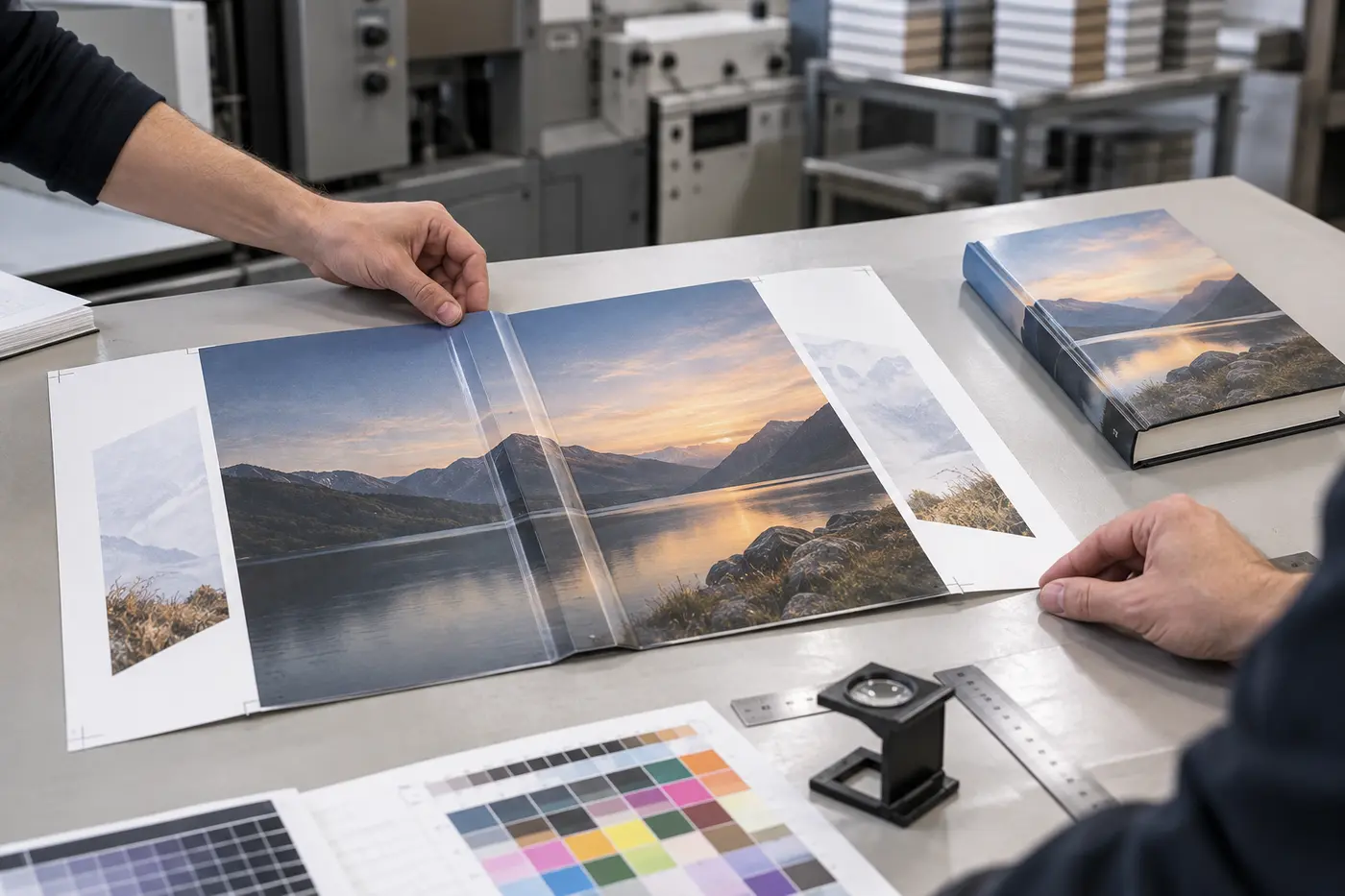
A hardcover book dust jacket production check should compare the flat printed jacket, approved proof, fold positions, and the fitted book.
- Front artwork is centered when the jacket is fitted.
- Spine type aligns with the book spine and does not drift onto either panel.
- Both flaps have consistent depth and fold squarely.
- Hinge areas flex without cracking, flaking, or whitening.
- Lamination has no silvering, bubbles, peeling, or trapped particles.
- Foil, embossing, or spot UV registers to the printed artwork.
- Dark solid areas resist ordinary handling marks at the agreed level.
- The barcode scans after printing and finishing.
- The jacket is snug enough to stay in place but not so tight that it bows the boards.
- Packed books do not rub, shift, or crush at the jacket edges.
What to Send for an Accurate Hardcover and Dust-Jacket Quote
Send all of the following in one brief:
- Finished trim size and orientation
- Page count and interior printing colors
- Interior paper type and weight
- Binding method and endpaper requirement
- Case material: printed wrap, cloth, imitation leather, or another stock
- Dust-jacket paper, flap width, lamination, and special finishes
- Quantity tiers you are genuinely considering
- Proofing requirement and target completion date
- Packing method, delivery city, postal code, and preferred Incoterm
- Target sales channel, retail price band, and handling environment
Explore Prikoro’s hardcover book printing options, or contact the printing team with your specifications.
Need a side-by-side specification? We can help you compare a printed case, cloth case with jacket, and slipcased edition using the same trim size and quantity.
Frequently Asked Questions
Does every hardcover book need a dust jacket?
No. A hardcover book dust jacket is useful for retail communication and a removable premium layer, but case wraps are often better for books that face frequent handling, stains, or rough use.
Does a dust jacket protect a hardcover book?
It protects the case from some dust, dirt, light rubbing, and scuffing. It does not protect every edge or provide the structural support of a fitted slipcase or preservation box.
What paper is best for a dust jacket?
Coated art paper around 157–200 gsm is a common starting range. The final choice must suit the jacket’s flat size, fold behavior, grain direction, finish, and desired stiffness.
Should a dust jacket be matte or gloss?
Choose matte for lower glare and a restrained appearance. Choose gloss for high shine and stronger visual saturation. Dark matte designs may benefit from an anti-scuff film.
Can you add foil or embossing to a dust jacket?
Yes. Foil, embossing, debossing, and spot UV are possible when the paper, lamination, artwork, and registration tolerances are compatible. A physical proof is valuable for complex combinations.
How wide should dust-jacket flaps be?
There is no universal width. Flaps must be deep enough to stay fitted and hold the required copy, while remaining compatible with the book size and folding equipment. Ask the printer for a final template.
Can I print the same artwork on the case and jacket?
You can, but identical artwork often wastes the opportunity to create a layered experience. Many premium books use a restrained case and a more descriptive jacket.
Is a slipcase better than a dust jacket?
A slipcase normally provides more edge protection and stronger presentation, but it adds material, assembly, weight, packing volume, and cost. Collector editions may use both.
Final Recommendation
Choose a hardcover book dust jacket when it earns its place: stronger shelf communication, useful flap content, edition flexibility, or a deliberate premium reveal. Choose a printed case when permanent durability and easy handling matter more. For high-value books, compare a cloth case plus jacket with a slipcase rather than assuming the jacket alone provides maximum protection.
Before approving production, request the final template, a color proof, and a fitted physical sample. Those three checks reveal problems that a screen preview cannot show.
Sources and Further Reading
- NEDCC: Custom Protective Enclosures — practical guidance on jackets, abrasion, dirt, and protective enclosures.
- NEDCC: Storage and Handling for Books — explains when fitted enclosures provide structural and environmental protection.
- Prikoro: Prepress Artwork — file preparation guidance for custom printing.