How much does it cost to print a magazine? The honest answer is that the total depends on quantity, page count, trim size, paper, color, binding, finishing, proofing, packaging, and delivery. As a practical planning range—not a live Prikoro quotation—a 32–64-page full-color magazine may budget roughly $2–$8 per copy at 500 copies, $1–$4 at 1,000 copies, and $0.60–$2.50 at 5,000 copies. Premium paper, perfect binding, special finishes, individual mailing, or air freight can raise the landed cost substantially.
Key Takeaways
- Quantity usually changes unit cost more than any other variable because setup spreads across more copies.
- Page count must normally fit the printer’s signature or production plan; adding four pages can be cheaper than forcing an inefficient configuration.
- Saddle stitching suits thinner magazines, while perfect binding adds a printable spine and a more substantial feel.
- Paper affects price, postage, opacity, image character, durability, and environmental profile at the same time.
- The cheapest factory price is not necessarily the cheapest landed option. Include proofs, overs, packaging, freight, duties, mailing, storage, and waste.
- A press-ready PDF, approved physical proof, and written tolerance plan reduce expensive reprints.
How Much Does It Cost to Print a Magazine? Cost at a Glance
For example, the following ranges are useful for early feasibility work. They are illustrative planning allowances in US dollars, dated September 2026, rather than published Prikoro prices. They assume a common portrait format, four-color process printing, standard commercial paper, ordinary packing, and no unusual handwork. Market, destination, schedule, exchange rates, and specification can move the result.
| Quantity | Typical production fit | Illustrative unit allowance | What usually drives the range |
|---|---|---|---|
| 50–100 | Digital print or print-on-demand | $8–$25+ | Very high setup share; economical only when inventory risk matters most |
| 250 | Digital or efficient short-run production | $4–$12 | Paper, page count and binding dominate |
| 500 | Digital or offset, depending on plant | $2–$8 | Setup begins to spread; freight remains meaningful |
| 1,000 | Often offset-compatible | $1–$4 | Specification efficiency and press format matter |
| 5,000 | Offset lithography | $0.60–$2.50 | Paper tonnage, finishing and transport drive the total |
| 10,000+ | Offset with optimized procurement | Quote project by project | Distribution plan and freight can rival production savings |
Therefore, use ranges only to decide whether an idea is viable. Therefore, a purchasing decision needs an itemized quote based on final files, delivery address, deadline, and packing instructions.
The Complete Magazine Cost Formula
Next, divide the landed total by usable copies. If the printer delivers 2,000 copies but 50 become samples, replacements, or transit damage allowance, your commercial denominator may be 1,950. That distinction makes subscription and retail margin calculations more realistic.
| Cost bucket | Mostly fixed or variable? | Questions to ask |
|---|---|---|
| Prepress and proofing | Mostly fixed | Are file checks, one digital proof, a contract proof, and corrections included? |
| Plates and press setup | Fixed | How many forms, colors and makereadies does the job require? |
| Paper and ink | Variable | Which grade, weight, finish, certification and waste allowance apply? |
| Binding and finishing | Mixed | Does the quote include scoring, lamination, spot UV, trimming and packing? |
| Logistics | Variable | Is delivery door-to-door, port-to-port, or ex-works? Who pays duties? |
| Contingency | Planning reserve | Can the schedule tolerate reproofing or a slower freight mode? |
Quantity: Why Unit Cost Falls, Then Flattens
First, every print run carries costs before the first saleable copy exists: file preparation, imposition, calibration, plates or digital setup, press wash-up, binding setup, and quality checks. Consequently, 2,000 copies rarely cost twice as much as 1,000. However, savings eventually flatten because paper, finishing, cartons, freight, and fulfilment still increase with every copy.
How Much Does It Cost to Print a Magazine: Digital Versus Offset?
| Decision factor | Digital printing | Offset lithography |
|---|---|---|
| Best fit | Very short runs, tests, regional versions, urgent replenishment | Medium and long runs with stable files |
| Setup | Lower; no conventional plates | Higher; plates and makeready required |
| Unit economics | Relatively stable per copy | Falls sharply as fixed costs spread |
| Color control | Consistent, but device gamut varies | Excellent process control and spot-color options |
| Versioning | Strong for variable or segmented content | Best when every copy is identical |
Importantly, there is no universal crossover quantity. Instead, ask the printer to price at least three quantities on one specification—for example 500, 1,000, and 2,500. Then compare both the incremental cost and the likelihood that extra stock will sell. Unsold inventory has a real cost even when its unit printing price looks attractive.
Trim Size, Page Count and Imposition
In practice, standard trim sizes use press sheets and paper more efficiently. A custom size may still be the right editorial choice, but a few millimeters can change how many pages fit a sheet. Ask the printer for the nearest economical trim before design becomes locked.
Likewise, saddle-stitched magazines normally use page counts divisible by four because each folded sheet creates four pages. Perfect-bound interiors also work through signatures, although production combinations can be more flexible. Blank pages, gatefolds and inserts must be planned, not discovered at preflight.
| Specification change | Likely cost effect | Editorial trade-off |
|---|---|---|
| Use a printer-friendly standard trim | Often reduces waste | Less distinctive than a custom shape |
| Reduce 64 pages to 56 or 48 | Less paper, ink and freight | Requires tighter editing or smaller advertising inventory |
| Add a gatefold | Extra stock, folding and handwork | High-impact reveal or advertising space |
| Increase format size | May use more sheets and heavier cartons | Stronger visual presence and larger photography |
Before export, follow a controlled artwork workflow. Prikoro’s artwork preparation guidance helps teams check bleed, safe areas, image resolution, fonts and color settings. Adobe also explains that bleed extends artwork beyond the final trim so small cutting variations do not create white edges.
How Much Does It Cost to Print a Magazine with Different Paper?
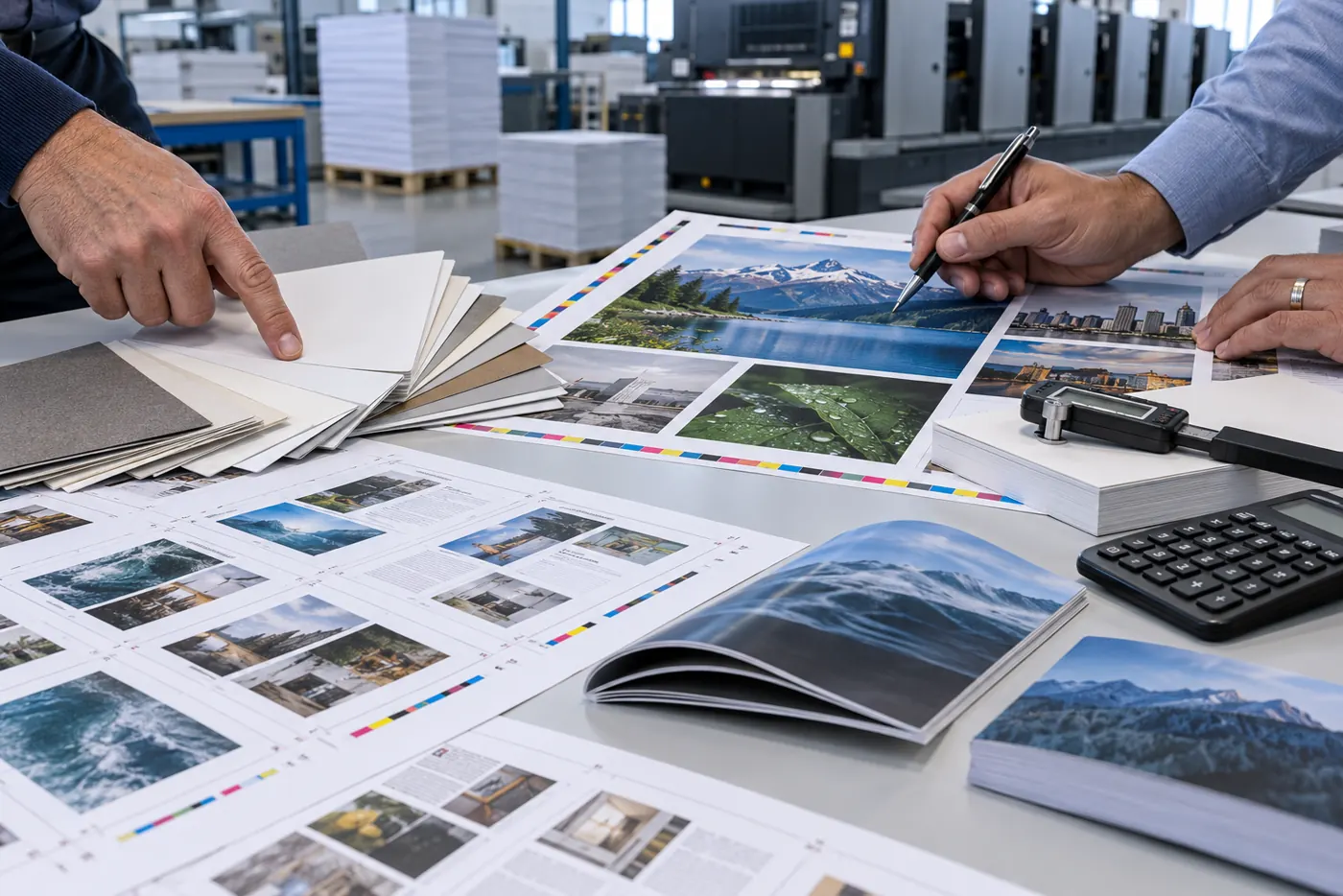
Meanwhile, paper is both a manufacturing input and part of the product. A glossy coated sheet can heighten contrast and photographic detail. A matte coated sheet reduces glare and feels refined. An uncoated sheet offers tactile warmth and easy writing, although images generally appear softer. Higher opacity can prevent show-through without automatically choosing the heaviest stock.
| Component | Economical starting point | Premium direction | Cost watch-out |
|---|---|---|---|
| Interior | Standard coated or uncoated text stock | Higher-opacity, recycled or specialty sheet | Availability and minimum purchase quantities |
| Cover | Self-cover or heavier cover stock | Thick cover with matte/gloss lamination | Scoring may be needed to prevent cracking |
| Color | CMYK process throughout | Spot colors or extended gamut where justified | Every extra ink and pass adds setup |
| Sustainability | Efficient size and responsible sourcing | Verified recycled content or certified chain of custody | Certification claims must match the actual order |
Nevertheless, do not select stock from a screen. Request physical samples and, when color is critical, approve a contract proof under controlled light. Moreover, calculate mailing weight before committing to paper: a luxurious heavier sheet may increase postage across every subscriber copy.
How Much Does It Cost to Print a Magazine with Different Binding?
For example, saddle stitching folds nested sheets and secures them with wire staples. It is efficient for thinner publications and opens well. Perfect binding mills the spine edge and glues pages into a wraparound cover; it supports thicker magazines and provides a printable spine. For a closer technical comparison, review Prikoro’s perfect-bound printing options and magazine printing service.
| Option | Best for | Budget effect | Production note |
|---|---|---|---|
| Saddle stitch | Thin magazines, programs and newsletters | Usually lowest binding cost | Page count and paper thickness limit feasibility |
| Perfect binding | Thicker editorial and retail magazines | Higher setup and binding cost | Needs enough spine width; allow for hinge and gutter |
| Wire-O | Reference publications that must lie flat | Higher component and handling cost | Visible wire changes shelf and mailing behavior |
| Spot UV or foil | Premium covers and special issues | Tooling plus per-sheet charge | Supply a separate, accurate mask file |
| Lamination | Durable covers | Moderate additional cost | Protects ink and changes tactile character |
Therefore, use special finishes with a purpose. A single foil title or selective gloss area often creates more perceived value than covering the entire cover. Conversely, several finishes may add production passes, spoilage, drying time, and scheduling risk.
How Much Does It Cost to Print a Magazine After Freight and Mailing?
In addition, a factory quote can omit the expenses that determine whether a project makes money. Therefore, specify the trade term, destination, delivery access, carton labeling, pallet requirements, and split shipments before comparing suppliers. Air freight can rescue a launch date but erase production savings. Sea or rail can lower cost, yet they require a longer and more resilient schedule.
| Often-missed item | Why it matters | How to control it |
|---|---|---|
| Overs and unders | Final delivered quantity can vary | Agree tolerance and billing method in writing |
| Carton and pallet limits | Heavy cartons increase damage and handling | Define maximum carton weight and labels |
| Duties and taxes | Depend on destination and import structure | Confirm responsible party and obtain local advice |
| Addressing/polybagging | Adds data, material and fulfilment work | Clean mailing data and test the finished pack |
| Storage | Cheap extra copies can become expensive inventory | Model sell-through and replenishment |
| Reprints | Errors multiply across the whole run | Use preflight, proofs and signed approvals |
For U.S. subscription distribution, consult the current USPS rules rather than assuming every magazine qualifies for Periodicals pricing. Eligibility, frequency, records, content, application, preparation and addressing requirements can affect the economics. The USPS Publication 417 is a useful official starting point.
Three Worked Magazine Budget Examples
For clarity, these examples demonstrate a repeatable method. They are not quotations, guarantees, or market averages. All numbers are hypothetical USD planning inputs so that you can replace each line with supplier data.
| Scenario | Specification | Illustrative calculation | Planning result |
|---|---|---|---|
| Community launch | 500 copies, 32 pages plus cover, 8.5 × 11 in, CMYK, saddle stitch | $1,900 production + $250 proof/prepress + $450 delivery + $200 reserve | $2,800 total / 500 = $5.60 each |
| Quarterly brand magazine | 2,000 copies, 64 pages plus cover, coated text, perfect bound, matte cover | $4,900 production + $350 proof/prepress + $1,050 freight + $450 reserve | $6,750 total / 2,000 = $3.38 each |
| National association issue | 10,000 copies, 48-page self-cover, efficient trim, saddle stitch | $9,800 production + $500 proof/prepress + $3,200 freight/handling + $900 reserve | $14,400 total / 10,000 = $1.44 each |
Notably, a larger run lowers unit production cost, yet total cash exposure rises. Consequently, the right quantity is the one that balances unit economics, demand confidence, storage, and working capital.
A Documented Real-World Case: Delayed Gratification
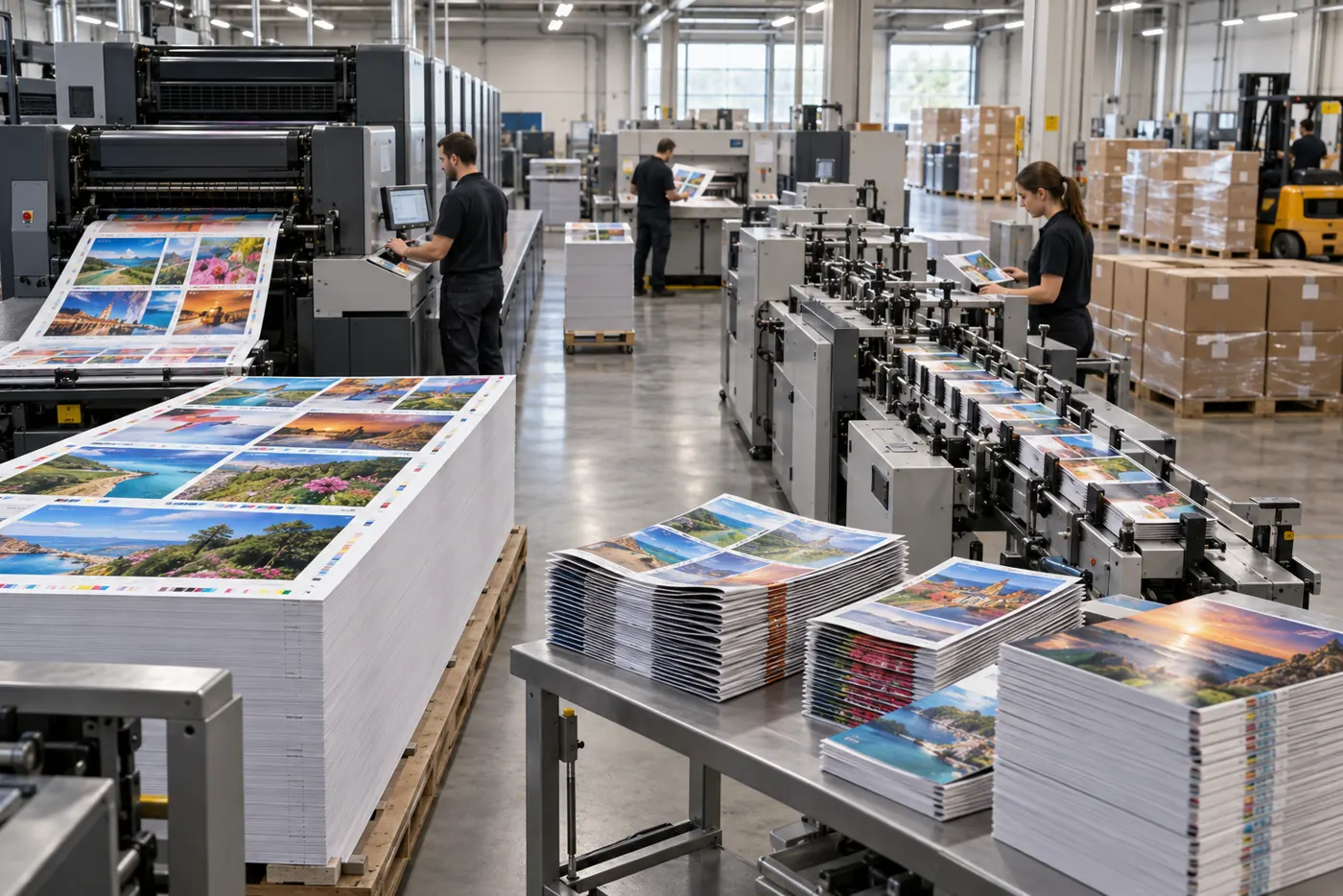
However, the transferable lesson is not a secret print price—the publisher does not publish a printer invoice. Instead, the case demonstrates a sound budgeting principle: match production specification to the magazine’s promise. A premium, keepable quarterly may justify better stock and binding; a high-frequency member bulletin may gain more from lighter paper, saddle stitching, and lower postage. This interpretation is our analysis based on the publication’s publicly described model, not a claim about its confidential manufacturing costs.
How to Reduce Magazine Printing Cost Without Making It Look Cheap
- Ask for the printer’s economical trim. A small size adjustment may improve sheet yield.
- Price three quantities. Compare cash outlay and realistic sell-through, not only unit price.
- Edit by signatures. Remove or add pages in efficient increments rather than leaving avoidable blanks.
- Keep one process-color workflow. Use CMYK creatively before adding spot inks.
- Spend on one visible upgrade. A tactile cover can carry more impact than several minor finishes.
- Separate urgent and non-urgent stock. Airfreight a launch quantity and send the balance by a slower mode when the math supports it.
- Proof early. Correcting a file costs far less than replacing a run.
- Standardize recurring issues. Reuse trim, paper family and packing rules while refreshing editorial design.
- Compare landed totals. Normalize every supplier quote to the same destination and scope.
What to Send for an Accurate Magazine Printing Quote
| Required detail | Example | Why the printer needs it |
|---|---|---|
| Finished size and orientation | 210 × 297 mm, portrait | Determines imposition and sheet use |
| Page count | 64 interior pages + 4-page cover | Defines forms, spine and binding |
| Quantity and overs | 2,000 finished copies; no billed overs without approval | Controls procurement and unit price |
| Paper | Interior and cover grade, weight, finish and certification | Paper can be the largest material input |
| Printing and binding | 4/4 CMYK, perfect bound | Defines press and finishing route |
| Cover finish | Matte lamination outside only | Changes tooling, schedule and durability |
| Proof | Contract color proof plus folded dummy | Sets approval standard |
| Packing and delivery | Max 12 kg cartons, labeled by issue, delivered to ZIP/postcode | Produces a comparable landed quote |
| Deadline | Must arrive by a stated date | Determines production slot and freight mode |
Finally, send the same brief to every supplier. If you are still deciding between magazine and catalogue formats, Prikoro’s catalogue printing page provides another useful production reference. You can also browse the printing knowledge center or contact Prikoro with your specification.
Frequently Asked Questions
How much does it cost to print a 32-page magazine?
For planning only, a standard full-color 32-page magazine might fall near $2–$8 per copy at 500 copies and $1–$4 at 1,000 copies. Paper, cover, binding, proofing and destination can move the result, so request an itemized quote.
How much does it cost to print 1,000 magazines?
A reasonable early allowance is roughly $1,000–$4,000 for standard production, before unusual finishes, individual mailing, duties or premium freight. A thick perfect-bound issue can cost more; a lean saddle-stitched specification can cost less.
Is it cheaper to print magazines digitally or by offset?
Digital printing usually wins for very small or versioned runs because setup is low. Offset often produces a lower unit cost for larger identical runs. Ask one capable supplier to compare both routes on your exact specification.
What is the cheapest magazine binding?
Saddle stitching is usually the most economical mainstream option. However, it works best within practical thickness limits and page counts divisible by four. Perfect binding costs more but provides a square spine and premium shelf presence.
Does reducing page count always save money?
Usually, but not proportionally. Savings depend on signature structure, press format and binding. Ask which nearby page count uses the production format most efficiently before cutting content.
How does paper weight affect magazine cost?
Heavier paper increases material use and shipment weight. It may also require scoring, different binding settings or stronger packing. Opacity and bulk can sometimes deliver the desired feel without selecting the heaviest sheet.
Should I include shipping in cost per copy?
Yes. Use landed cost per usable copy for business decisions. Include freight, insurance, duties, local delivery, fulfilment, storage and expected waste in addition to manufacturing.
How much bleed should a magazine file have?
The printer’s template controls. A common requirement is 3 mm or 0.125 inch beyond trim, but never assume: confirm the exact bleed, safe area, spine and export settings before final artwork.
How can I compare magazine printing quotes?
Issue one written specification, normalize currency and trade terms, and create an itemized comparison. Confirm paper identity, quantity tolerance, proofs, finishes, packing, delivery, tax and schedule instead of comparing headline totals.
How can Prikoro provide an accurate quote?
Provide finished size, page count, quantity, paper, color, binding, finishes, proof requirements, packaging, destination and required arrival date. A PDF or reference images help the estimator identify production risks.
Final Cost-Planning Advice
Ultimately, when deciding how much does it cost to print a magazine, the best magazine is not the one with the lowest press invoice. It is the one whose editorial value, physical specification, quantity and delivery plan work together. First define the reader and distribution model. Next obtain a structural dummy and paper samples. Then compare itemized landed quotes and approve a meaningful proof. This sequence protects both the publication and the budget.
Sources and Further Reading
- Adobe: printer’s marks and bleed setup
- USPS Publication 417: Periodicals eligibility and mailing overview
- Delayed Gratification / Slow Journalism: publication model
- Forest Stewardship Council: FSC labels and claims