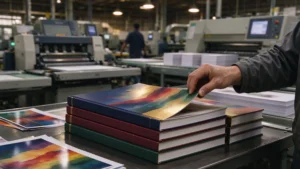
Producing a pop-up book is harder than printing an ordinary picture book. Every fold, cut and glue point must move reliably, and a small structural error can stop an entire spread from opening. The safest approach is to compare manufacturers with verified paper-engineering, die-cutting, assembly and inspection capabilities before approving a production run.
The best pop-up book manufacturers in China combine paper engineering, offset printing, precision die-cutting, folding, hand assembly and movement testing. The ten options below suit different projects, from children’s novelty books to premium promotional editions. Your best choice depends on mechanism complexity, safety requirements, quantity, proofing and delivery.
This guide compares nine newly researched suppliers plus Prikoro. You will also find a manufacturer comparison, production process, procurement checklist and practical questions to use before requesting quotations.
Top 10 Pop-Up Book Manufacturers in China
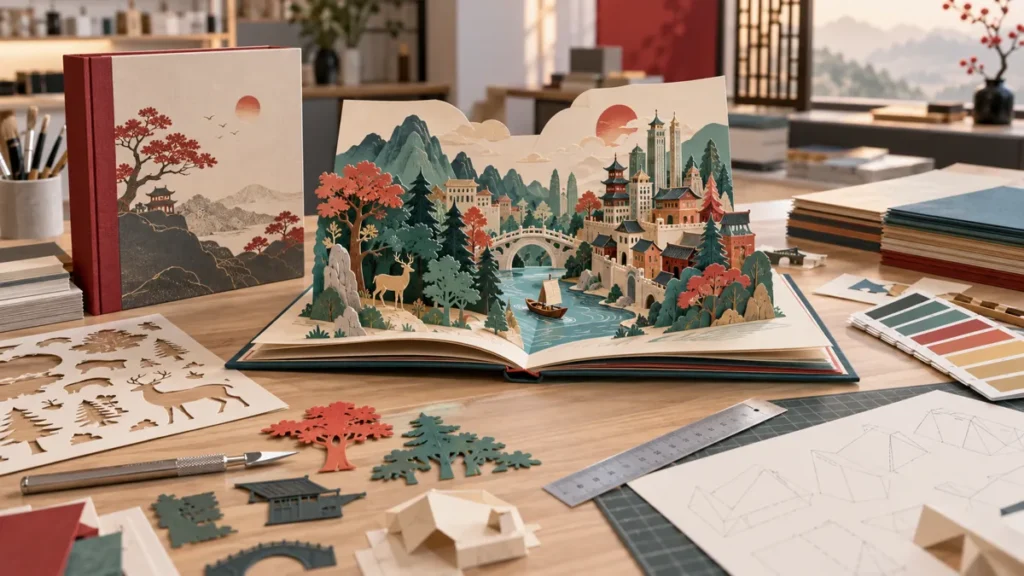
A pop-up book is a movable publication in which folded, cut or layered paper mechanisms rise, rotate or slide as the reader opens a page. Manufacturing therefore requires both graphic printing and structural paper engineering. A capable supplier must control paper grain, scoring, die-cut registration, folding, gluing, binding and repeated movement.
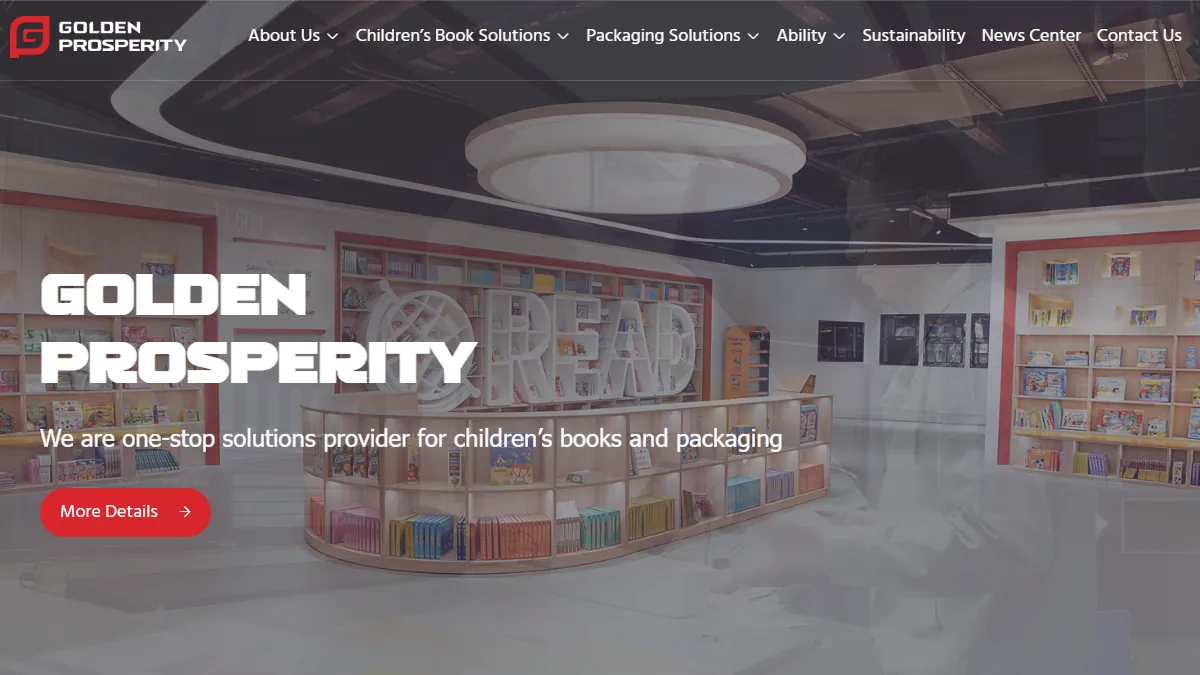
1. Golden Prosperity
Golden Prosperity presents pop-up books as part of its children’s-book manufacturing operation, including V-folds, pull tabs, sensory features and optional sound or light modules. It is a relevant candidate when your project needs paper engineering and several interactive technologies coordinated through one production workflow.
At a Glance
- Location: China; confirm the production site with the supplier
- Main Products: Pop-up books, children’s books, novelty books and interactive products
- Best For: Complex multi-sensory or high-volume children’s book projects
- Confirm Before Ordering: Paper-engineering scope, testing standards, MOQ and assembly capacity
- Website: Golden Prosperity
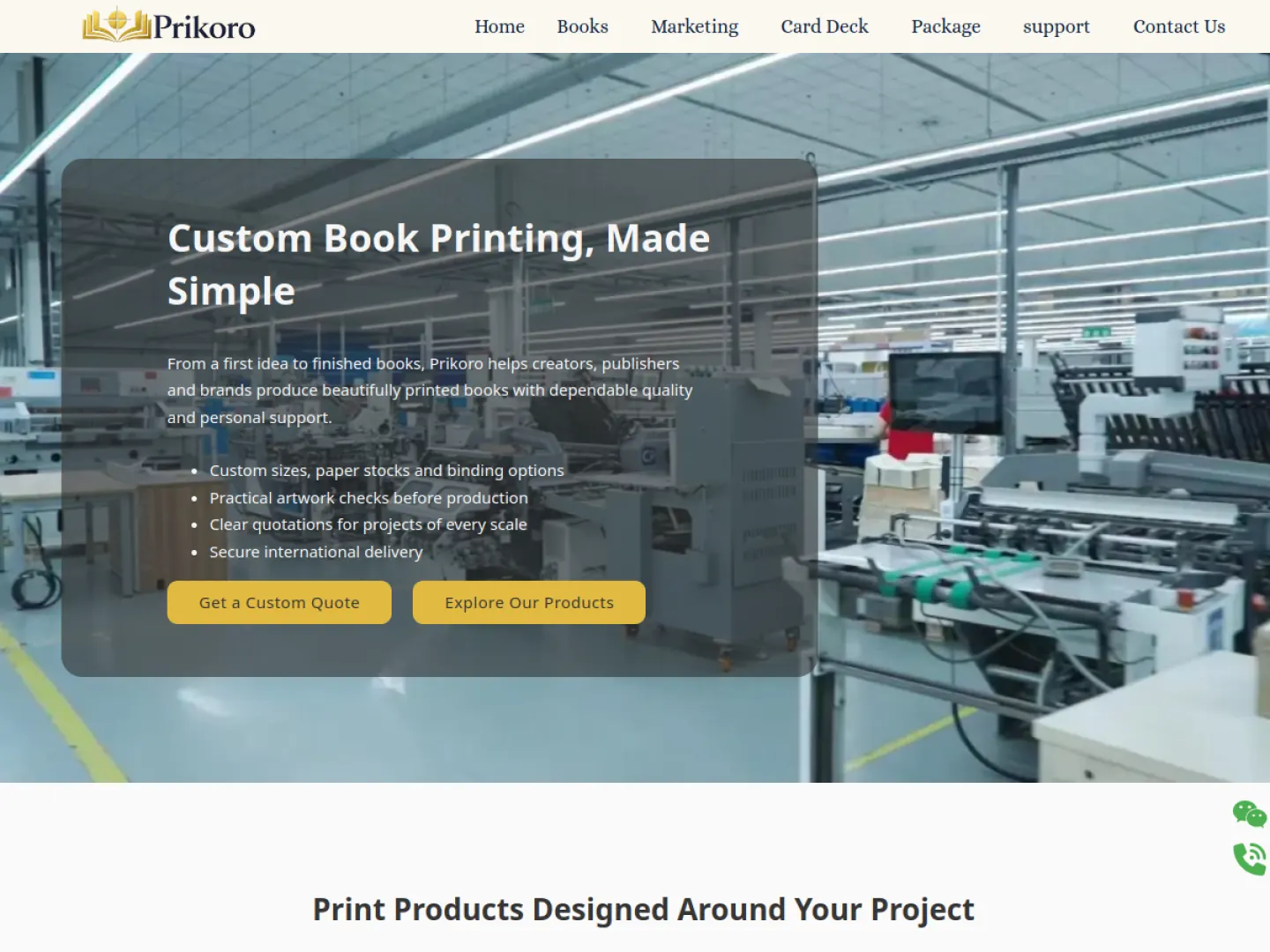
2. Prikoro
Prikoro can coordinate custom book printing, paper selection, hardcover construction, finishing, proofing, production and delivery for interactive book projects. It is especially useful when you want one team to review the printed book, structural dummy and packaging specification together.
At a Glance
- Location: China
- Main Products: Custom books, children’s books, packaging and printed paper products
- Best For: Publishers and brands needing coordinated custom production
- Confirm Before Ordering: Mechanism count, paper-engineering files, sample stages, quantity and destination
- Website: Prikoro
3. KP Printed
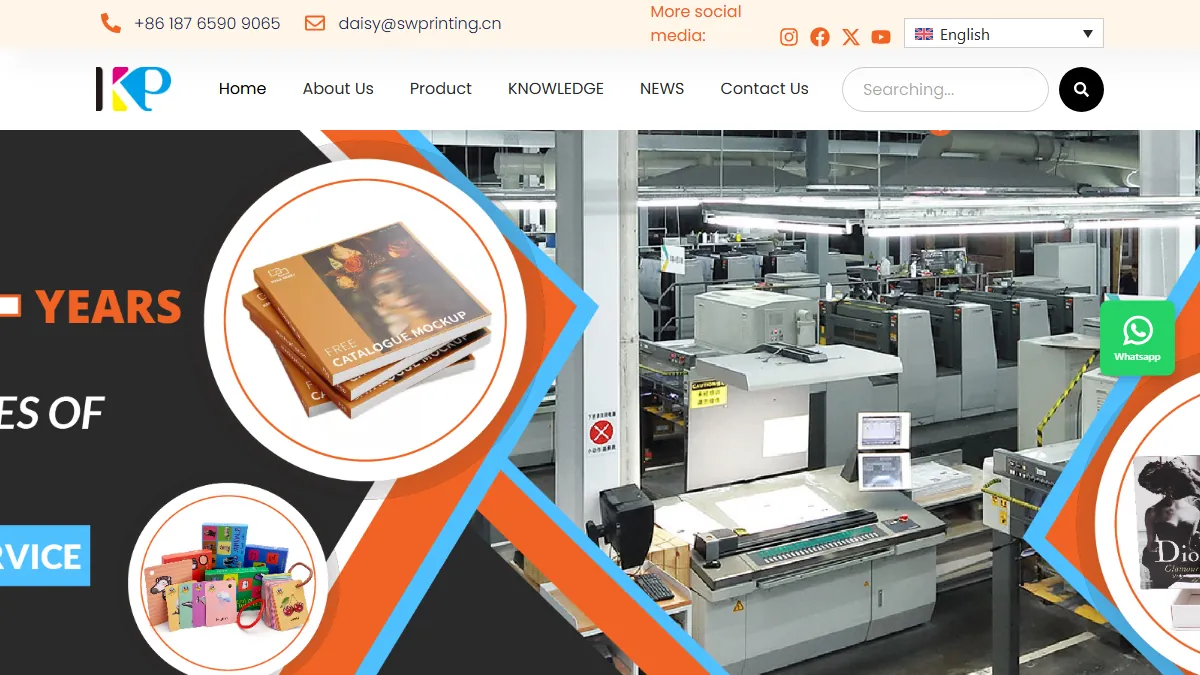
KP Printed lists pop-up, flap, sound, sticker and touch-and-feel books within its Qingdao printing range. The company is worth comparing for a novelty-book series that may use more than one interactive format, but the quotation should clearly separate structural development, tooling, sample and mass-production charges.
At a Glance
- Location: Qingdao, Shandong, China
- Main Products: Pop-up books, board books, flap books, sound books and boxes
- Best For: Multi-format children’s book ranges
- Confirm Before Ordering: Engineering charges, tooling ownership, proof revisions and lead time
- Website: KP Printed
4. Ningbo Haigong Printing
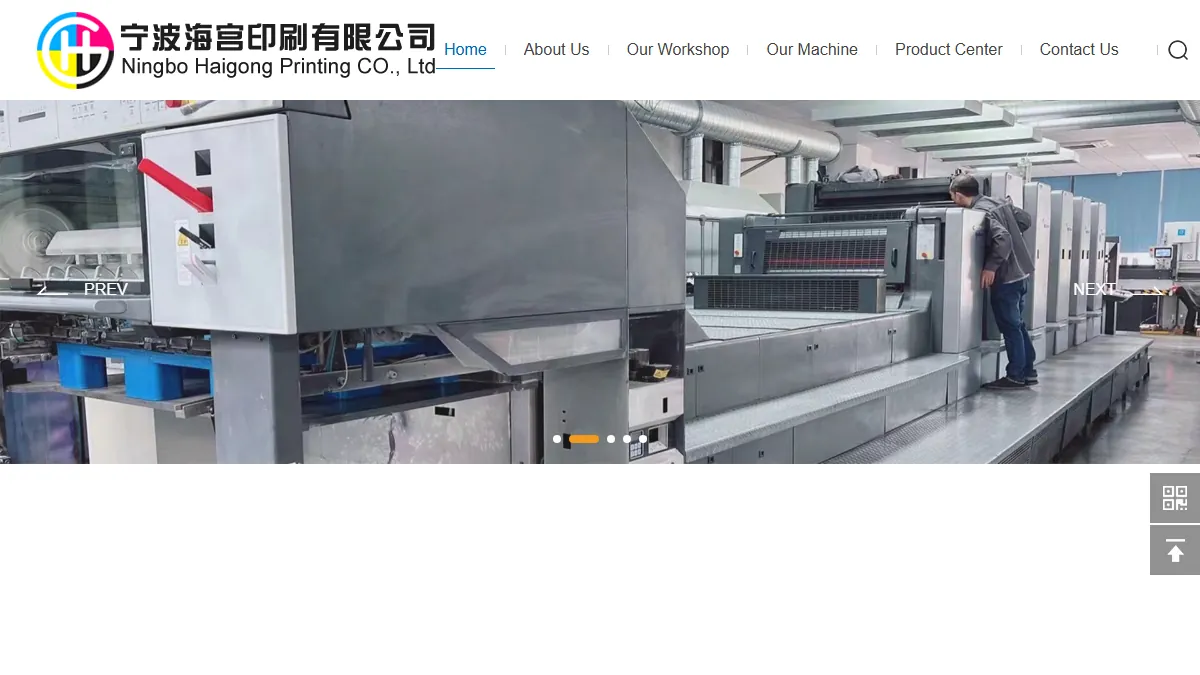
Ningbo Haigong Printing lists custom pop-up and sound books alongside conventional books and paper products. Its manufacturing location in Cixi may suit buyers seeking a Zhejiang supplier, although structural design support, manual assembly steps and child-product testing should be confirmed for the exact title.
At a Glance
- Location: Cixi, Ningbo, Zhejiang, China
- Main Products: Pop-up books, sound books, children’s books, notebooks and paper products
- Best For: Printed novelty books with standardised mechanisms
- Confirm Before Ordering: Paper engineer involvement, assembly method, safety testing and MOQ
- Website: Ningbo Haigong Printing
5. Tung Wing
Tung Wing focuses on sound books and also presents OEM pop-up sound books combining three-dimensional scenes with electronic audio modules. It is a specialised option when sound, buttons and paper mechanisms must work together, but buyers should define battery, volume, drop-test and market-compliance requirements before sampling.
At a Glance
- Location: Shenzhen, Guangdong, China
- Main Products: Pop-up sound books, baby sound books and electronic book modules
- Best For: Interactive books combining sound and pop-up structures
- Confirm Before Ordering: Electronic specifications, battery compliance, testing reports and repair policy
- Website: Tung Wing
6. Main Choice
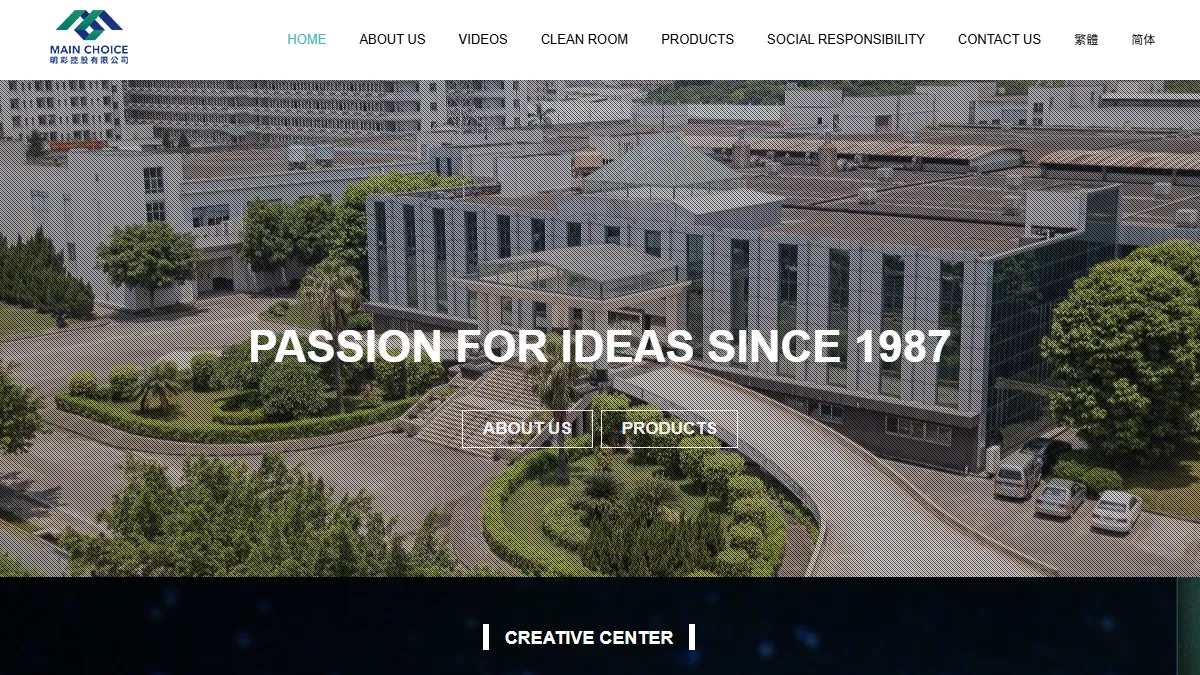
Main Choice describes a dedicated creative centre for pop-up books and structural packaging, supported by paper engineers and a Dongguan factory. It is a strong quotation candidate for design-intensive projects where paper mechanics must be refined before tooling, printing and manual assembly begin.
At a Glance
- Location: Hong Kong with manufacturing in Dongguan, Guangdong, China
- Main Products: Pop-up books, children’s books, greeting cards and structural packaging
- Best For: Mechanically complex books requiring paper-engineering development
- Confirm Before Ordering: Design ownership, prototype rounds, tooling storage and production allocation
- Website: Main Choice
7. Dakings Printing
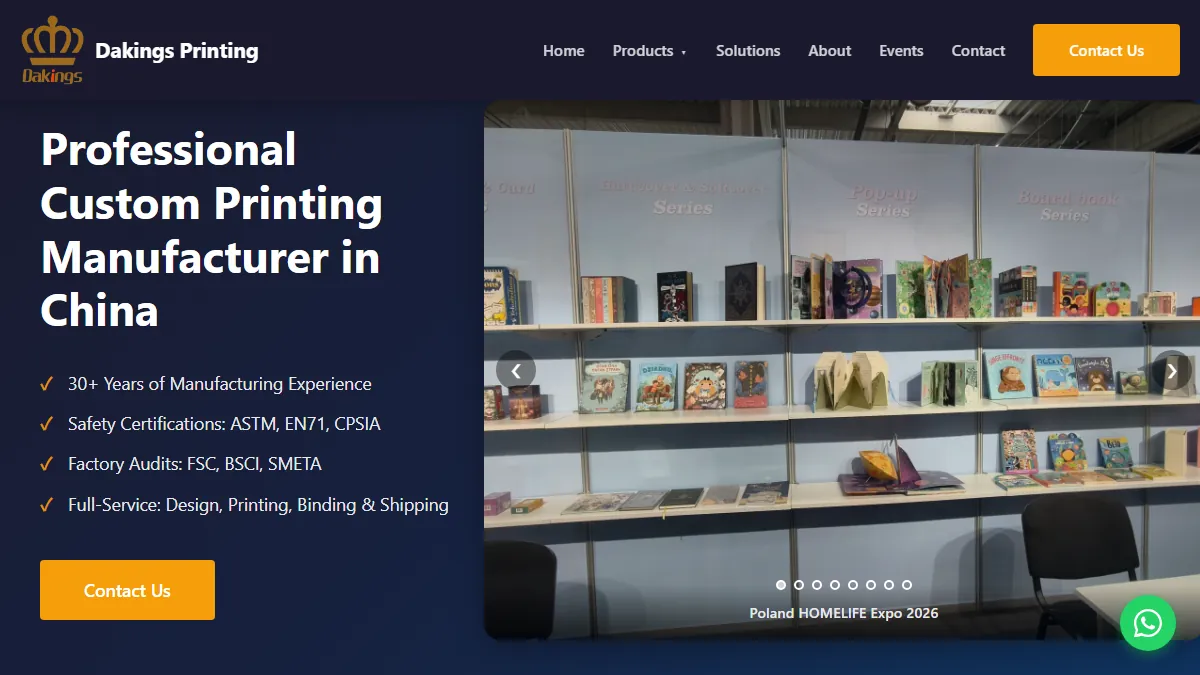
Dakings Printing lists pop-up books within a wider portfolio covering children’s books, board books, activity products, games and packaging. It may suit buyers consolidating a book and its retail box, provided the approved dummy shows every fold, glue point and moving part rather than only printed colour.
At a Glance
- Location: Guangzhou, Guangdong, China
- Main Products: Pop-up books, children’s books, board books, activity books and packaging
- Best For: Complete children’s products combining books and packaging
- Confirm Before Ordering: Structural sample, paper stock, inspection frequency and certification scope
- Website: Dakings Printing
8. Runsheng Printing
Runsheng Printing lists pop-up book production with paper engineering, die-cutting, hand assembly and production support. The company is suitable for comparison when you already have artwork and mechanism concepts but need a manufacturer to review manufacturability, tolerances and packing.
At a Glance
- Location: China; confirm the factory address with the supplier
- Main Products: Pop-up books, children’s books, books, notebooks, packaging and cards
- Best For: Specification-led interactive book projects
- Confirm Before Ordering: Factory location, paper engineer review, capacity and QC documentation
- Website: Runsheng Printing
9. Shanghai Chenyi Craft
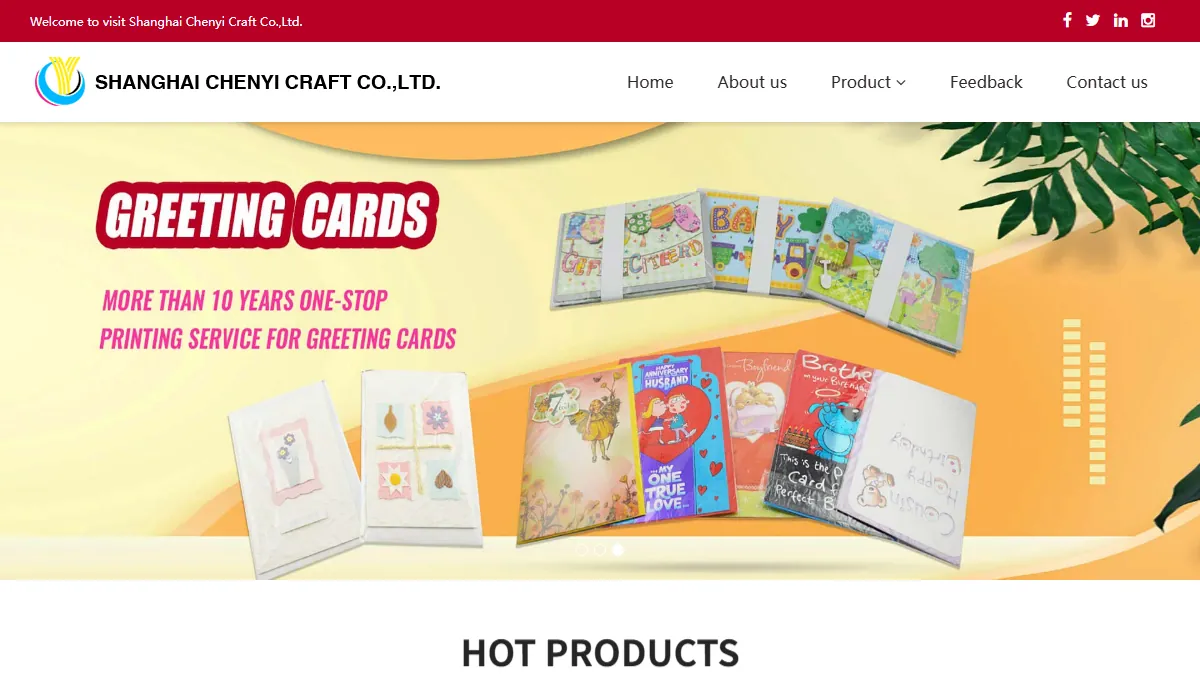
Shanghai Chenyi Craft supplies children’s pop-up, board, touch-and-feel, sound and puzzle books, plus packaging and board-game products. Its range makes it relevant for interactive learning sets, but the buyer should confirm which production steps are completed in-house and which are subcontracted.
At a Glance
- Location: Shanghai, China
- Main Products: Pop-up books, board books, sound books, puzzles, games and boxes
- Best For: Interactive book-and-activity sets
- Confirm Before Ordering: In-house processes, component sourcing, inspection plan and export packing
- Website: Shanghai Chenyi Craft
10. Huaxin Printing
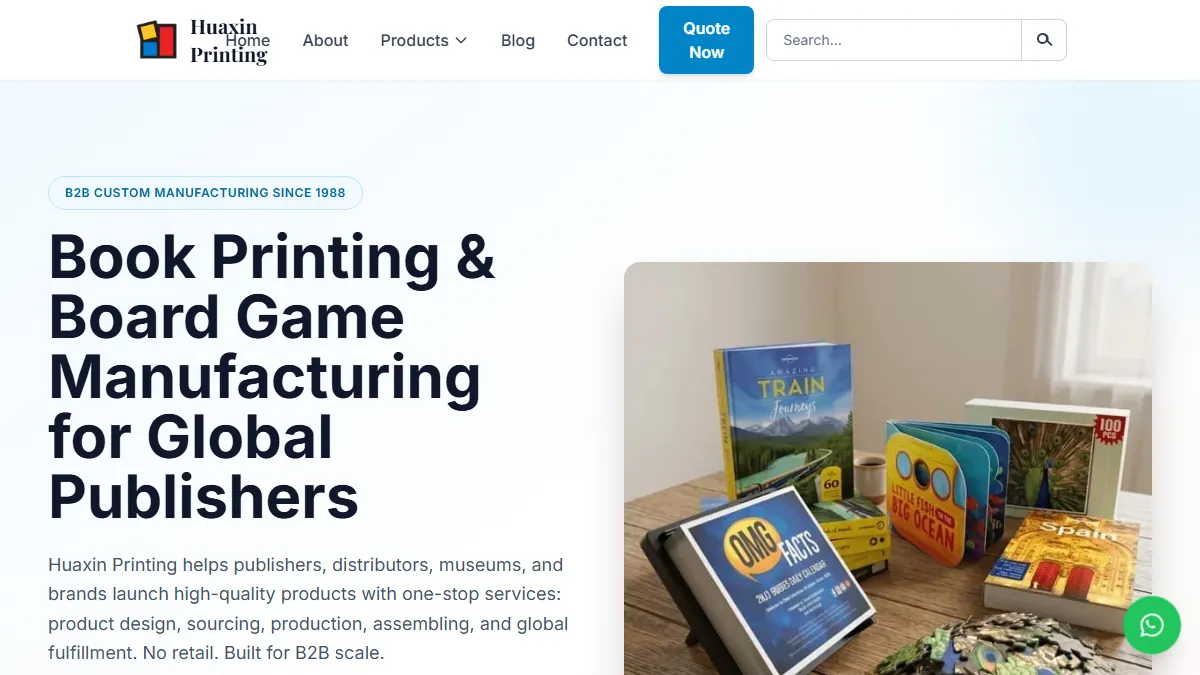
Huaxin Printing offers pop-up book production covering dieline review, dummy samples, paper selection, printing, die-cutting, folding, assembly, movement checks and export packing. It is a useful option for publishers who need the manufacturer to review both structural files and production risks before mass manufacture.
At a Glance
- Location: Shenzhen, Guangdong, China
- Main Products: Pop-up books, children’s books, general books and board games
- Best For: Publishers requiring structured prepress and prototype review
- Confirm Before Ordering: MOQ, dummy charges, glue tolerance, movement-test method and shipping terms
- Website: Huaxin Printing
Pop-Up Book Manufacturer Comparison
The main difference between suppliers is the depth of paper-engineering and assembly support. A printer may reproduce a finished dieline accurately, while a development-oriented manufacturer may help redesign a mechanism for reliable mass production. Request quotations against one controlled specification so that engineering, tooling, samples, assembly and freight are compared fairly.
| Manufacturer | Useful Capability | Best Fit | Confirm First |
|---|---|---|---|
| Golden Prosperity | Pop-ups with sensory or electronic features | Complex children’s titles | Testing and capacity |
| Prikoro | Coordinated custom book production | Publisher and brand projects | Mechanism and proof scope |
| KP Printed | Multiple novelty-book formats | Children’s book series | Engineering and tooling fees |
| Haigong | Pop-up and sound books | Standard novelty mechanisms | Assembly and testing |
| Tung Wing | Pop-up sound integration | Electronic interactive books | Battery and compliance |
| Main Choice | Paper-engineering creative centre | Design-intensive mechanisms | Prototype and IP terms |
| Dakings | Books plus packaging | Complete retail products | Approved structural dummy |
| Runsheng | Die-cutting and assembly | Specification-led projects | Factory and QC details |
| Chenyi Craft | Books, puzzles and games | Activity sets | In-house process scope |
| Huaxin | Dieline and dummy review | Publisher-managed titles | Movement tests and tolerance |
How to Choose a Pop-Up Book Manufacturer
The best option depends on whether you need reproduction or development. If a paper engineer has already supplied production-ready dielines, focus on printing accuracy, scoring, cutting, gluing and assembly control. If the mechanism is still conceptual, choose a manufacturer that can create white dummies, test movement and simplify weak structures before colour proofing.
Paper grain and stiffness affect whether a pop-up rises cleanly or fights the fold. Coated stocks reproduce illustrations well, while uncoated or specialty papers can change friction and glue performance. Confirm scoring direction, die-cut tolerance and adhesive before choosing a stock. For outer construction, compare hardcover book printing, board book construction and special-edition finishes.
For children’s products, ask which tests apply to your target market and age group. Do not accept a general certification claim without confirming the legal entity, product scope, test date and materials covered. The finished mass-production book should match the tested construction.
Pop-Up Book Production Process
A typical pop-up book project involves eight controlled stages. Structural approval should happen before expensive printing plates, dies and assembly labour are committed.
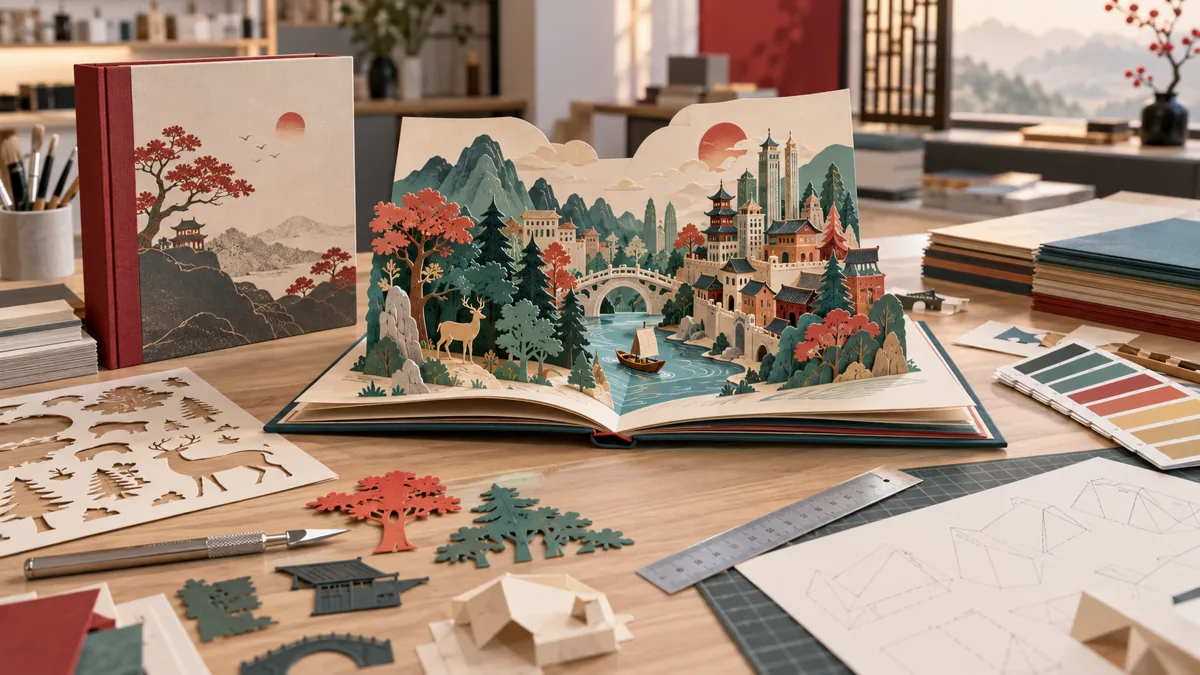
- Define the concept: Set trim size, spread count, reader age, mechanisms, binding, quantity and target market.
- Engineer the paper structures: Convert illustrations into workable folds, tabs, layers, wheels or V-folds.
- Build a white dummy: Test movement, clearances, page thickness and closing pressure without relying on printed colour.
- Prepare production artwork: Apply CMYK or Pantone artwork to approved dielines with bleed, safe zones and glue-free areas.
- Approve printed prototypes: Check colour, die-cut registration, scoring, glue, binding and every moving part.
- Create tooling and production standards: Record dies, jigs, assembly order, tolerances and defect limits.
- Manufacture and inspect: Print, laminate, die-cut, fold, glue, bind and test samples throughout the run.
- Pack and ship: Protect books from crushing and moisture, then verify cartons, quantity and delivery terms.
If the title includes a companion guide or activity insert, compare booklet printing and activity book production at the specification stage.
Pop-Up Book Procurement Checklist
A written checklist prevents suppliers from quoting different assumptions. Attach the approved dummy, artwork version and inspection standard to the purchase order.
- Finished size, spread count, mechanism count and binding style
- Named paper stocks, thickness, grain direction and lamination
- CMYK or Pantone Matching System colour requirements
- Dielines, score lines, cut lines, glue zones and assembly sequence
- White dummy, printed prototype and revision allowance
- Tooling cost, ownership, storage and future re-order terms
- Acceptable movement, alignment, glue and scuff tolerances
- Rounded corners, small-part risks and target-market test requirements
- MOQ, quantity tolerance, lead time and payment milestones
- In-process checks, pre-shipment inspection and remedy procedure
- Individual wrapping, export cartons, moisture protection and pallet rules
- Incoterm, destination, freight method and customs responsibilities
When a pop-up book needs its own presentation pack, include folding carton printing or drawer-and-sleeve packaging in the same prototype review.
Frequently Asked Questions
What is the usual MOQ for a custom pop-up book?
The MOQ varies with mechanism complexity, manual assembly and tooling. Many projects become more economical at several hundred or more copies, but every supplier sets its own threshold. Ask for matched prices at several quantities and confirm whether engineering, dies, prototypes and packing are included.
Do you need a paper engineer?
Yes, complex pop-up books normally require paper engineering. An illustrator creates the visual artwork, while a paper engineer designs folds, tabs, pivots, clearances and glue points so the mechanism can open, close and survive production. Some manufacturers offer this service; others expect finished dielines.
Why is a white dummy important?
A white dummy tests structure before colour distracts from mechanical problems. It reveals collisions, weak folds, excessive bulk, awkward page turning and mechanisms that do not lie flat. Approve the white dummy first, then review a printed and fully assembled prototype before mass production.
Which paper is best for pop-up mechanisms?
The best paper depends on stiffness, fold endurance, print coverage and glue performance. C1S or C2S coated stocks are common for vivid colour and structural strength, but the exact weight must match the mechanism. Test the chosen production stock rather than approving a substitute sample.
How should a pop-up book be inspected?
Inspect print colour, die-cut registration, scoring, glue marks, page alignment and cover construction, then open and close sampled books repeatedly. Check every mechanism against the approved dummy. The inspection plan should define critical defects such as detached parts, blocked movement or sharp exposed edges.
How long does pop-up book manufacturing take?
Production time depends on engineering revisions, prototype approval, tooling, print quantity, assembly labour and factory workload. Request a dated schedule covering the white dummy, printed prototype, mass production, inspection and transit. Add contingency time for structural corrections instead of treating the first estimate as guaranteed.
Can a pop-up book include sound or lights?
Yes, some manufacturers integrate sound, lights and buttons with paper mechanisms. Electronic components add safety, battery, drop-test and recycling considerations. Approve one complete working sample and confirm the exact module, battery, wiring, volume and compliance documents before the production run.
How Prikoro Can Help You
Prikoro can help you define the book size, paper, binding, cover, finishes, prototype stages, quality checks and delivery plan for a custom interactive title. The team can coordinate printed components and packaging so the quotation reflects the complete product rather than an incomplete print-only estimate.
Prepare your page count, mechanism sketches, artwork status, quantity, target market and destination, then request a custom pop-up book quotation. A structural dummy or reference video will help the team understand how each spread should move.
Conclusion
The right pop-up book manufacturer must control paper engineering as carefully as printing. Compare suppliers using one specification, approve a working dummy and define movement tests before production. Contact Prikoro when you are ready to review materials, structure, packaging and delivery.