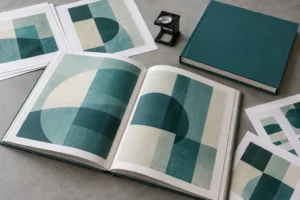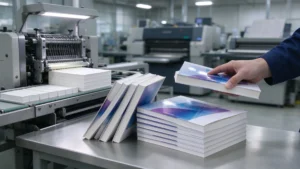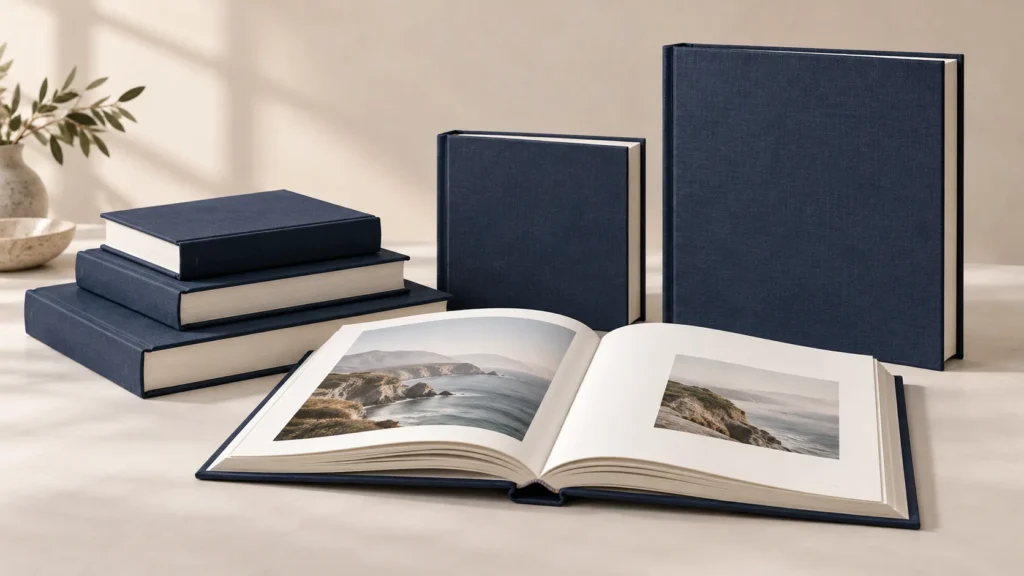
Quick answer: Hardbound book printing is a good fit when a book needs a durable, premium-feeling cover and a long shelf life. Start by fixing the trim size, page count, interior paper, cover material, and finish; then send a print-ready PDF and ask for a specification-based quote rather than comparing prices alone.
What hardbound book printing includes
Hardbound book printing creates a rigid, separately made cover that is wrapped around a printed text block and joined with endpapers. It is usually chosen for illustrated books, premium editions, reference titles, annual reports, and keepsake projects where durability, presentation, and repeat handling matter as much as the pages themselves.
“Hardbound,” “hardcover,” and “casebound” are often used interchangeably in everyday buying conversations. The useful distinction is not the label: it is whether the cover construction, page count, paper, and finishing choices match the way readers will use the book.
Plan hardbound book printing around the book’s job
The best hardbound book printing specification begins with the book’s purpose, not a favorite cover treatment. A photo-heavy portfolio needs a different page experience from a textbook, a brand book, or a limited-edition novel. Describe who will use it, how often, and what impression it must make before selecting materials.
| Project type | Primary decision | Useful starting conversation |
|---|---|---|
| Photo or art book | Image reproduction and page feel | Trim size, image paper, proofing, cover finish |
| Novel or memoir | Comfortable reading and spine design | Page count, text paper, jacket or printed case |
| Brand or portfolio book | Presentation and repeat use | Format, cover material, protective finish, packaging |
| Reference or yearbook | Durability and navigation | Page count, paper opacity, binding construction, tabs or inserts |
A useful quote brief names the audience and distribution use alongside the physical specs. It prevents a printer from guessing whether a visually impressive choice is also practical for shipping, shelving, or frequent opening.
Choose trim size and page count before cover details
Trim size and page count set the physical foundation for a hardbound book: they influence the text-block thickness, spine width, cover proportions, artwork dimensions, and shipping format. Lock these two items early, then let the printer calculate the final cover template from the approved paper and binding construction.
Common book sizes can be useful reference points, but they are not a substitute for a project-specific template. A 6 × 9 in / 152 × 229 mm narrative book and an 8.5 × 11 in / 216 × 279 mm portfolio may both be hardbound, yet their paper choices and cover behavior can be very different.
Ask for the spine width only after the final page count and interior stock are confirmed. Adding or removing pages, or changing to a heavier paper, can change that measurement. For a broader format discussion, see this guide to hardcover book trim sizes.
Match the paper and page construction to the content
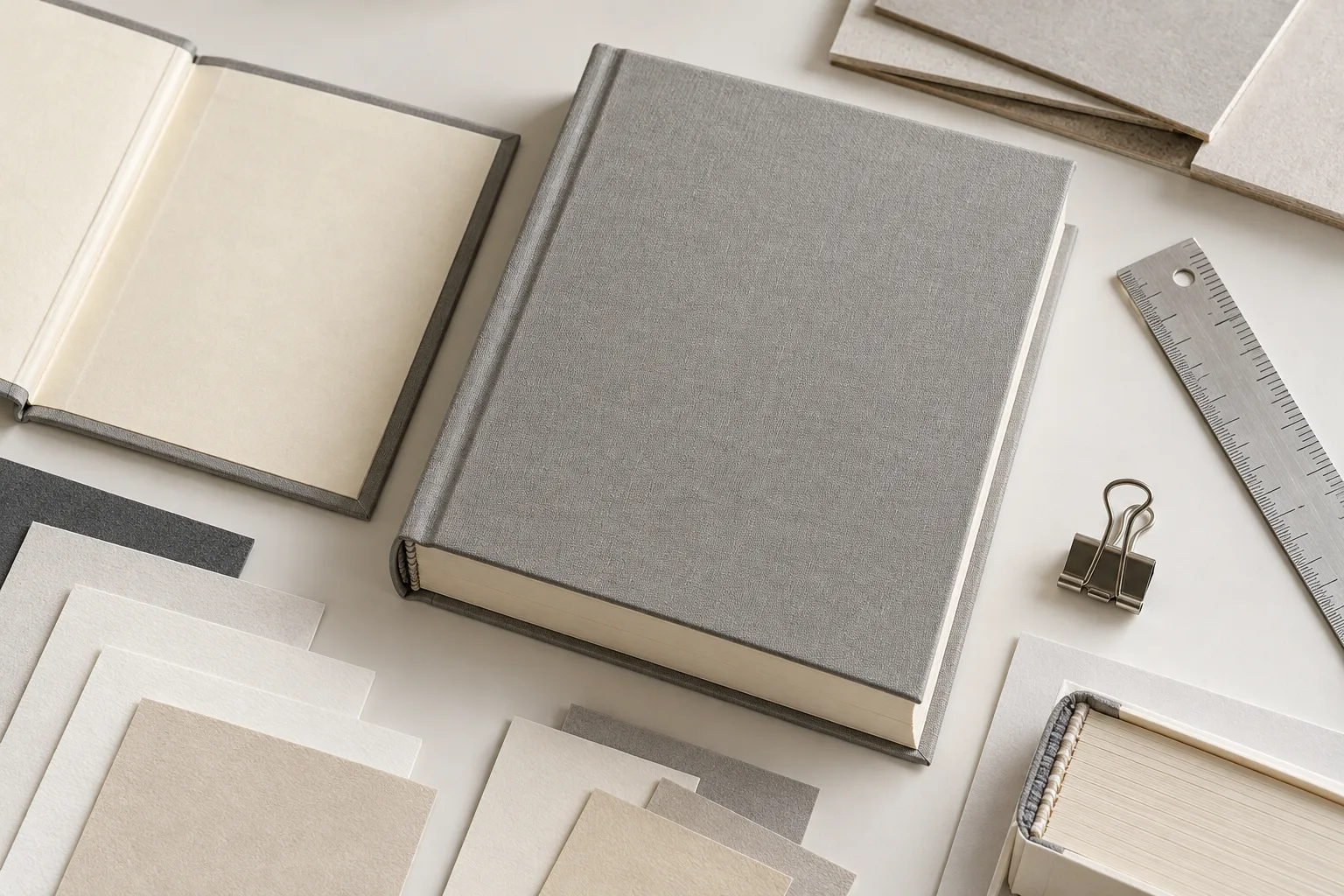
Interior paper should support the content, reading conditions, and total page count without making the finished book unnecessarily bulky. Text-only projects often prioritize opacity and reading comfort, while image-led projects need paper and proofing choices that support the artwork. Ask to review the exact stock options available for your project.
For photographs, illustrations, and solid color areas, make color review part of the plan. A calibrated file is still only one part of the result; paper surface and print process affect how color is perceived. Request a proof or production confirmation when color accuracy is central to the project.
Send a press-ready PDF with fonts embedded and image assets prepared for print. Adobe explains how its PDF export settings can preserve print-production information, while its bleed guidance explains why artwork intended to reach an edge must extend beyond the trim. Prikoro’s book printing bleed guide is a helpful companion before final export.
Select the cover material and finish with intent
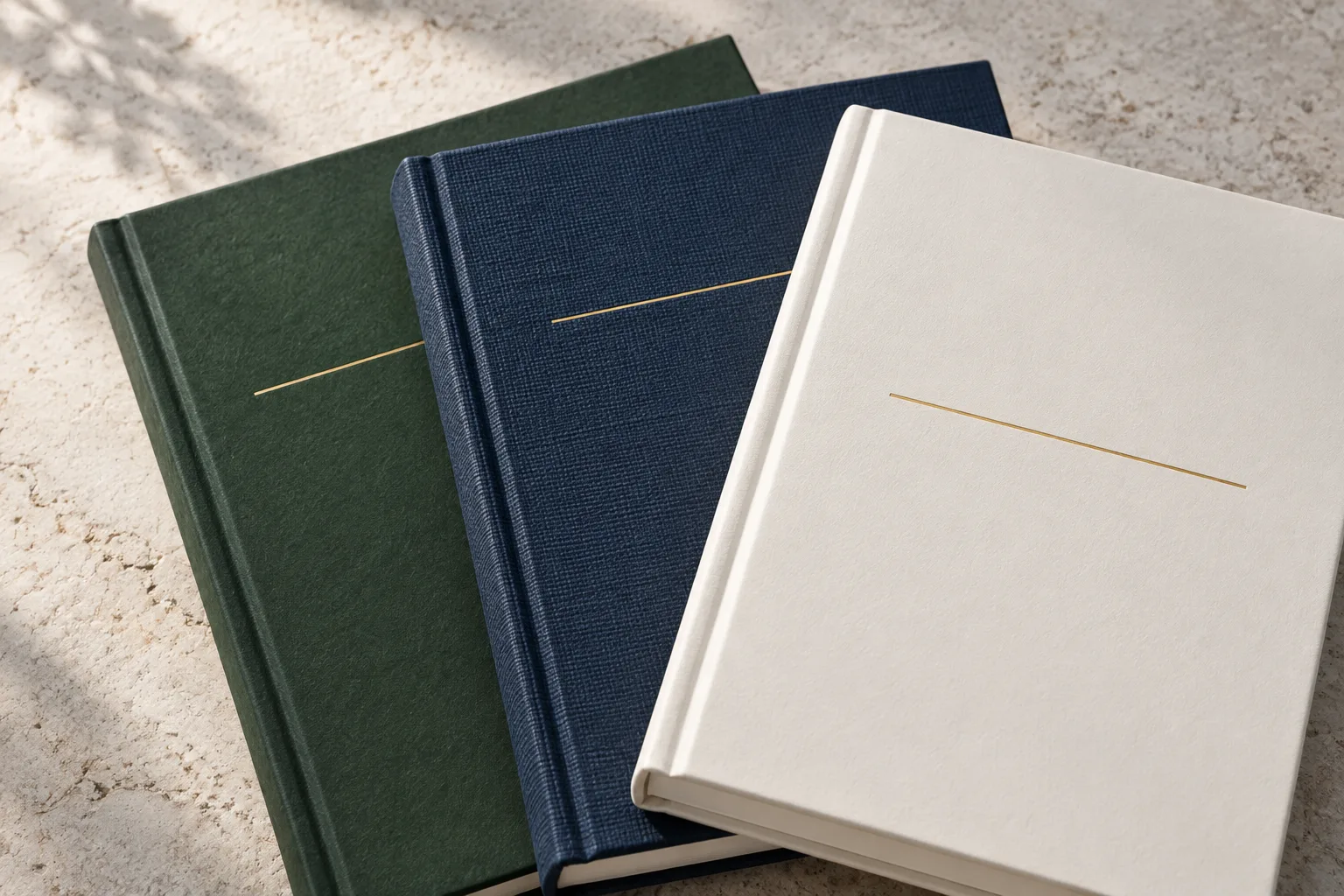
A hardbound cover does two jobs: it protects the text block and sets the reader’s first expectation of the book. Printed paper wraps, textured materials, matte films, and gloss treatments each produce a different visual and tactile result, so choose them for the content and handling needs rather than for trend alone.
Keep the final cover art separate from the initial creative layout until the printer provides a production template. The template accommodates the front, back, spine, hinge areas, turn-ins, and bleed. It is the reliable place to position spine text or fine artwork, especially on books with narrow spines.
Use a proof to reduce avoidable surprises
A proof is the clearest way to check that the physical decisions made for hardbound book printing work together before the full run proceeds. It gives the buyer a chance to inspect pagination, trim, image placement, cover alignment, paper feel, and any critical color or finish expectations against the approved specification.
Review a proof with a short written checklist. Check the front and back covers, spine orientation, page order, folios, image cropping, visible color shifts, blank pages, and any special pages. Record changes in one consolidated file so revisions are clear and approval is traceable. Read more about what to check in a book printing proof.
Prepare a quote brief that printers can compare fairly
A comparable hardbound book printing quote gives every printer the same core information: finished size, quantity, page count, interior and cover preferences, finishing, file status, packaging needs, and destination. Without that common brief, two prices may describe materially different books, making the cheaper number impossible to evaluate.
- Book type and intended reader or use
- Finished trim size and orientation
- Quantity and final page count
- Interior color treatment and paper preference
- Cover style, material direction, and desired finish
- Any jacket, ribbon, insert, or special packaging request
- Whether files are final, plus the shipping destination
Prikoro is a China-based custom printing manufacturer serving publishers, brands, and creators with books, printed marketing materials, game components, and paper packaging. For a project conversation, share the brief above through Prikoro’s contact page; it gives the team a practical basis for discussing options and a project-specific quote.
Hardbound book printing checklist before you approve
Before approving production, confirm that every physical and file decision refers to the same final version of the book. This last check protects against ordinary but expensive mismatches: an outdated page count, a cover built to an old spine width, missing bleed, or a proof approved without checking the page order.
- Confirm final title, trim size, orientation, quantity, and page count.
- Confirm interior paper, color treatment, and cover material or wrap.
- Use the printer-supplied cover template after the specification is fixed.
- Export the PDF with correct bleed and embedded fonts; Adobe’s print-ready PDF overview is a useful reference.
- Check a proof for page order, images, spine text, trim, and finish expectations.
- Keep written approval and the final file version together.
Frequently asked questions about hardbound book printing
Is hardbound book printing the same as hardcover printing?
In most buying conversations, yes. Both terms usually describe a book with a rigid case around the printed text block. Ask the printer to describe the proposed construction and materials, because the useful comparison is the actual specification—not the label used in a quote.
How do I decide whether a hardbound cover is right for my book?
Choose a hardbound cover when durability, presentation, or long-term use are central to the project. It can suit photo books, premium editions, portfolios, reference books, and gifts. A simpler binding may be better when portability or a lower physical profile is the priority.
When should I ask for the final spine width?
Ask after page count and interior paper are confirmed. Spine width depends on the final text-block thickness, so it can change when page count or paper stock changes. Do not finalize spine artwork against an estimate if those items are still moving.
Do I need bleed for a hardbound book?
You need bleed wherever artwork, color, or photographs are meant to print to a trimmed edge. The required amount should come from the printer’s template or file guide. Keep important text and logos safely inside the trim area rather than at the edge.
What should I check on a hardbound book proof?
Check the size, page order, image placement, cover alignment, spine orientation, text errors, and any color-critical content. Also check that the final cover was built from the current template. A proof should be reviewed against the exact approved specification, not memory.
Can a hardbound book use a printed cover instead of cloth?
Yes. A printed wrap is a common direction when the cover art carries photography, illustration, or brand graphics. A cloth-like or textured material changes the tactile effect and may need separate artwork or decoration planning. Ask to see project-appropriate material options before deciding.
What information is needed for a hardbound book printing quote?
Provide the trim size, quantity, page count, color treatment, paper preference, cover direction, finishing requests, file status, packaging requirements, and delivery destination. Those details let a printer quote one defined book rather than a range of assumptions.
Make the next hardbound book decision easier
Good hardbound book printing begins with a clear, complete specification and ends with a careful proof review. Start with the book’s purpose, make size and page count stable, then align paper, cover, files, and approval around that decision. The result is a quote and production process that are easier to compare and manage.