Quick answer: Book gatefold pages open beyond a book’s ordinary page area to reveal a larger image or layout. Before designing one, agree with your printer on its folded size, placement, attachment, paper and production template. Test the reading sequence with a physical dummy and approve a representative proof before production.
What are book gatefold pages and foldouts?
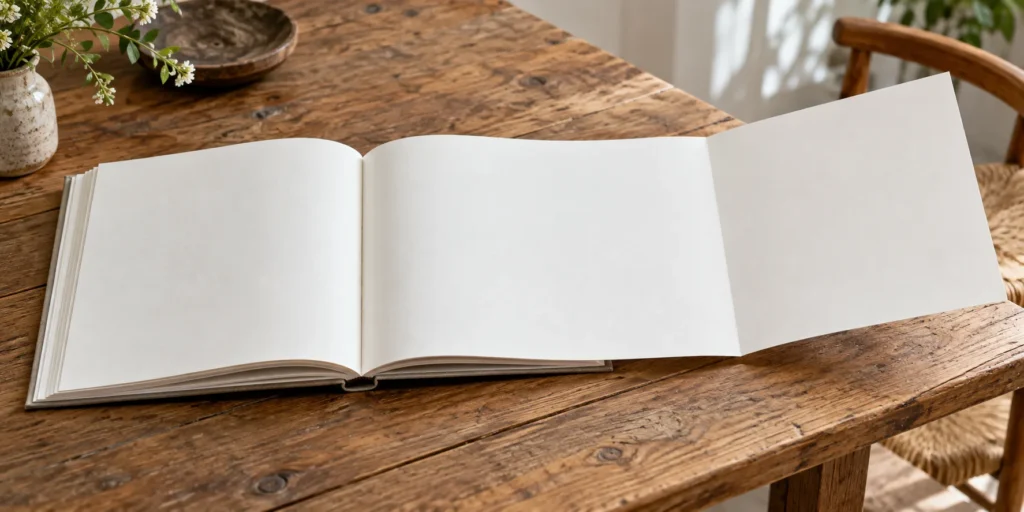
Book gatefold pages are folded interior components that open to reveal a wider view. A foldout may open in one direction, while a gatefold can use panels that open from a central meeting point. Names vary, so describe the desired opening and show the printer a labeled paper model.
These interior pages are different from French flaps, which are extensions of a paperback cover. Maps, panoramas, timelines and large artwork can benefit from the extra space, but only if the folded component fits the book and the reader can open it comfortably.
| Option | Reader experience | Confirm with printer |
|---|---|---|
| Foldout | Opens beyond the page, often to one side | Direction, folded size and attachment |
| Gatefold | Multiple panels reveal a wider view | Panel order, folds and placement |
| Tipped-in leaf | A separate leaf attached to the book | Attachment and handling expectations |
| Loose insert | Separate piece can be removed | Placement, packing and retention |
A folded leaf may be attached in different ways; do not assume all foldouts are tipped in. Specify whether the component is attached or loose and agree on the method with the printer.
When is a foldout worth using?
Use a foldout when a continuous view adds information that ordinary pages cannot present as clearly. A map, panoramic photograph or wide family tree may benefit from opening across several panels. Consider the reading position, the space needed to open the sheet and whether the result justifies additional production decisions.
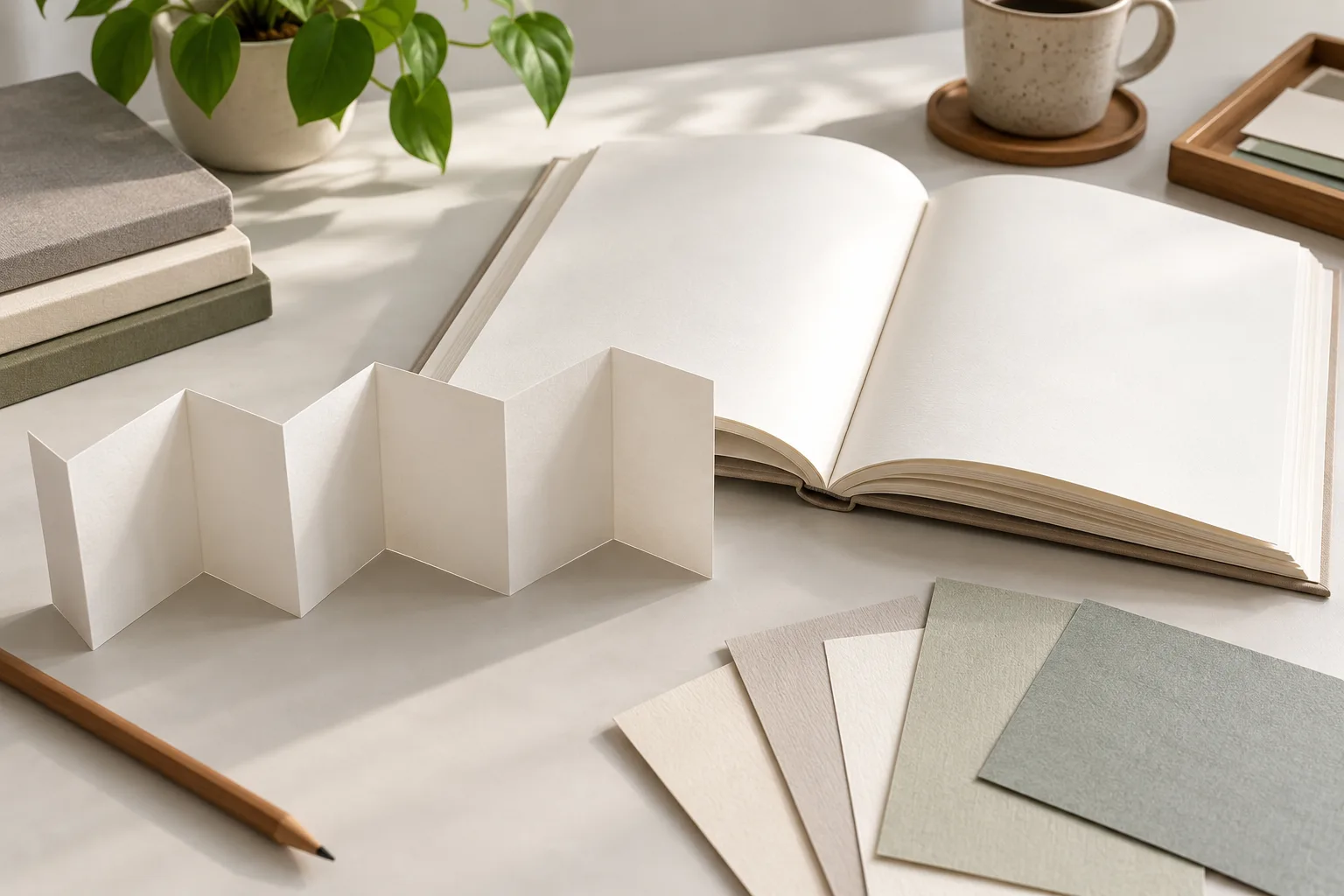
Make a simple numbered paper dummy: include the pages immediately before and after the feature, then open and close the proposed insert. Check what the reader sees first, whether any captions become hidden and how the component fits when the book is shut.
Where should book gatefold pages go?
Decide the reader’s preferred location first, then ask the printer whether that position works with the book’s signatures and binding. Placement constraints vary by construction and supplier. Provide the page immediately before and after the feature, the number of folded components and whether each is bound, tipped in or loose.
For example, PrintNinja publishes specific placement rules for its own production methods. Those rules are useful questions for another supplier, not universal guarantees. If page order or page count changes, reconfirm the insertion point before approving the file.
How do you specify the folded and open sizes?
Specify both the finished size when folded and the full size when opened. Identify the book’s trim, number of panels, fold direction and any clearance needed near the spine or fore-edge. The printer should provide a project-specific template that accounts for the chosen attachment, folding and trimming process.
Do not assume every panel is identical or subtract an arbitrary amount from a panel. Fold allowances depend on the configuration and materials. CH Paper’s fold-line guide explains why the layout should be measured from the flat artwork and why folded panels may differ; follow your own supplier’s approved measurements.
How should you prepare the artwork file?
Work from the printer’s approved template, including its fold positions, bleed, safe areas and file-format instructions. Label the front and reverse, show the intended reading sequence and keep important text away from folds and trim. Ask whether the folded component belongs in a separate PDF or the interior file.
- Mark the book location and identify which side faces the reader when closed.
- Check images and captions across each fold in both open and closed positions.
- Keep reference marks only as instructed; do not let production guides appear in the finished artwork.
- Confirm color expectations, image resolution and any separate paper specification.
- Recheck the template after changes to trim, paper, binding or page count.
Use the book printing file requirements guide for general PDF preparation, then apply the printer’s specific folded-page instructions. A screen preview cannot show every physical fold interaction.
What paper and proof should you request?
Choose the folded component’s paper with the printer, considering image reproduction, stiffness, repeated handling and compatibility with the rest of the book. Ask whether the sample uses the actual stock, folds, attachment and finish. A flat color proof alone cannot demonstrate how the assembled piece opens or closes.
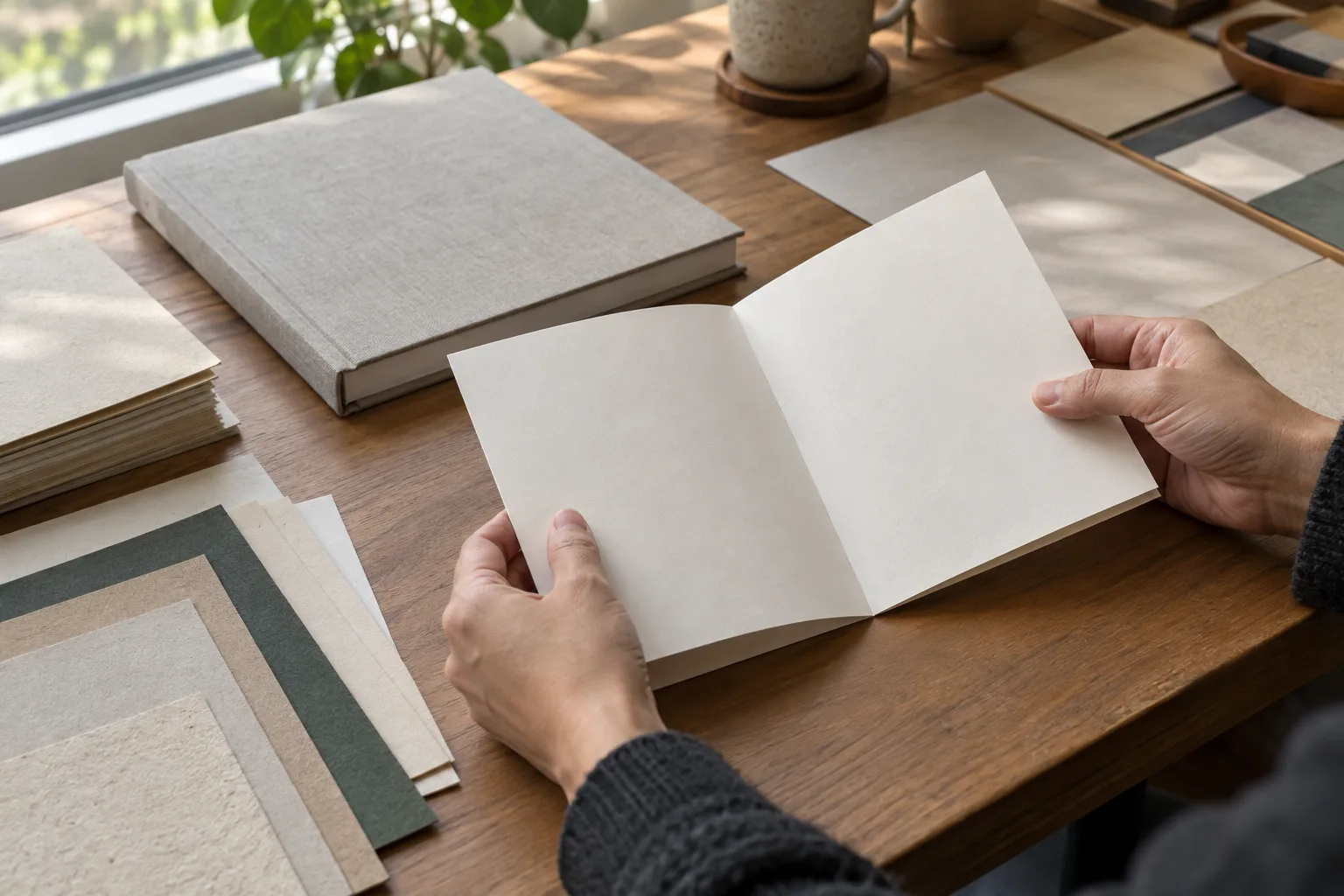
Open the sample completely and fold it back several times without forcing it. Check fold alignment, visibility of text, rubbing or cracking, fit inside the trimmed book, and the page sequence. Record any differences between sample and production materials. For the wider approval process, see our book proofing guide.
What should a gatefold quote request include?
Give the printer a clear book specification and a separate description of the folded component. Include trim size, page count, binding, quantity, the proposed location, open and folded dimensions, panel order, paper and printing on each side. Ask what samples, file preparation and finishing are included in the quote.
- Can the proposed position and attachment work with this binding and page sequence?
- Which template, tolerances and fold directions should the designer use?
- Does the quote include scoring, folding, insertion and an assembled sample?
- How will different stock or a changed page count affect the quote and schedule?
- What should be checked and signed off before the production run?
Compare quotes against the same written specification rather than assuming every supplier includes the same work. Use our hardbound printing checklist or paperback specifications guide to complete the rest of the brief.
Frequently asked questions
Is a gatefold the same as a French flap?
No. An interior gatefold opens inside the book; French flaps are folded extensions of a paperback cover.
Can a foldout be placed anywhere in a book?
Not always. Placement depends on binding, signatures and the printer’s process, so confirm the exact location.
Does a folded page have to use the same paper as the text?
No. A different stock may be possible, but confirm how its thickness and folding properties affect the construction.
Is a tipped-in page always a foldout?
No. Tipping in describes an attachment approach; a separately attached page does not have to fold out.
Should I submit a separate gatefold PDF?
Ask your printer. File separation, page order and guide requirements depend on its workflow.
Can I approve the foldout from a flat proof?
A flat proof can help assess artwork, but it cannot confirm the assembled folding, fit and handling. Request a representative physical sample.
Will a gatefold increase printing cost?
It can add materials or operations, but the effect depends on the project. Ask for a comparable quote with and without the component.
Plan the open view and the closed book together
Successful book gatefold pages are planned as part of the full book, not just as oversized artwork. Confirm placement and attachment, use the printer’s template, and test a folded physical sample before approving production. Verify the supplier’s actual capabilities for your specific project.