Children’s book printing starts with the reader and the use case, then turns those decisions into a complete production specification. Choose the finished format, page count, paper, binding, colour treatment, proofing path, quantity, and delivery scope before comparing quotes. The best option is not one universal format: it is the one that fits the age group, illustration style, handling demands, retail plan, and budget assumptions of your particular book.
This guide helps authors, small presses, education teams, and brand buyers prepare a more useful request for quotation. It does not promise a particular price, minimum order, material, safety certification, production method, or delivery date. Those details need project-specific confirmation.
Start with the reader and the reading experience
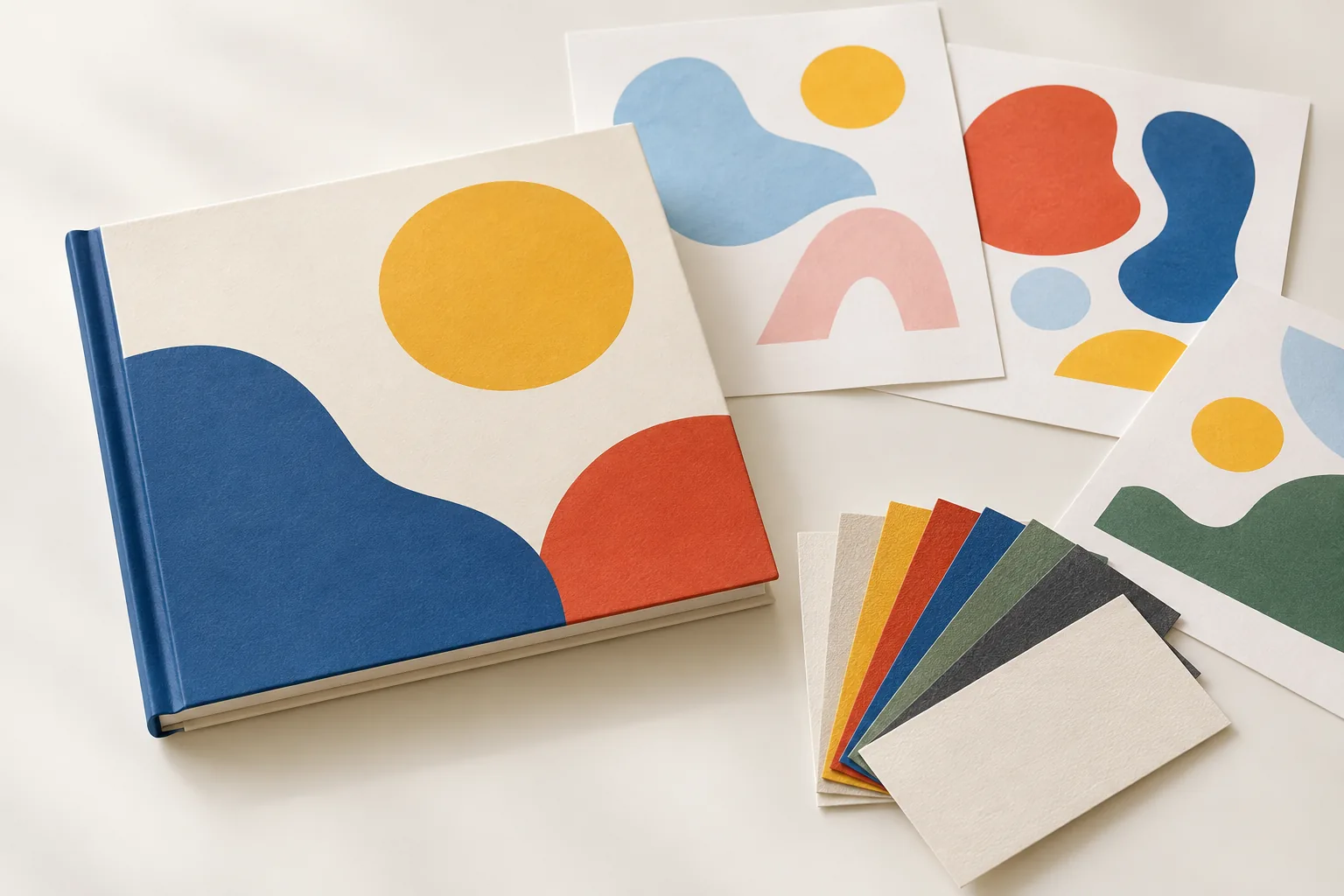
“Children’s book” covers very different products. A board book for very young readers, a fully illustrated picture book, a classroom workbook, and a longer paperback chapter book do not make the same demands on materials or binding. Start your brief with the reader’s approximate age range, how the book will be used, and what needs to survive repeated handling.
Then describe the content. Is it image-led or text-led? Are there full-bleed illustrations, activity pages, stickers, fold-outs, removable pieces, or pages that need to lie particularly flat? These are not cosmetic details: they help a printer understand what format, production approach, and proofing questions need to be discussed.
Choose the format before you choose a price
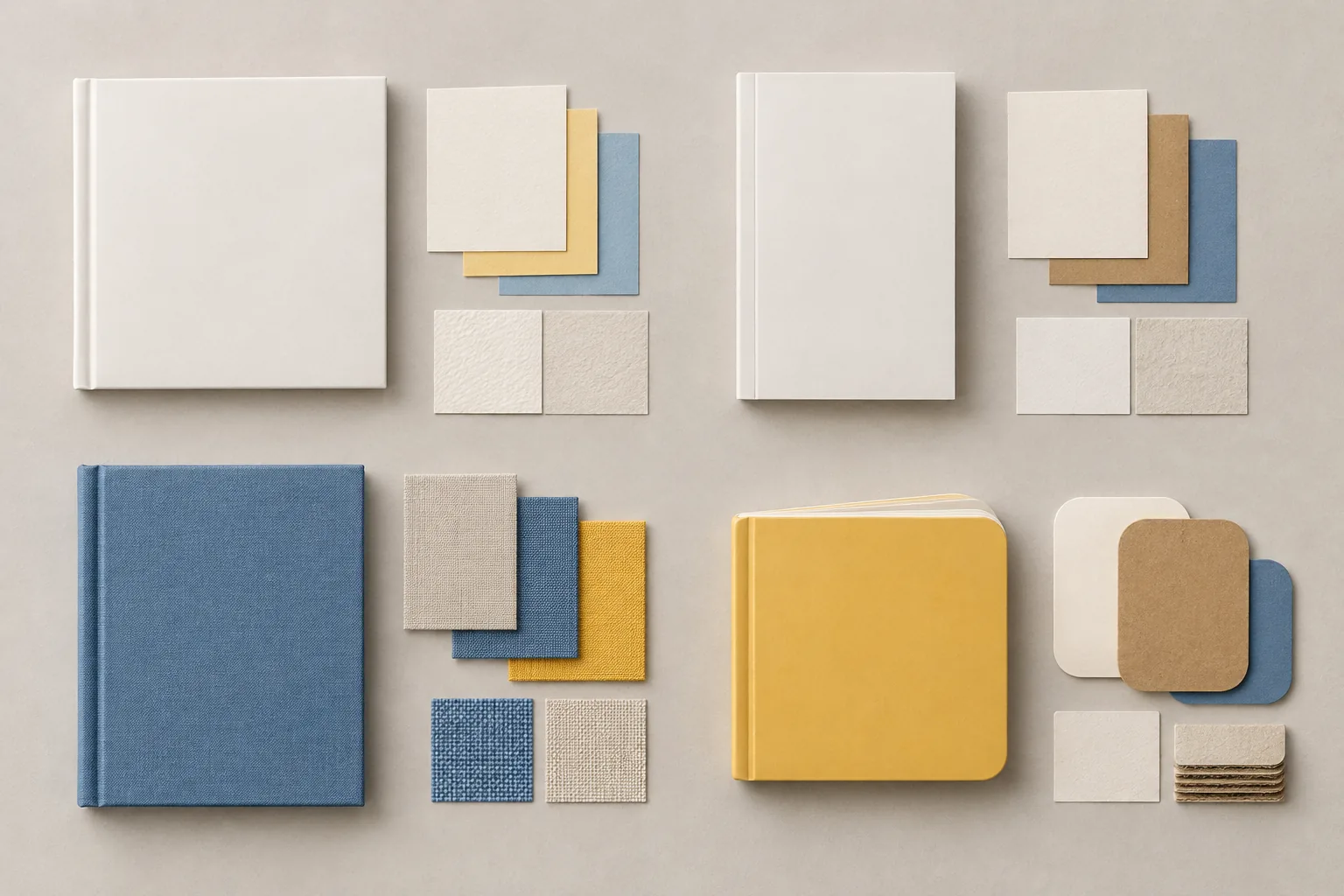
For an accurate comparison, every supplier should quote the same finished format. Record the finished trim size, orientation, cover style, binding, and final page count. A landscape picture book, square storybook, portrait workbook, and thick-page board book are different physical products even when the manuscript is similar.
Picture books and illustrated stories
Picture-led books require early agreement on trim size, image placement, page count, bleed, and the relationship between a spread and the binding edge. Keep the final trim size consistent across quotes, and make it clear whether artwork extends to the edge of the page. Our book printing bleed guide explains the file-space issue behind that decision.
Paperback and hardcover editions
A paperback, hardback, and special edition can share content but differ in cover construction, spine requirements, durability expectations, and reader experience. Decide whether you need one edition or alternate editions, then ask for each version as a separately identified quote rather than treating them as interchangeable.
Board books and interactive formats
Board books and interactive formats need their own production discussion. State the intended age range, page construction, corner treatment, any cut-outs or moving components, and destination market. Do not assume that an option is available or compliant without a project-specific response. For product-context research, see our board book printing page.
Specify paper and colour in terms a quote can use
Paper is more than a weight. For each component, record the paper type or required performance: finish, opacity, bulk or caliper, shade, coating, and the visual or handling outcome you need. If you do not have a named stock, describe the reader-facing requirement—such as a low-glare surface for detailed illustrations or a more substantial feel for repeated handling—and ask the supplier to identify the proposed equivalent.
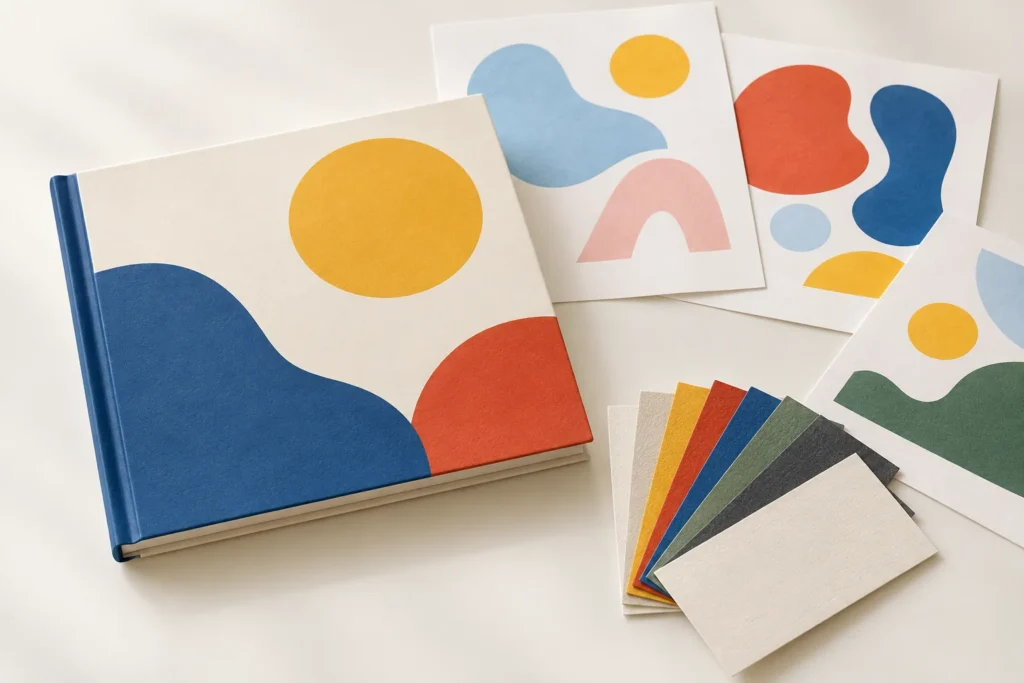
For full-colour interiors, say whether colour runs throughout the book or only on selected pages. For cover and interior artwork, prepare files to the printer’s stated specifications and avoid assuming screen colour will translate unchanged to print. Our guides to book printing file requirements, image resolution, and rich black versus 100K cover common preparation questions.
Match binding and proofing to the intended use
Binding is a functional choice. Explain how often the book will be opened, whether spreads need to open comfortably, whether pages include activities, and whether the book is intended for retail, classroom, gift, or library-style use. These needs should be compared alongside paper, page count, and cover construction—not added as an afterthought.
Agree on the proofing step before production approval. A proof can serve different purposes, so ask what the proposed proof is intended to verify and what changes would require a revised quote. Use our book printing proofs guide to prepare the questions your project needs answered.
Use a quote-ready children’s book specification
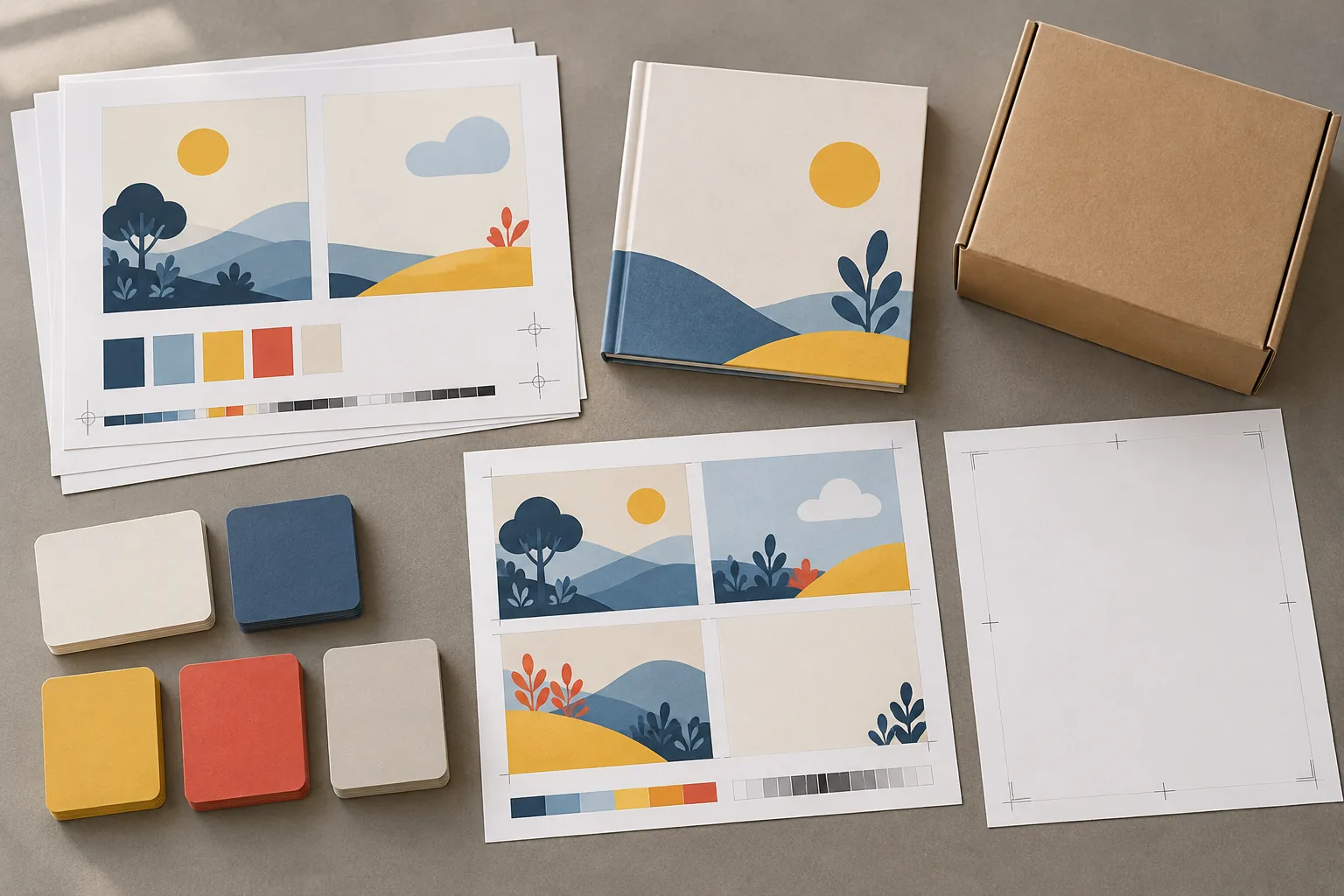
A clear request helps suppliers quote the same book. Include the following information in one document or email:
- Reader and use: age range, intended market, how the book will be used, and any durability or compliance questions that need project-specific confirmation.
- Format: final trim size, orientation, final page count, binding, cover type, and any alternate editions.
- Artwork: file status, full-bleed pages, colour treatment, special layouts, and required file-preparation guidance.
- Materials and finishing: paper preference or performance requirement, coatings, lamination, jackets, inserts, cut-outs, or other special elements.
- Proofing: the proof or sample you need before final approval.
- Quantity and delivery: required quantity, meaningful alternate quantities, destination, packing needs, and whether delivery is to one or several locations.
When setting quantities, compare the full project decision rather than the unit figure alone. Storage, distribution, timing, and replenishment can matter as much as the print-run price. Our book print-run planning guide can help frame those trade-offs.
Compare quotes only after the specification matches
Ask every supplier to quote the same specification. If one proposal uses an alternative paper, binding, proofing path, packing assumption, or delivery scope, list it as an alternative and compare it separately. A lower total is not necessarily a lower price for the same book.
For broader supplier-selection questions, read our guide to evaluating a book printer. Keep the final specification, supplier assumptions, and proof record together so the approval decision remains traceable.
Frequently asked questions
What information is needed to quote children’s book printing?
Provide the reader/use case, finished size, orientation, page count, binding, cover type, colour requirements, paper or performance requirement, finishing, file status, proofing needs, quantity, and delivery destination. Add any interactive elements and market-specific questions.
What is the best binding for a children’s book?
The right binding depends on the age group, page construction, expected handling, format, and the book’s intended use. Describe those requirements first, then compare proposals against the same specification.
Can I request a quote before artwork is final?
Yes, for planning. Clearly label unresolved choices and expect a revised quote if the final page count, dimensions, materials, finishing, or delivery scope changes.
How should I prepare a children’s picture-book file for print?
Confirm the required final trim size, bleed, image resolution, colour setup, page order, and cover/spine setup with the printer before final export. Use a printer-specific template or specification rather than relying on a generic document setting.