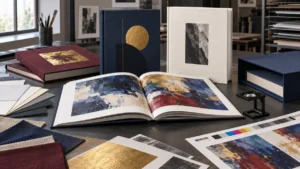
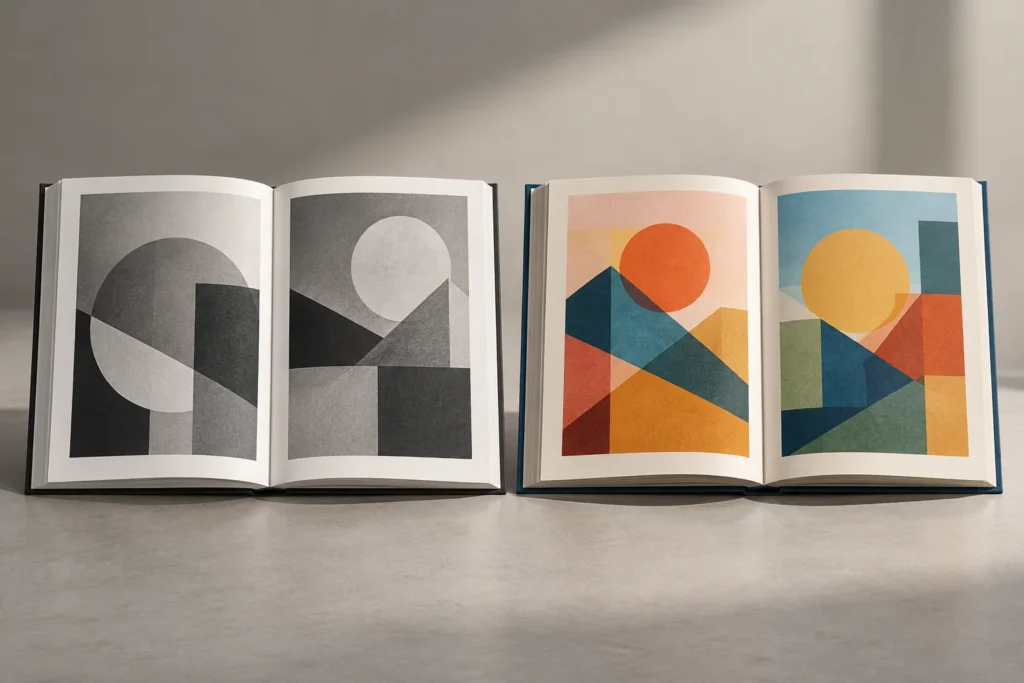
Choose black-and-white interiors when the information works without color; choose color when readers need it to understand, identify or appreciate the content. To compare black and white vs color book printing fairly, keep the trim size, page count, paper, binding and quantity consistent, and review a physical proof before committing to a production run.
Black and white vs color book printing: what is the practical difference?
Black-and-white interiors use black ink or toner to reproduce text, linework and shades of gray. A color interior reproduces colored artwork using the printer’s color process. Neither choice dictates the cover: discuss cover and interior specifications separately, and check how the selected printer charges for each.
| Decision | Black-and-white interior | Color interior |
|---|---|---|
| Best fit | Text, line art and images that remain clear in gray | Illustrations, photos or information where color matters |
| Artwork review | Check contrast, fine detail and chart labels in grayscale | Check color consistency, skin tones and image detail on a proof |
| Cost | Often less expensive, but request a matched quote | Often costs more; the difference depends on the project and supplier |
| Reader experience | Simple and focused when color adds little | Preserves color-dependent meaning and visual appeal |
As one example rather than a rule for every printer, Amazon KDP’s print options distinguish black-ink and color interiors and recommend a proof. Its paper and product restrictions apply to KDP, not automatically to a custom printing quote.
When is a black-and-white interior the better choice?
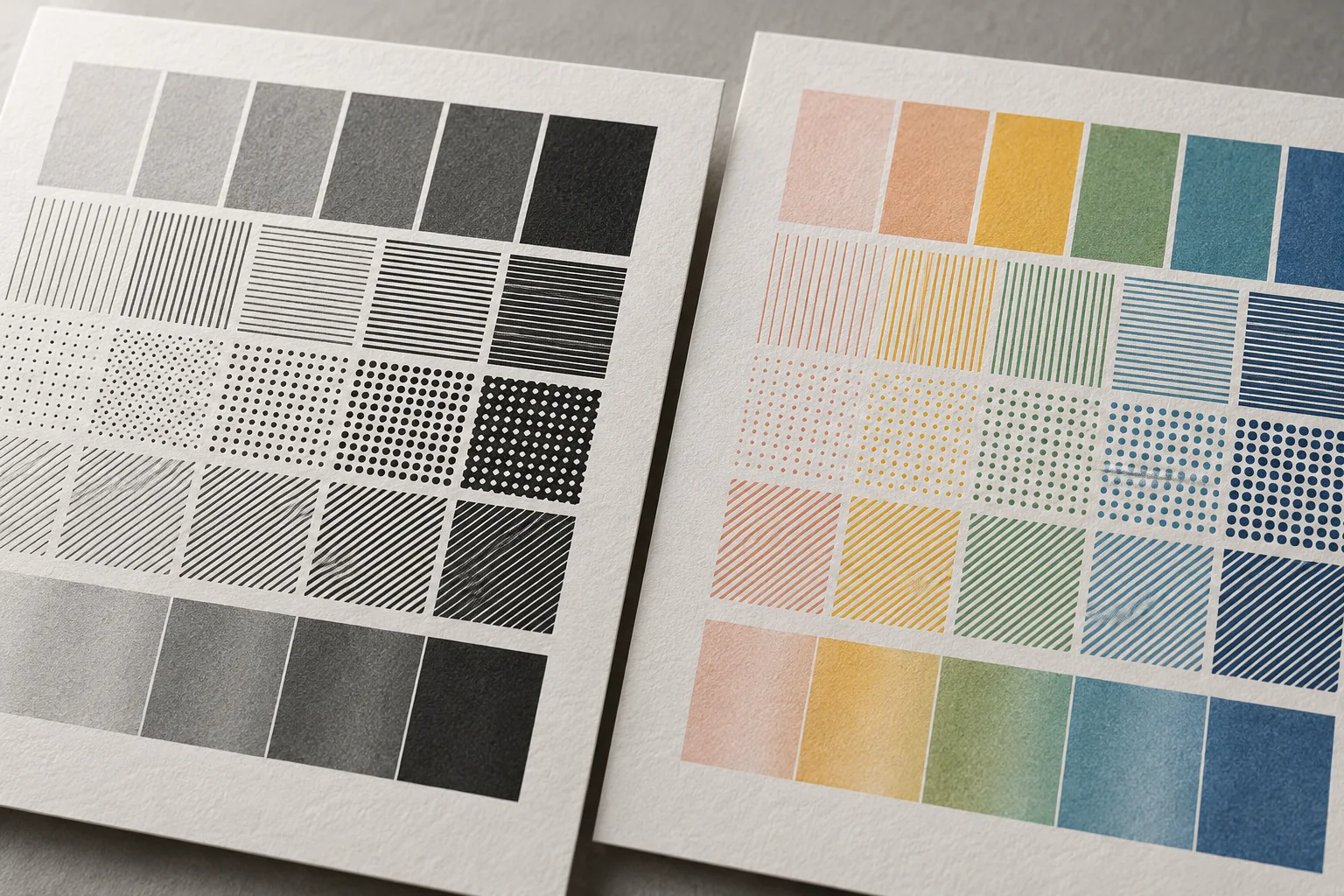
Choose black and white when readers can use the book without distinguishing colors and a printed gray-scale sample retains the necessary detail. Novels, text-heavy nonfiction and many workbooks are natural candidates. Photographs and charts can work too, provided their contrast and labels remain clear after conversion.
Inspect every visual, not just a representative page. Replace color-only chart legends with patterns, labels or different line styles. Light gray text, thin lines and dark photographs deserve special attention. A color cover can still be specified separately; ask your printer for the available cover and interior combinations.
When is color worth the additional cost?
Color is worth considering when it carries information or is central to the purchase decision: illustrated children’s books, visual reference guides, art books and cookbooks are common examples. Judge it against the reader’s task and the finished book’s positioning, not simply the number of colored pages.
For example, a training manual may need color to distinguish safety zones, but a line drawing may communicate equally well in black and white. Review representative high-coverage pages, subtle shades and small type on the intended paper. Screen colors are not a substitute for an agreed printed proof.
Can you mix color and black-and-white pages?
Some production workflows may allow selected color pages, separate color sections or inserts, but availability and pricing vary by printer, printing process and binding. Do not assume that a few color pages will be billed individually or that mixed printing is automatically cheaper than an all-color interior.
Give each supplier the exact page numbers, whether both sides of each sheet contain color, and the intended sequence. Ask how the pages will be grouped, whether pagination or binding changes, and whether paper can remain consistent. Compare the whole delivered quote, including setup and any separate inserts.
How do paper and image preparation affect the result?
Paper influences the appearance and readability of both color and black-and-white pages. Compare shade, surface, opacity and weight with actual samples: a pleasing white page on screen is not a paper specification. Ask the supplier which stocks are compatible with the selected process and binding.
Start with the printer’s file instructions and preserve the original images before creating a grayscale version. Check image resolution at its final placed size, bleed, margins and the requested color profile. KDP’s image guidance, for example, recommends at least 300 DPI for its workflow; confirm the applicable requirements with your own supplier.
Read our book printing paper guide and file preparation guide when assembling your specifications. For dark artwork and text, also see rich black vs 100% K; the appropriate black depends on the application and supplier’s instructions.
How should you compare quotes and proofs?
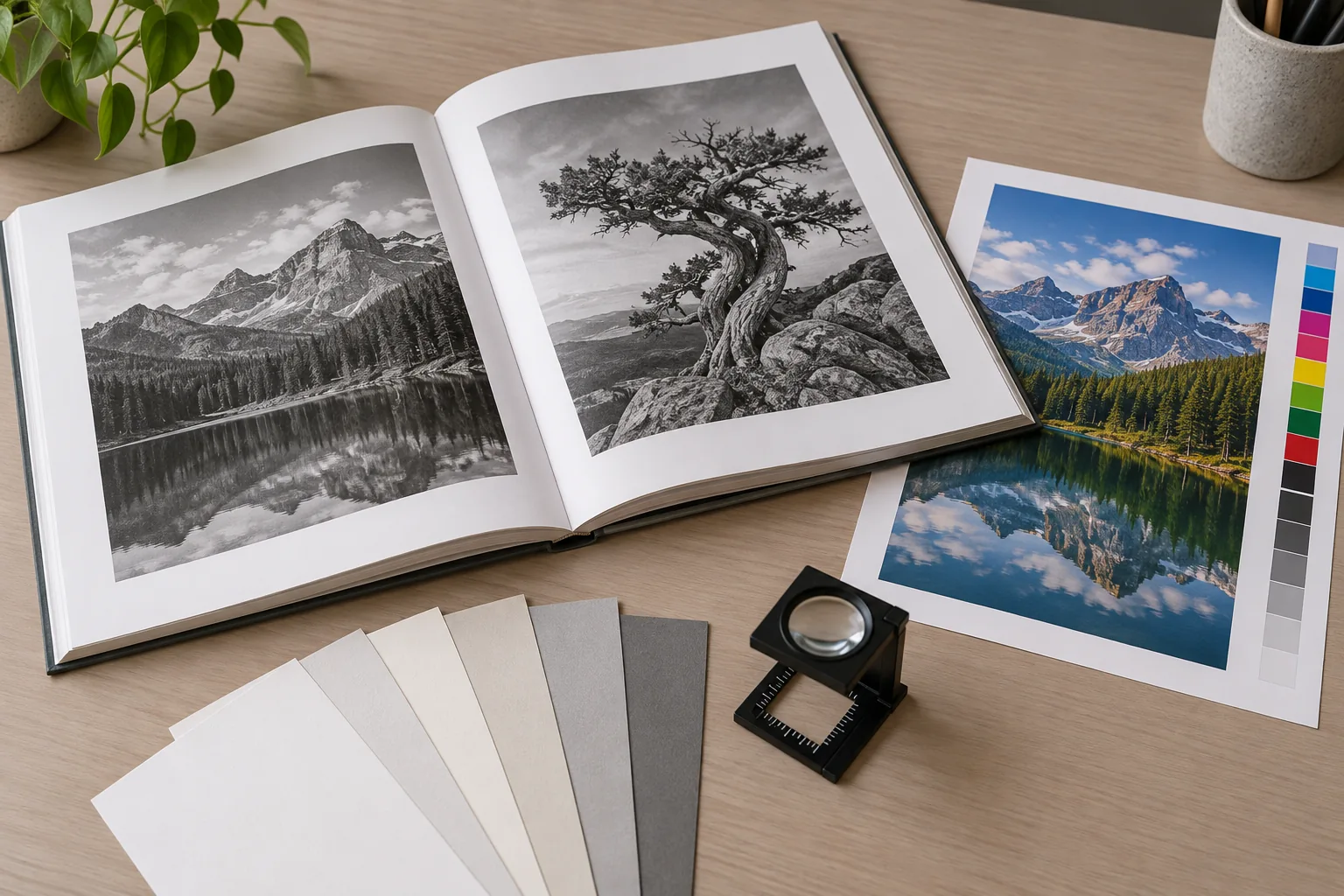
Request matched quotes for black-and-white, full-color and, if available, a specified mixed-color option. Keep the book’s dimensions, total pages, binding, cover, paper, quantity, packing and delivery terms consistent. Ask for any differences to be itemized before you compare total project cost.
- Identify the intended reader, end use and target quantity.
- List exact color page numbers and whether color is required on both sides.
- Specify trim size, total page count, binding, cover and interior paper.
- Provide representative files or request a preliminary estimate with assumptions stated.
- Ask what proof, shipping, packing and taxes are included and what might change the price.
- Review a physical proof on the intended stock and agree on corrections before approval.
A proof helps reveal weak grayscale contrast, paper show-through, unexpected color shifts and details that disappear at finished size. Check the book printing proof guide and confirm what the supplier’s particular proof can and cannot represent.
Frequently asked questions
Is black-and-white book printing always cheaper?
Not always. It is often less expensive, but the actual difference depends on quantity, process, paper, coverage and other specifications. Ask for matched quotes rather than relying on a universal percentage.
Can a color cover be paired with black-and-white pages?
Often, yes: cover and interior are separate specifications. Confirm the available combination, finishes and price with the printer before ordering.
Will a color photograph print well in grayscale?
It can, but similar colors may turn into similar gray tones. Convert a copy, adjust contrast where necessary and inspect a physical proof, especially in dark or detailed areas.
Can I print only a few pages in color?
Possibly, depending on the supplier and production method. Provide the exact page numbers and ask how mixed pages or a separate color section affect layout, binding and total cost.
Does color printing require a particular paper?
Requirements differ by printer and process. Paper shade, surface and opacity affect appearance, so request compatible paper samples and proof important images on the intended stock.
Should I approve a digital or physical proof?
A digital proof is useful for checking layout and content, but it cannot fully show paper, physical handling or final printed color. Ask what each proof represents and whether a physical production proof is available.
What should I send for a reliable estimate?
Send quantity, trim size, page count, binding, cover and paper preferences, delivery destination and the exact color-page plan. Identify unfinished files and ask the supplier to state its assumptions.