Quick answer: To reduce distracting show-through in a printed book, compare the opacity and surface of the actual paper grades—not just their GSM—and inspect the same representative artwork printed on both sides. A physical sample helps you balance readability against paper thickness, binding, weight, and cost before approving a production run.
What is book paper opacity?
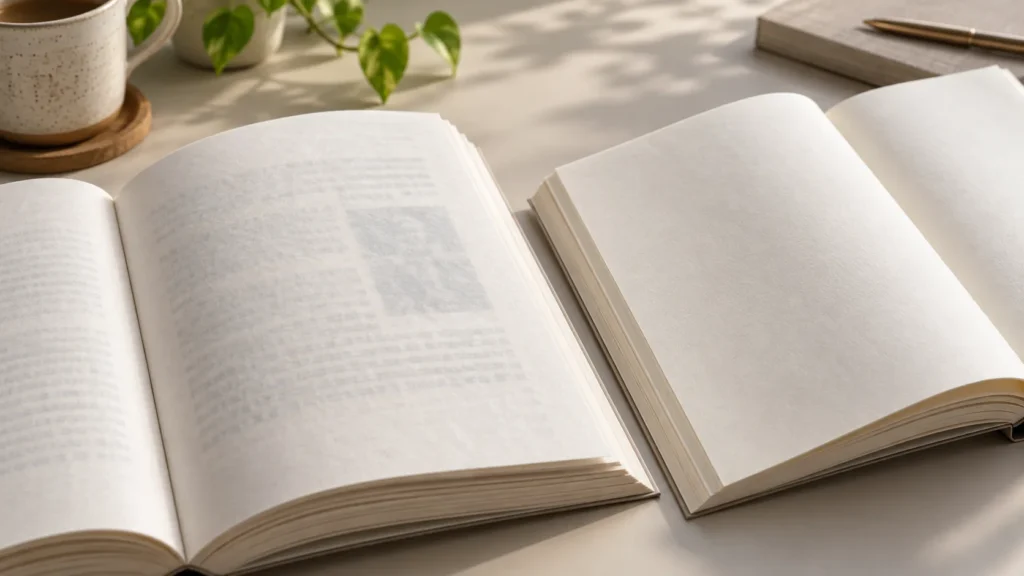
Book paper opacity describes how effectively a sheet hides what is behind it, including printing on its reverse. Greater opacity generally makes reverse-side content less conspicuous, but the final reading experience also depends on the artwork, ink coverage, lighting, paper shade, and the way the pages are viewed together.
A paper specification may report opacity as a percentage under a named test method. Compare like with like: the test method and backing matter, and a laboratory value is not a guarantee that every page in your book will look the way you expect. The World Bank’s guidance on reading-book specifications identifies opacity as an important property for limiting show-through.
Is show-through the same as ink bleeding through?
No. Show-through is primarily an optical effect: the image on the other side can be seen through the sheet. Strike-through involves ink or its components penetrating the paper. A page can exhibit more than one issue, so ask your printer to inspect the actual sample before choosing a remedy.
| What you notice | Possible cause | What to check |
|---|---|---|
| Reverse-side text visible through the sheet | Optical show-through | Paper opacity, page artwork and viewing conditions |
| Ink appears to have penetrated to the reverse | Possible strike-through | Paper, ink and print process together |
| Writing is visible after a reader uses a pen | Writing show-through or penetration | Test the intended pen and actual stock |
The distinction between optical show-through and ink penetration is explained in this printing and paper reference from Pearson. Avoid diagnosing a production defect from a screen image alone.
Does higher GSM always prevent show-through?
No. GSM measures paper mass per unit area, not opacity. A heavier sheet may help, but two papers with the same GSM can differ in construction, thickness, surface and opacity. Compare actual grades and printed samples; changing paper weight alone may also alter the book block and shipping weight.
Ask for the grade name, grammage, caliper or bulk, shade, surface and available opacity data. Use the same measurement method when comparing opacity figures. Our guide to GSM, caliper and bulk explains why weight and thickness should not be treated as interchangeable.

How do you compare paper samples fairly?
Compare candidate papers using the same representative pages, printed on both sides using the proposed production process where possible. View them under similar lighting and in reading sequence, then handle a bound or folded dummy. Record what the sample represents and what still needs confirmation before production approval.
- Choose demanding pages. Include small text, dark illustrations, solid areas and a light page backed by darker content where these occur in your book.
- Identify each paper. Record grade, shade, GSM, finish and supplier data rather than using an unlabeled swatch.
- Keep conditions comparable. Ask whether the print process, ink, artwork and finishing are representative of the order.
- Inspect the sample in use. Compare legibility and reverse-side visibility both on a single leaf and within a stack or dummy.
- Record the decision. Agree what is acceptable, the sample date and the approved paper reference. Reassess if the stock or artwork changes.
A screen proof can help check content and page sequence, but it cannot reproduce the physical sheet. See our book printing proofs guide to distinguish the purposes of different proof types.
What should different types of books test?
Choose test pages based on how the finished book will be used. A text-led book may prioritize reading comfort, while an illustrated book may need to balance image reproduction and reverse-side visibility. Workbooks add writing and erasing, so test with the tools readers are expected to use.
| Project | Useful test | Trade-off to discuss |
|---|---|---|
| Novel or text-heavy book | Dense text on both sides | Readability, page feel and block thickness |
| Art or photography book | Dark images and light pages in sequence | Image reproduction, glare and weight |
| Workbook or journal | Writing and erasing with intended tools | Writeability, penetration and page handling |
| Mixed text and illustrations | Text backed by high-coverage artwork | Show-through versus paper and layout choices |
For a broader material selection, see the book printing paper guide. A paper suitable for one book is not automatically suitable for every page design or printing process.
What should you include in a printer’s paper brief?
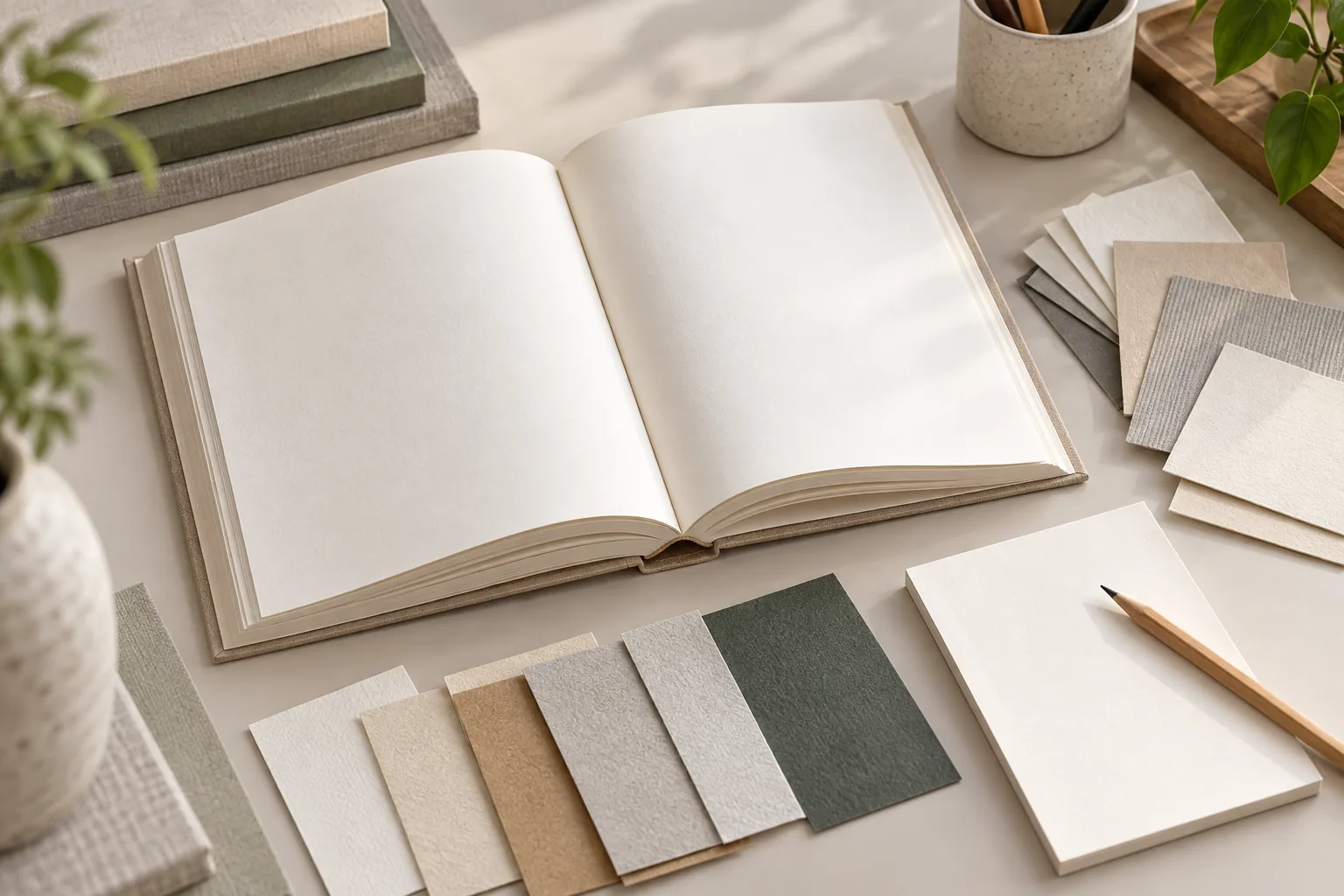
Give the printer the book’s trim size, page count, quantity, binding preference, color plan and intended use, along with the pages most sensitive to show-through. Ask for available paper specifications and a representative sample, and document how any proposed substitution will be reviewed before it is accepted.
- Identify the paper grade or explain the desired finish and reading feel.
- Provide representative files or page pairs, including dark images and text-heavy pages.
- Request opacity and caliper data where available, including the measurement basis.
- Ask which process and stock a sample represents, and what it does not represent.
- Discuss how paper changes affect binding, cover dimensions, cost and delivery weight.
- Record the approved stock and sample; agree how substitutions will be handled.
For the rest of your files, use the book printing file requirements guide. Before placing a larger order, compare suppliers using the same written project specification.
Frequently asked questions
These answers address common paper-selection questions, but no single specification guarantees the appearance of every book. Compare the actual paper, artwork and process for your project, and confirm your acceptance criteria with the printer before committing to a production run.
What opacity percentage is best for book paper?
There is no universal best percentage. The appropriate level depends on the artwork, printing, paper and reader expectations. Compare measurements made under the same method and approve representative printed samples.
Will thicker paper always be more opaque?
No. Thickness and opacity are different properties. Paper composition and surface also matter, so compare declared data and actual samples rather than relying on caliper alone.
Can a digital proof show whether a paper will show through?
Not reliably. A digital proof helps review artwork and page sequence but cannot reproduce the optical behavior and feel of the physical stock. Request a representative two-sided printed sample.
Does coated paper eliminate show-through?
No. Coating changes the paper surface, but it does not guarantee that reverse-side content will be invisible. Evaluate the particular coated grade with the actual design.
Is show-through the same as pen bleed-through?
No. Show-through is visibility through a sheet; pen bleed-through involves the writing medium penetrating it. Test the intended writing instruments on the selected stock.
Should I change my layout if the paper shows through?
Possibly. Review dark areas and page pairings as well as the stock; a different layout can change how noticeable the reverse-side image is. Compare a revised design and paper options before deciding.
Can I approve a substitute paper by GSM alone?
No. Matching GSM does not establish equivalent opacity, bulk, surface or print appearance. Review the substitute’s specification and representative sample, and recheck dimensions and binding where relevant.
Make book paper opacity part of your approval
Book paper opacity is best judged alongside the design, printing process and physical handling of the finished book. Compare named grades with representative two-sided samples, document your choice, and ask the printer to confirm the production specification before the run begins.
Sources and further reading
- World Bank: technical specifications for reading books — paper properties and procurement context.
- Pearson: printing and paper reference — show-through and strike-through distinction.