Special edition book printing turns a standard title into a collectible by combining a clear creative concept with controlled upgrades such as foil, cloth cases, sprayed or printed edges, illustrated endpapers, ribbons, tip-ins, dust jackets, and slipcases. The best edition is not the one with the most features; it is the one whose materials, decoration, price, quantity, and packing tell one coherent story.
Therefore, start with the reader promise and retail position before choosing finishes. Then freeze the book specification, request production templates, proof every high-risk component, and test the finished pack-out before authorizing the full run.
What Is Special Edition Book Printing?
Special edition book printing is the manufacture of a differentiated version of a title with upgraded materials, binding, decoration, exclusive content, packaging, or numbering. It may be a deluxe retail edition, signed edition, anniversary edition, crowdfunding reward, subscription-box exclusive, or small numbered release.
A special edition should be visibly and physically distinct from the standard edition. However, distinction does not require extravagance. A clothbound case with one foil color and illustrated endpapers can be more convincing than an edition with unrelated effects competing for attention.
Use each approval to close a specific risk. For instance, approve paper before recalculating the spine. Next, approve the book block before sizing the case. Then, confirm the case before building a slipcase dieline. Likewise, test foil on the chosen cover material rather than on a substitute. Meanwhile, compare decorated edges with the final paper because shade and absorbency change the result.
Afterward, check the complete sample under normal retail lighting. Moreover, weigh the packed unit before finalizing fulfillment charges. Consequently, the selling price reflects the product customers will actually receive. However, keep one contingency option ready if a material becomes unavailable. In that case, approve the substitute by swatch and sample.
Similarly, record every color, material code, and tolerance in the specification. Therefore, production teams do not have to interpret visual mockups. Furthermore, attach each approval to the matching revision code. Accordingly, the factory can isolate later changes. Besides, define the acceptable variation before inspection begins. Otherwise, subjective judgments can delay dispatch. Finally, seal one approved sample for comparison during inspection. As a result, quality decisions stay objective across the run.
Special Edition Book Printing Formats
For example, a retail deluxe edition and a crowdfunding edition may use similar finishes but require different packing and inventory controls. Likewise, a numbered release needs stricter reconciliation than an unnumbered store exclusive. Therefore, choose the edition model before locking the feature list.
| Edition type | Main purpose | Practical feature set |
|---|---|---|
| Deluxe retail edition | Higher shelf value and gifting | Sewn hardcover, foil, jacket, ribbon, illustrated endpapers |
| Signed or numbered edition | Scarcity and direct fan relationship | Signature or limitation page, numbering control, certificate |
| Crowdfunding edition | Reward tiers and campaign storytelling | Upgradeable bundles, stretch-goal features, robust mail packing |
| Subscription exclusive | Recognizable club variant | Alternative cover, edges, endpapers, bound-in bonus content |
| Anniversary edition | Celebrate legacy and reintroduce a title | New foreword, archival material, upgraded case and typography |
Special Edition Book Printing: 12 Features Readers Collect
1. Foil stamping
Foil adds controlled metallic or pigment color non-metallic emphasis to titles, symbols, and borders. Use bold, production-safe artwork and confirm minimum line and gap sizes with the printer.
2. Embossing and debossing
Raised or recessed details create tactile hierarchy. They are strongest when the relief follows a simple motif and is proven against the actual cover material.
3. Cloth, linen, or specialty case material
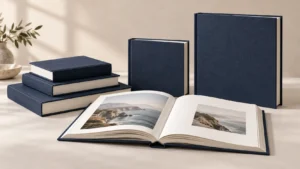
Cover texture changes the book before it is opened. Moreover, a restrained material palette can make one foil impression feel intentional and premium.
4. Sprayed, stenciled, or digitally printed edges
Decorated page edges are highly visible in shelf and unboxing photography. Yet edge art must align with trim, book-block compression, grain, and normal variation. Intricate designs demand a physical production sample.
5. Illustrated or specialty-color endpapers
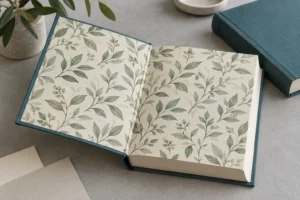
Endpapers deliver an immediate reveal and connect the case to the interior. Maps, patterns, timelines, and symbolic artwork can add narrative value rather than decoration alone.
6. Ribbon markers
A ribbon is useful and inexpensive relative to many other upgrades. Choose width, weave, color, length, attachment, and quantity carefully, especially when two or three ribbons are planned.
Special Edition Book Printing: Interior and Packaging Upgrades
7. Headbands
Headbands add a finished look at the top and bottom of the spine. Coordinate them with the case, ribbon, endpapers, and edge color instead of selecting them in isolation.
8. Dust jackets
A dust jacket adds panels and flaps for art, synopsis, reviews, or author information. It can conceal a decorated case and create a second reveal, but it also adds a component vulnerable to rubbing and transit damage.
9. Tip-ins and gatefolds
Inserted art, signatures, maps, or foldouts can make exclusive content physically distinctive. Because they alter binding and page handling, confirm position, paper, folding, and attachment before layout is final.
10. Bonus signatures or bound-in content
Character art, author notes, alternate scenes, process sketches, or archival material can create durable value. Bound-in content is harder to separate or lose than loose merchandise.
11. Slipcases and rigid presentation boxes boxes
A slipcase protects and unifies a volume or set. A rigid box can hold extras, but it increases dimensional weight, assembly, storage, and fulfillment complexity.
12. Numbering, certificates, and signatures
Scarcity must be operationally controlled. Define the edition size, numbering method, spoilage procedure, signature workflow, replacement policy, and recordkeeping before production.
Therefore, reconcile every numbered copy before packing. In addition, reserve documented replacement copies rather than improvising after delivery.
Special Edition Book Printing Priorities: Choose the Right Upgrades
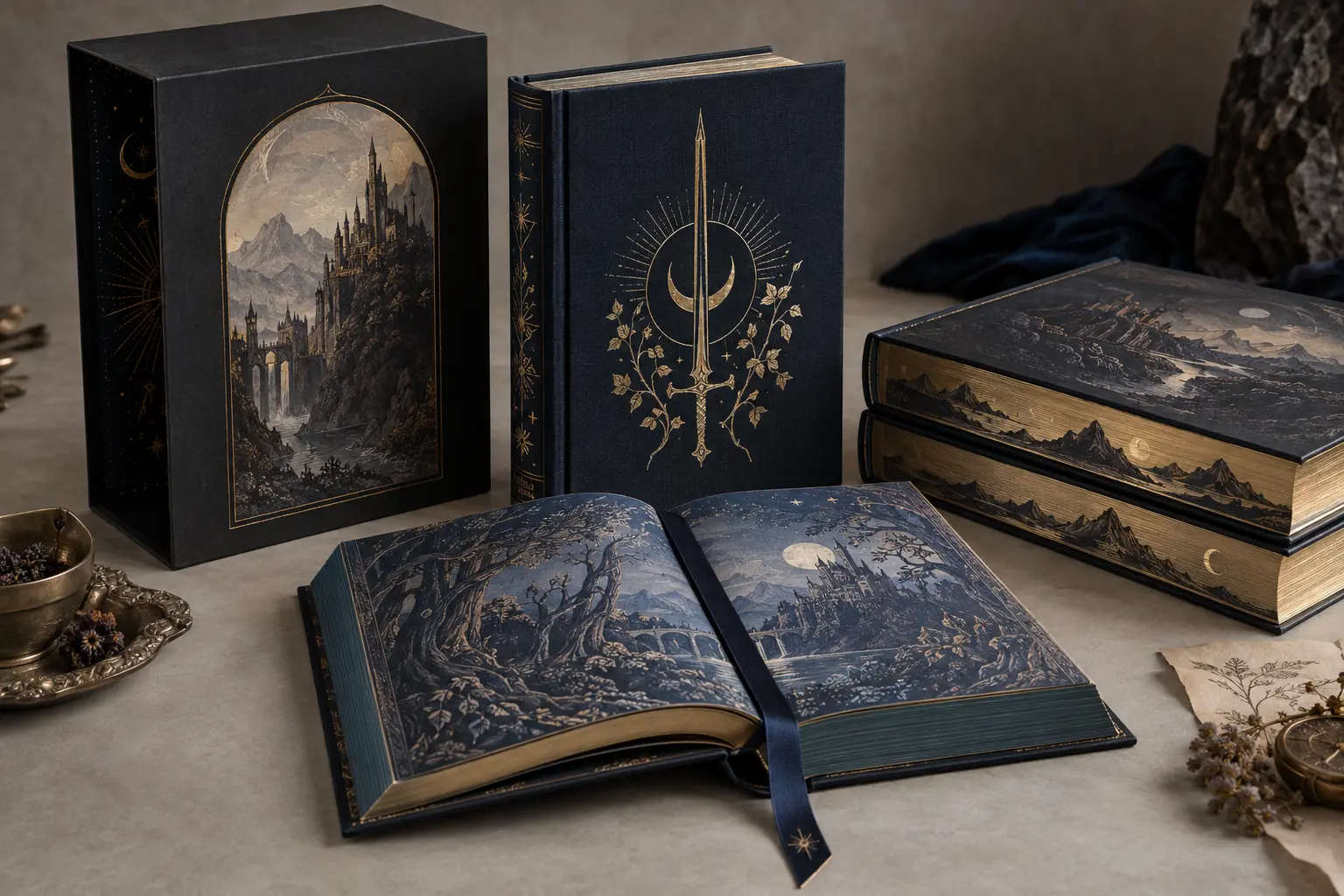
First, define the edition’s promise in one sentence. For example: “a nocturnal collector edition that reveals a hidden landscape as the reader opens it.” Every feature should strengthen that promise. Next, classify each option by reader impact, production risk, and commercial value.
| Feature | Reader impact | Production risk | Best reason to use it |
|---|---|---|---|
| One-color foil | High on shelf and in hand | Medium | Build a clear focal point |
| Illustrated endpapers | High reveal value | Low to medium | Extend the world or visual system |
| Decorated edges | Very high in videos and display | Medium to high | Create a recognizable collector signal |
| Ribbon and headbands | Moderate, tactile, useful | Low | Coordinate the color story |
| Slipcase | High perceived protection | High | Unify a set or premium single volume |
| Loose extras | Variable | High in packing | Reward tiers where fulfillment is controlled |
Build Special Edition Book Printing from the Inside Out
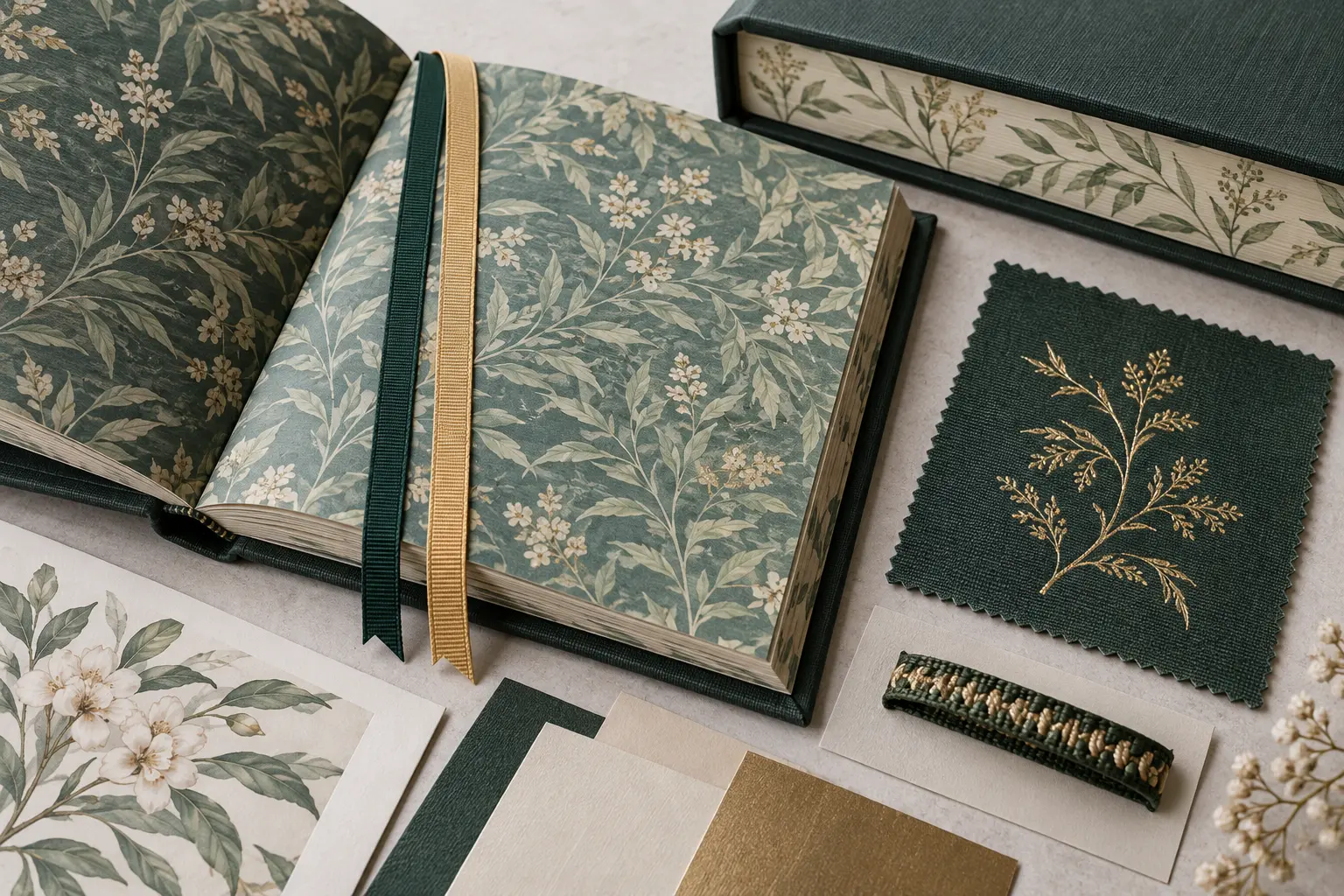
Begin with trim size, page count, paper, printing, and binding. These determine bulk, spine width, weight, opening behavior, and the dimensions of every outer component. For long or premium books, section-sewn construction can improve durability and opening, while a suitable board and joint create a stable case.
Then coordinate the case material, foil, endpapers, ribbon, headbands, and edges. Ask for physical swatches because screen previews cannot reproduce texture, reflectivity, thickness, or exact color. You can explore custom construction on Prikoro’s hardcover book printing page.
Finally, design packaging around the finished product, not an early estimate. Foil and edge decoration can rub; slipcases can scuff; book corners can crush; and loose extras can migrate. A practical pack-out test is part of product development.
Prepare Artwork for Special Edition Book Printing
Special editions need more than an interior PDF and a cover PDF. Request a file map from the printer and treat each production operation as its own controlled component.
- Final interior PDF with embedded fonts and printer-approved bleed.
- Case, jacket, or cover artwork on the final template.
- Separate vector layers for each foil, emboss, deboss, or spot effect.
- Endpaper artwork with the correct left/right orientation and hinge allowances.
- Edge-decoration art built to the printer’s book-block template.
- Tip-in, foldout, signature, certificate, and box dielines as separate files.
- A written specification naming materials, colors, positions, and finishes.
- A revision code so every approved file can be traced.
Moreover, do not finalize spine, case, jacket, slipcase, or box dimensions before the printer confirms the book block. Even a paper or page-count change can cascade through multiple components.
Special Edition Book Printing Cost and Quantity
No universal price is credible because a special edition combines multiple custom operations. Cost depends on quantity, trim, page count, paper, color, binding, cover material, tooling, finishing passes, hand assembly, proofing, packaging, freight, and destination.
| Cost category | Typical drivers | Control method |
|---|---|---|
| Core book | Paper, signatures, color, sewing, case | Freeze page count and compare named paper options |
| Tooling | Foil, emboss, deboss, dies, screens | Reuse motifs and reduce unnecessary stamped areas |
| Finishing | Number of passes, alignment, materials | Choose one hero effect before secondary effects |
| Handwork | Tip-ins, ribbons, signatures, assembly | Confirm sequence, tolerance, and spoilage allowance |
| Packaging | Slipcase, rigid box, inserts, wrapping | Prototype the complete bundle early |
| Logistics | Weight, dimensions, cartons, destinations | Compare delivered cost and test mailer fit |
For crowdfunding, do not treat stretch goals as free upgrades. Every added component changes files, proofing, procurement, assembly, packing, and the chance of delay. Set a financial threshold that covers the feature plus contingency, fulfillment, taxes, platform fees, and replacements.
Special Edition Book Printing Proofs and Quality Control
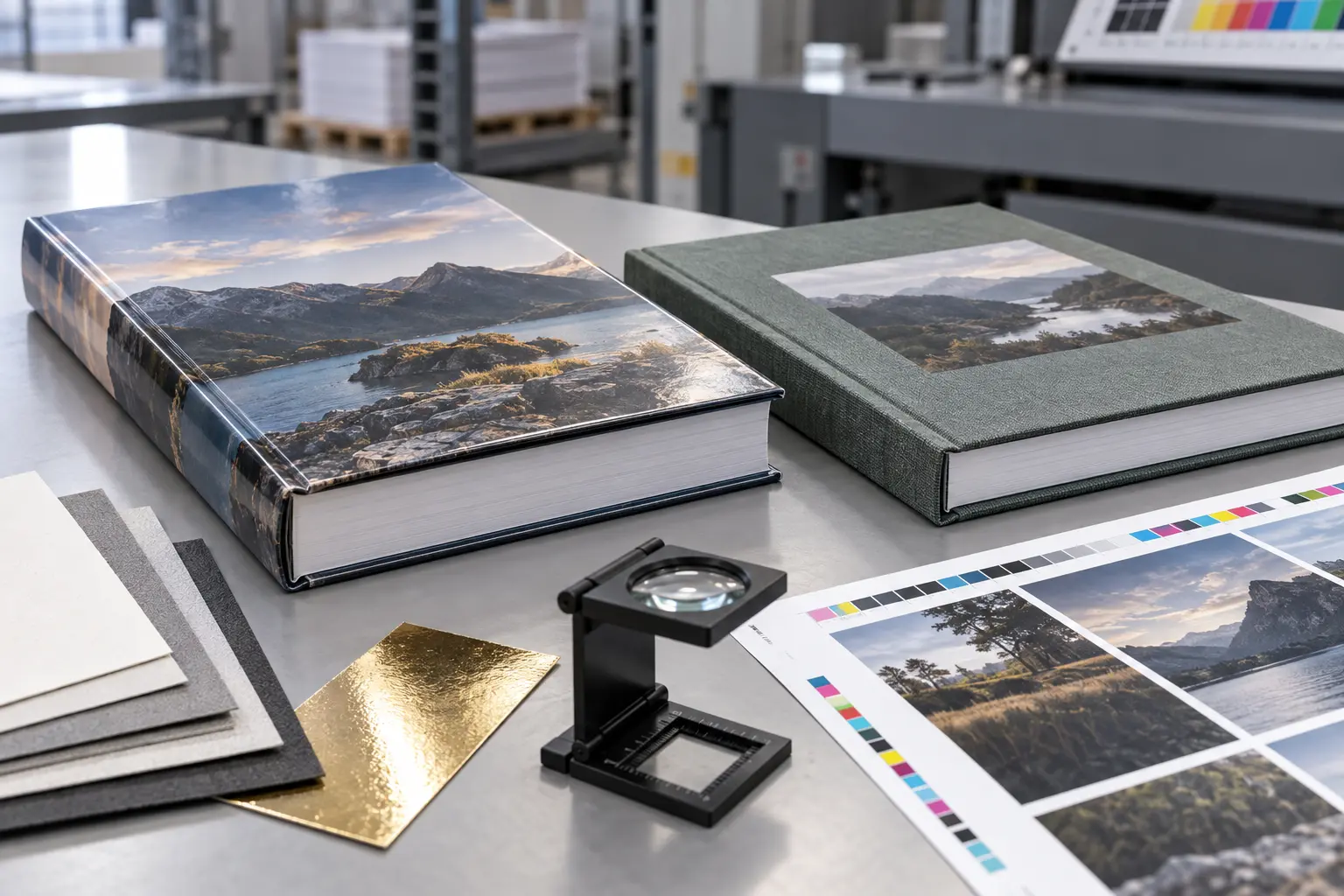
A digital proof checks content; a flat color proof checks reproduction; material swatches check texture; and an assembled sample checks construction. Therefore, match the proof type to the risk instead of asking one sample to answer every question.
- Inspect foil coverage, pinholes, edges, and registration.
- Check emboss depth and alignment from front and reverse sides.
- Compare edge decoration across closed, fanned, and opened book blocks.
- Check endpaper direction, hinge, glue, and color.
- Measure case, spine, square, joint, and slipcase fit.
- Verify ribbon count, length, attachment, and fraying.
- Reconcile numbering, signatures, rejects, and replacements.
- Rub-test dark surfaces and simulate packing and unpacking.
- Approve cartons, labels, bundle contents, and destination splits.
Special Edition Book Printing Market Evidence and Scenario
This is the central lesson: production quality comes from disciplined selection. A shorter, coherent specification is easier to proof, communicate, repeat, and replace than a crowded one.
Special Edition Book Quote Checklist
- Title, audience, sales channel, and target price
- Trim size, page count, paper, color, and binding
- Quantity options and reserve quantity
- Case material and board thickness
- Foil, embossing, debossing, UV, or labels
- Endpapers, headbands, and ribbons
- Edge-decoration method and artwork
- Dust jacket, slipcase, or rigid box
- Tip-ins, foldouts, signatures, and numbering
- Proof stages and approval owner
- Individual wrapping, mailers, cartons, and pallets
- Destination, deadline, split shipments, and fulfillment plan
Send the frozen specification through the Prikoro contact page. For related planning guidance, browse the printing blog or review Prikoro’s custom printing overview.
Special Edition Book Printing FAQs
What makes a book a special edition?
It is a deliberately differentiated version with upgraded construction, decoration, exclusive content, scarcity, packaging, or a combination of these.
Which feature gives the best value?
There is no universal winner. Illustrated endpapers, one-color foil, and coordinated ribbons often create strong perceived value without the fulfillment complexity of a large box.
Are sprayed edges and printed edges the same?
No. Spraying applies color; stenciling adds a motif through a mask; digital edge printing can reproduce more detailed artwork. Availability, appearance, and tolerance vary.
Can special editions be printed in small quantities?
Sometimes, but tooling and setup are spread across fewer books, so unit cost may rise. Ask printers for realistic minimums for the exact feature set.
Should I use a slipcase or rigid box?
Use a slipcase to protect and present a book or set compactly. Use a rigid box when the opening experience or bundled extras justify greater size, cost, and assembly.
How should signed copies be handled?
Decide whether pages are signed before binding or finished books are signed afterward. Document quantities, transport, rejects, numbering, and replacement copies.
Can every finish be combined?
No. Films, papers, cloths, inks, foils, adhesives, and raised effects have compatibility and registration limits. Confirm combinations and proof them.
How much contingency should a crowdfunding edition include?
Base it on supplier quotes, spoilage, replacements, freight, duties, taxes, platform fees, and scope risk. Do not apply one generic percentage without modeling the project.
What should I approve before mass production?
Approve final files, written specifications, materials, colors, tooling artwork, an appropriate physical sample, packing method, quantity, schedule, and delivery responsibilities.
Special Edition Book Printing: Final Recommendation
Build a special edition around one memorable idea. Protect the core book first, select one hero feature, coordinate the supporting materials, and remove upgrades that do not strengthen the reader promise. Then proof the entire product—including packaging—before production. Thus, every component supports the same creative and commercial goal. Ultimately, that approach creates a collectible edition that looks intentional, survives fulfillment, and can be reproduced consistently.
Sources and Further Reading
- TikTok Newsroom — 2026 report on European #BookTok-recommended book sales.
- The Publishers Association — publishing market reports and industry context.
- IngramSpark File Creation Guide — production file principles for print books.
- Book Industry Study Group Metadata Resources — product metadata guidance.