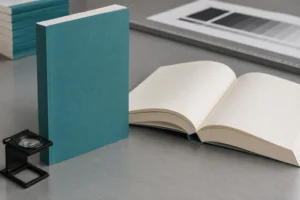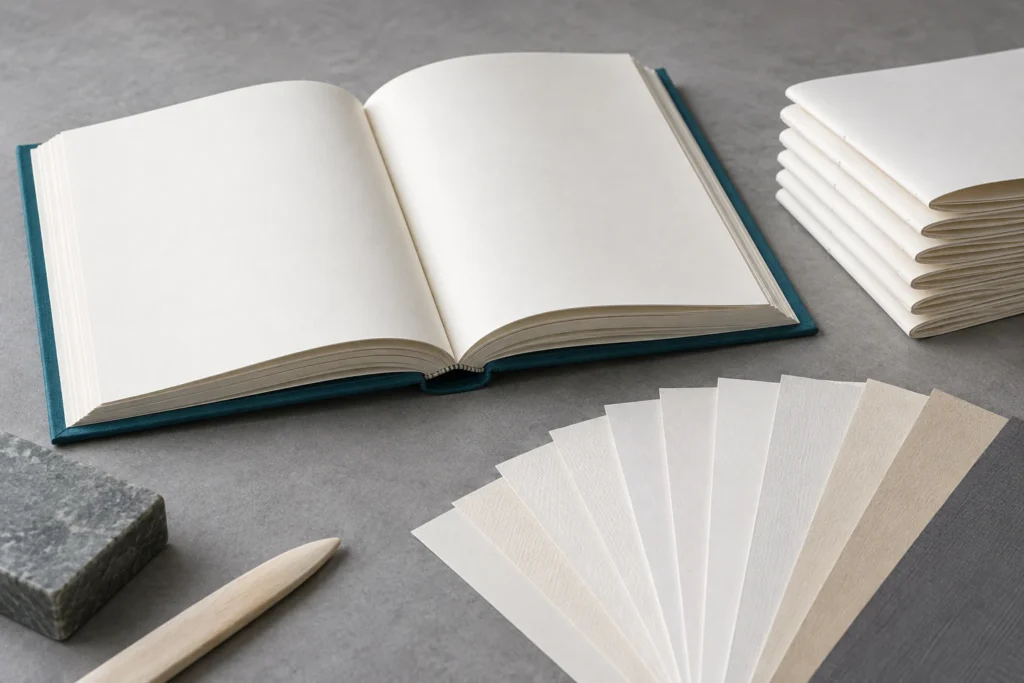
Book paper grain direction should usually run parallel to the finished book’s spine. This is a useful starting point for natural page turning and binding performance. Specify the direction on the finished page, then have the printer confirm that the sheet layout and folding plan preserve it.
Paper weight alone cannot tell you the grain direction. The answer also depends on the format, stock, binding, and production route. This guide explains long grain versus short grain, how to discuss grain with a supplier, and what a representative sample should verify before you approve production.
What Book Paper Grain Direction Means
Grain is the predominant fiber orientation in a machine-made sheet. The machine direction, or MD, follows the paper machine’s travel direction. The cross direction, or CD, runs across it. Fibers are not perfectly parallel, but the sheet’s directional structure affects how it behaves.
Holmen’s technical guide to sheet grain direction defines long grain as MD parallel to the longer sheet dimension and short grain as MD parallel to the shorter dimension. These labels refer to the sheet being described, rather than a universal choice for every book.
A buyer’s practical question is therefore: After cutting and folding, where does the grain run in the finished page? Keep that question separate from grammage in gsm, caliper, coating, shade, and opacity. Two stocks with the same gsm can behave differently, and the same stock can be supplied in different orientations.
Long Grain vs Short Grain: Follow the Finished Spine
Choose the orientation that aligns with your actual bound edge. A portrait book and a landscape book may require different cut-sheet orientations. A top-bound format introduces another direction. The phrase “short grain is wrong for books” misses these distinctions.
| Illustrative finished format | Bound edge | Requested grain direction | Label on that finished leaf |
|---|---|---|---|
| Portrait: 148 × 210 mm | Left edge, 210 mm long | Parallel to the 210 mm spine | Long grain |
| Landscape: 210 × 148 mm | Left edge, 148 mm long | Parallel to the 148 mm spine | Short grain |
| Portrait: 148 × 210 mm, top-bound | Top edge, 148 mm long | Parallel to the 148 mm bound edge | Short grain |
| Square: 200 × 200 mm | Left edge, 200 mm long | Parallel to the identified spine | Use an arrow or written direction; equal sides make the label unhelpful |
These dimensions illustrate orientation, rather than recommended sizes or a production layout. On a larger parent sheet, the long-grain or short-grain label may differ from the label on the cut leaf. Ask prepress to show the grain arrow on its imposition drawing and explain the final result after folding.
For a size decision, use our hardcover trim size guide alongside the printer’s sheet plan. Do not finalize a format on sheet yield alone.
Grain Direction and Book Binding
Review orientation together with the complete binding construction. A grain requirement is useful, but it cannot specify the adhesive, sewing, spine preparation, cover hinges, or page count for you. The intended reading behavior should guide the complete specification.
Sappi’s Web Growth technical notes identify grain parallel to the spine as an accepted industry practice. They also show why moisture-related movement remains a separate production concern even with that orientation.
| Construction | Starting requirement | Additional decision to confirm |
|---|---|---|
| Perfect-bound paperback | Text grain parallel to the finished spine where the production route permits | Stock and adhesive compatibility, spine preparation, cover creasing, and opening behavior |
| Section-sewn hardcover | Confirm grain at the spine fold of the final signatures | Folding sequence, sewing, case construction, endpapers, and cover materials |
| Saddle-stitched booklet | Plan the principal center fold and paper orientation together | Cover stock, fold quality, creep allowance, and total thickness |
| Wire-O or spiral book | Review orientation against page turning and the finished bound edge | Hole position, page stiffness, cover construction, and suitability for the intended use |
A sewn book can still resist opening if the materials or spine construction are unsuitable. Similarly, grain parallel to the spine does not convert an ordinary perfect-bound book into a guaranteed lay-flat product. If a workbook must remain open on a desk, make that behavior an explicit sample-review requirement.
For paperback purchasing, compare perfect-bound book printing and the complete paperback specification checklist. Grain is one item in that checklist, not a substitute for it.
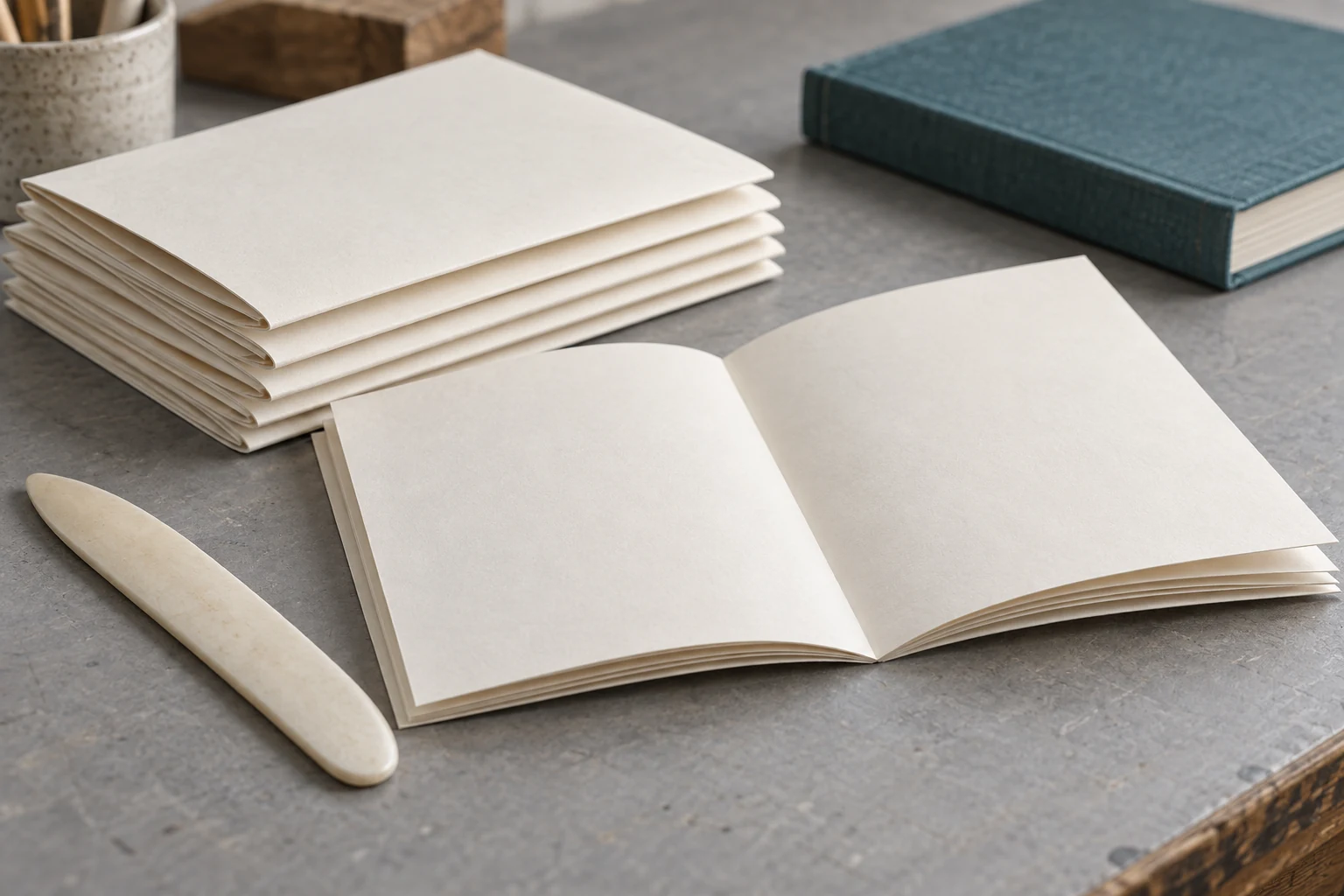
Folding, Creasing, and Cracking: Avoid a Single-Cause Diagnosis
Cracking at a fold does not automatically prove that the grain is wrong. Paper structure, coating, moisture, ink coverage, scoring, and equipment settings can all influence the result. Start by identifying which layer failed and where, then review the material and process together.
Sappi’s Fold Endurance technical notes discuss these interacting causes. They also distinguish lightweight-paper splitting from cracking in heavier grades. Do not turn a useful spine-orientation rule into a claim that every paper always has its highest fold endurance in the same direction.
For cover board, creasing creates a controlled hinge before folding. Holmen’s creasing and folding guidance explains why tooling must suit the board’s construction. Its paperboard recommendations should not be copied unchanged into settings for every text paper.
What buyers should ask when a cover fold cracks
- Was the actual cover stock used, including its coating and finish?
- What grain direction does the supplier identify on the finished cover?
- Was the fold creased or scored using settings suited to that stock?
- Does the defect appear before or after printing, lamination, or another finish?
- Has the printer reviewed conditioning and handling rather than changing grain alone?
Ask for a corrected representative sample before accepting the proposed solution. Avoid writing a universal “no cracking” promise without an agreed inspection method and realistic acceptance criteria for the specific product.
How to Verify the Proposed Stock and Sample
Use supplier identification and a representative bound sample as your primary evidence. An emailed picture of paper cannot establish its fiber direction. Ask for the stock identification, the grain notation on the supplied sheet, and the direction preserved in the cutting and folding plan.
A gentle bend comparison can help screen an unprinted sample: compare how the same sheet responds when curved in two perpendicular directions. However, caliper, coatings, conditioning, and how you handle the sheet affect that impression. Treat it as an informal check, rather than a certified measurement or permission to overturn the mill’s identification.
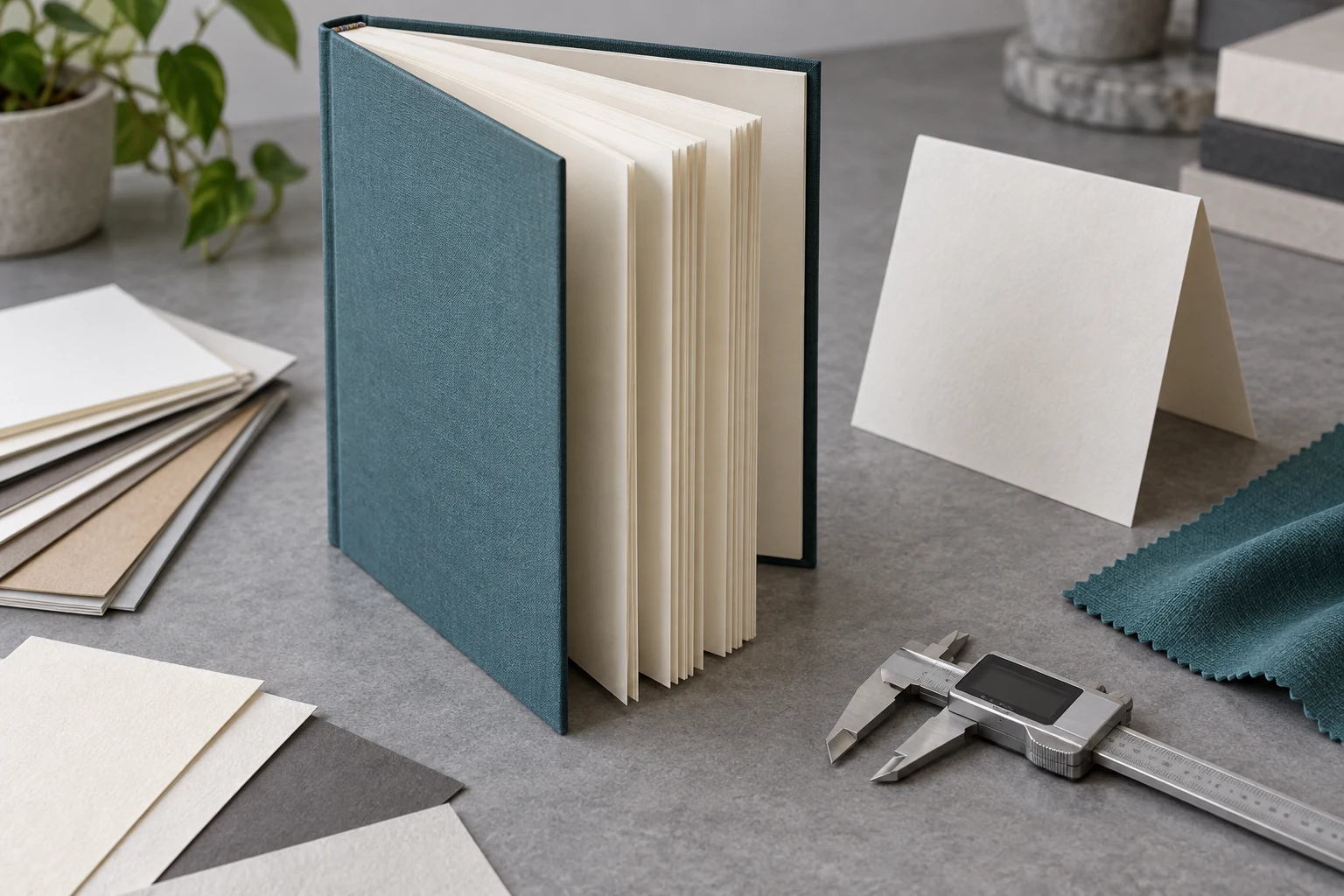
When opening behavior matters, request a dummy with the proposed stock, page count, size, and binding. Turn pages at the beginning, middle, and end. Note spring-back, gutter access, and cover movement under normal use. Record any substituted material or prototype process, because it can limit what the sample proves.
For a complete sample approval process, see what to approve in book printing proofs. A content proof, color proof, and structural dummy answer different questions.
Why Sheet Layout Can Change Cost
A grain requirement can restrict how prepress rotates pages on the sheet. That may change sheet utilization, stock availability, or the folding plan. It does not mean the job will always cost more: the effect depends on the printer’s available stocks and equipment.
Because grain must be preserved through cutting and folding, the buyer should ask how it constrains the proposed layout. Request the actual sheet plan and an explanation of any price difference, rather than accepting an unsupported percentage premium.
If your planned format produces poor yield, request alternatives that preserve the intended spine orientation. A modest trim-size change, another parent-sheet size, or a suitable stock may improve the plan. Compare complete specifications, including sample charges, materials, binding, and delivery, before choosing an option.
Do not authorize a stock substitution solely because the gsm matches. Ask the printer to review grain, caliper, opacity, shade, coating, and binding compatibility. A change can affect the cover template or sample behavior even if the quote appears otherwise unchanged.
A Quote-Ready Book Paper Grain Direction Specification
State the orientation in relation to the finished product and request confirmation of the route. The following example is a specification exercise, not a completed Prikoro order, a fixed quote, or a guaranteed manufacturing outcome.
| Specification item | Illustrative request |
|---|---|
| Format and bound edge | 148 × 210 mm portrait book, bound on the 210 mm left edge |
| Quantity and extent | 1,000 copies; 192 interior pages; confirm endpaper counting separately |
| Interior stock | 100 gsm uncoated paper; supplier to identify the proposed grade, shade, and caliper |
| Grain request | Interior grain parallel to the finished spine; show the direction on the imposition and folding plan |
| Construction | Section-sewn hardcover; confirm proposed case and endpaper materials independently |
| Approval evidence | Representative dummy using the proposed stock and construction; disclose any substitutions |
| Delivery and changes | Quote delivery to the buyer’s named destination; review material or layout substitutions before release |
If the printer proposes a more economical layout with a different finished grain orientation, request a written explanation and sample comparison. Decide whether its opening and handling behavior meet the book’s use. Do not approve the substitution merely because both samples look similar when closed.
How to Discuss Your Project with Prikoro
Send your trim size, bound edge, page count, quantity, preferred stock, printing colors, binding, finishes, and delivery destination. Describe how readers will use the book, especially when comfortable gutter access or desk use is important.
For a casebound project, review custom hardcover book printing and ask for confirmation of the proposed stock, grain orientation, and dummy requirements. For related purchasing topics, explore the Book Manufacturing guides.
Request a quote with a paper and binding review. Ask the team to identify any material availability or sheet-layout trade-offs before you finalize the specification.
The practical rule for book paper grain direction is to specify the finished spine relationship, confirm the sheet plan, and evaluate the actual construction. This gives the buyer a clearer approval decision than a long-grain label or gsm value alone.
Frequently Asked Questions
Should book paper grain direction run parallel to the spine?
Usually, yes. It is a practical starting requirement for bound books. Confirm the finished-page direction, stock, folding route, and binding together; the rule does not guarantee lay-flat behavior or eliminate every material defect.
Is long-grain paper always better than short-grain paper?
No. The label depends on the sheet’s dimensions. A landscape book bound on its shorter side can require short grain on the finished leaf. Specify the spine relationship instead of treating either label as universally superior.
Can I tell the grain direction from the gsm?
No. Gsm describes mass per unit area, not fiber orientation. Obtain the supplier’s grain information and confirm how the cutting and folding plan positions it in the final book.
Does correct grain direction make a paperback lay flat?
No. Opening also depends on paper flexibility, book thickness, adhesive, spine preparation, and cover hinges. If staying open on a desk is essential, specify that use and review a representative construction.
Does a cracked fold mean the paper was cut against the grain?
Not necessarily. Coating, caliper, dryness, ink coverage, scoring, and handling can contribute. Ask the printer to review the actual stock and process before accepting a diagnosis or a proposed correction.
Does grain still matter in digital book printing?
Yes. Digital printing does not remove the sheet’s directional structure. Available cut-sheet stocks, feeding requirements, and finishing equipment can affect the choices, so confirm the proposed route rather than assuming offset and digital plans are identical.
Should hardcover endpapers be included in the grain review?
Yes. Endpapers are part of the assembled construction and should be reviewed with the case and book block. Ask the bindery to confirm their proposed orientation and compatibility rather than approving the interior stock alone.
Can I confirm paper grain from a photograph?
Usually not reliably. A photograph can document a supplier’s marked grain arrow, but it cannot independently establish the sheet’s fiber orientation. Use stock records and representative material samples for confirmation.
Sources and Further Reading
The four paper-manufacturer references linked above cover material definitions, fold troubleshooting, paperboard creasing, and moisture-related movement. They are Holmen’s general technical information and creasing guide, plus Sappi’s Fold Endurance and Web Growth notes. Recommendations in this article are purchasing guidance; final material and process settings require the selected stock’s technical information and the printer’s confirmation.